


Big Data is a buzzword these days. Are you wondering what big data is? So, firstly let’s get the definition out of the way so that we can begin on the same page.
What is Big Data?
Big Data refers to huge volume of data, both structured and unstructured. The volume of data is so massive in scope that it is almost impossible to process it using traditional means. As per Cloud Tweaks, 2.5 quintillion bytes of data is produced every single day. Again, as per predictions of experts, 40 zettabytes of data will be in existence by end of 2020. So, basically, big data is everywhere and it’s shaping the internet and influencing the way we do business.
How Big Data is influencing the Web Design
With the help of Big data, businesses can create a data-driven web design that delivers the best user experience. Well, a data driven website design is not only restricted to functionality and visual appeal rather it takes a more scientific approach towards the concept of web design. It closely highlights, how through the design a company website can gain more traffic and leads. It has been observed, businesses who make a switch to data-driven web design enjoy higher traffic and thus better ROI.
Here are Top 5 ways to use Big Data to improve your Website Design
1. Heat Map Analysis
Heat maps are an excellent tools that allows you to monitor your website content act right on time. Heat maps can measure where a visitor’s mouse or eyes travel to help you understand what is drawing user’s attention and what’s being skipped by them. In short, this analysis enables you to track in real -time the performance of your site. As marketer can understand in a split-second which are their best performing contents and which needs to be changed. Thus, it allows you to keep the SEO friendly content or data that makes sense to you.
For instance- If your visitors aren’t giving enough time to your CTA button or business logos then you know that there is a scope of improvement here.
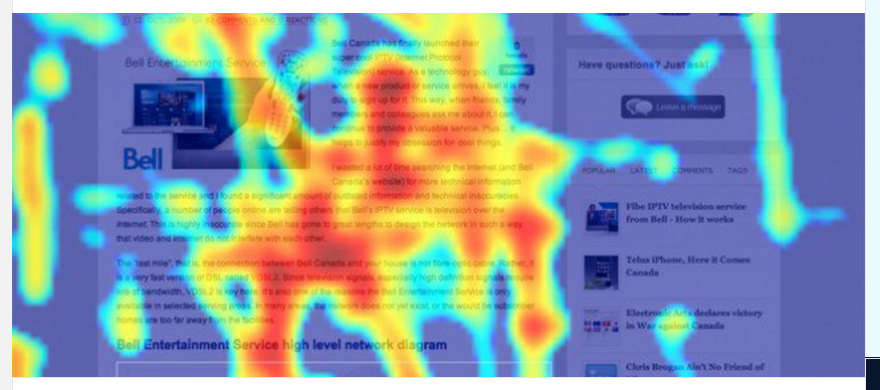 Image Source: Conversionxl.com
2. Traffic Analysis
Traffic Analysis is another great tool that gives you a deeper insight on how the visual appeal of the website can affect your sales. It shows you what elements of website are engaging the users and what area needs improvement. With traffic analysis you can also compare your site’s traffic with a competitor site and figure out what’s drawing traffic to a competitor site. Further, you can examine page views, visits, unique visitors, average visit duration, new visits, and bounce rate on your site. You can watch real-time traffic numbers and improvise the area where you think there is scope of improvement.
3. Site Search Analytics
Site Search analytics is great to get an inside view of what consumers want or searching on your site. Adding a search box on your site and tracking what users are searching gives you clear insight into user intent. Thus, with site search analytics, you get to know that if users are searching for a particular content and are unable to find the same in matching results they are like to abandon the web page altogether. Let me be more precise here:
Take a look at the Example: If your users are searching for any specific long tail keywords, and do not get any relevant results. Even though these keywords should match the content on your blog but did not show in the search then you know it’s time to upgrade the search box.
4. Email Marketing Segmentation Analysis
As per latest user data of MailChimp, segmented campaigns get 14.64% more opens and 59.99% more clicks as compared to non-segmented campaigns.
As we know, Email marketing is critical for every business and when combined with your website design can help you generate more effective emails. For achieving this, email marketing segmentation analysis is a great tool, it allows you to tailor your emails as per the interest of your subscribers. You can achieve this information based on the fact, what types of emails consumers open and share. And also the kind of information users are accessing on your site or the kind of links they are clicking on your website link page.
Again, examining the kind of content your users are engaging with will help you to increase consumer attention and better your communication. Through segmentation, you can send messages to targeted group thus your email campaigns will be more relevant resulting in better open and click rates.
5. Built-in Testing
Built-in tests delivers quantifiable data including real-time information and consumer reports at every stage of development thus you can improvise your website continuously to meet customer satisfaction. Thus, you can deliver the results user wants at a faster rate giving you an edge over your competitors.
A/B testing is one example of tests that can make a huge difference in the effectiveness of your marketing campaigns. It has been observed that correct A/B tests can boost conversions up to 300 percent. (TruConversion.com) It can basically help you test anything from search ads to sales emails, thus enable you to achieve better results from your website.
Closing Note
Big Data has powerfully modified business Intelligence as a field though it is not an easy game to play. However, a solid understanding of concept is needed to stay ahead of the curve. At the end of day, Big Data is all about using refined data to develop a web design that delivers a better and satisfactory user experience. Users are more impressed when they receive a personalized experience as compared to a standard one. The good news is, you have all the data, you just need to use it efficiently to flourish in the marketplace.
