


As lead generation methods become increasingly sophisticated, its no longer enough for sales teams to generate a lead and pass it on to the marketing department. Sales agents need to be clearer about lead scoring models. Marketers need to analyze and qualify leads based on the lead score and align their strategy depending on the stage of the customer journey where the lead is currently positioned. They also need to tweak their communication strategy accordingly.
This is a short and succinct guide to understanding lead scoring models and how best practices in lead generation and qualifying affect communication at various stages of the sales funnel.
B2B Communication Challenges
When youre talking B2B, you usually imagine a large organization riddled with red tape. The product value is high, sometimes running into the millions. So it is natural that your customer journey is longer than usual. The complexity doesnt stop here; consider these two stats:
- Currently, 81% of all B2B purchases involve multiple decision makers. (Source: Ledger Bennett DGA)
- By 2020 over 85% of B2B purchase decisions will be made without human interaction. (Source: Gartner Research)
It is easy to see that B2B marketing communication is in the middle of a giant transformation. There isnt enough clarity or brand awareness, which is why over 90% of B2B researchers with access to the internet start with a simple search engine query and do as many as 12 searches before visiting a specific brand’s site.
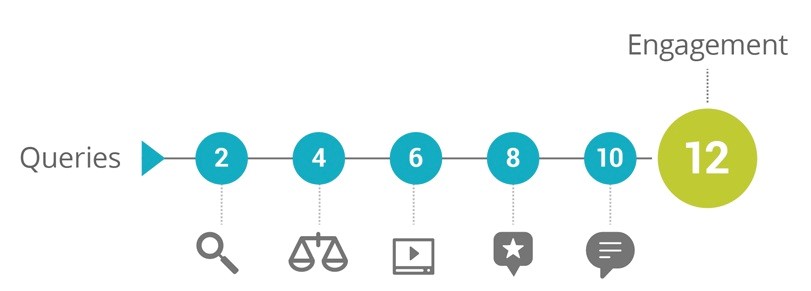
Source: Google/Millward Brown Digital, B2B Path to Purchase Study, 2014
While it is difficult to engage B2B customers and maintain authentic and meaningful communication with them, it is not impossible. You can shorten the journey from sales proposal to deal closure with the help of a well-defined communication strategy.
Application of Lead Scoring Models to B2B Communication
Depending on how and where your customers have engaged with you and their position along the sales funnel, they can be assigned lead scores. There are several lead scoring models to choose from: predictive lead scoring, demand waterfall, lead engagement scoring, account based scoring, behavioral scoring, demographic scoring, and so on. You can also score leads based on their source or the campaign that landed them.
For simplicitys sake, here is a typical example of lead scoring model for a customer who has watched your live video or attended an event sponsored by your company. While attending your event qualifies the consumer as a low quality lead, the lead score goes up slowly as he or she visits your website and eventually requests a trial.
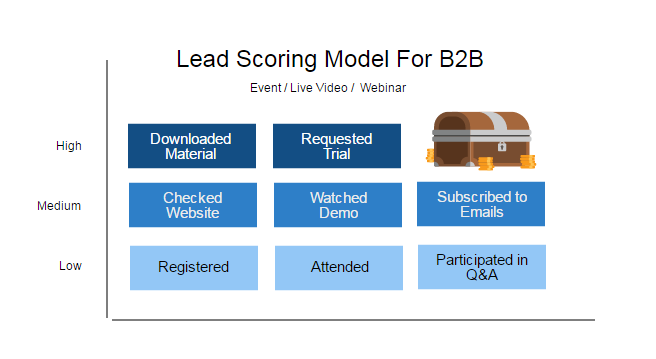
However, real life customer journeys are rarely linear. For instance, you cant assign similar scores to all your website visitors because not all pages have equal value. To get over this limitation, you could try assigning positive or null values based on the landing page your visitor interacted with. Let use examine a real world example to explore this further.
Shopify, the popular ecommerce platform, is known for publishing comprehensive resources for online retailers. On their website, they have a resource section called Business Encyclopedia which helps you learn everything there is to know about running a business online. You can find pages on everything from branding to retail, market segmentation to merchandising, and business licenses to manufacturing.
This section is designed to help leads and customers get all information under one roof. However, the chances of a web surfer whos researching something not directly related, say stock keeping, and landing on this page is very high. Therefore, if a visitor lands on one of the pages within the encyclopedia through a search engine, she cant really be considered a lead. So you could assign her no lead score:
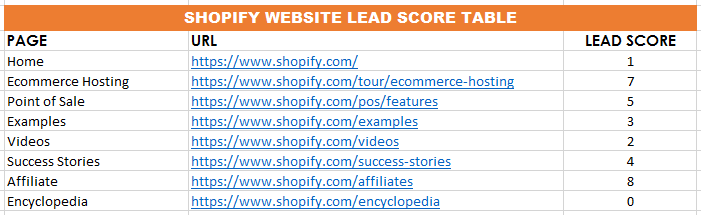
It is only when your visitors visit your high value pages like the product page, feature page, pricing page, or watch your demo and sign up for your emails that they qualify as leads. If the consumer downloads your brochure or material and signs up for a trial, you have hit the jackpot and its your turn to inform your sales team to take action.
A SaaS leadgen tool, like Leadfeeder, combined with Google Analytics and integrated into your sales process, can help you better understand leads purchase intent better by knowing how they found you, which pages theyve visited, how often, and how long they stayed there.
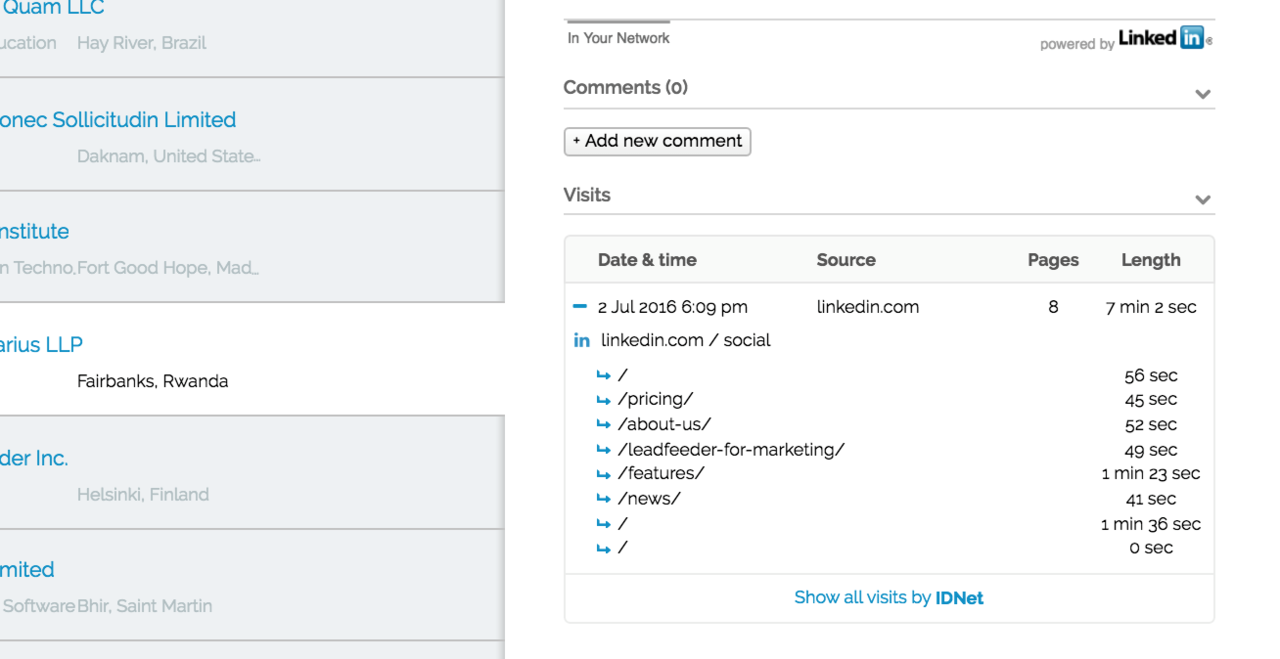
However, you cant just automate the customers journey until they fall into the sales teams hands; you need to devise a communication strategy right from the time a lead first finds out about you until after theyve purchased your product:
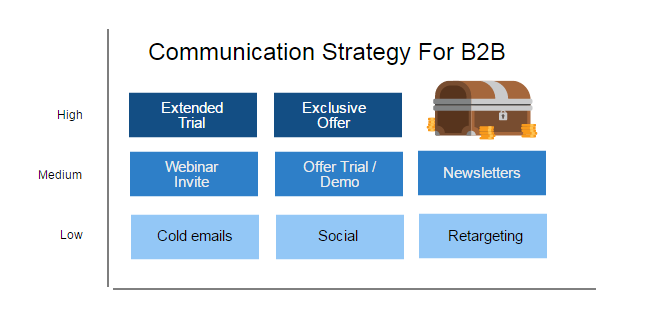
You can try out everything from cold emails to social media and advertising to ensure you are not erased from your leads memory. Here are some methods that help you maintain communication with consumers when they arent ripe enough to be plucked.
- Invest in retargeting ads. Retargeting is known to bring up to a 726% lift in website visits after four weeks of ad exposure.
- Maintain communication through B2B social platforms such as LinkedIn.
- Cold emails have a bad rep but can work like a charm if done right and timed well.
- Convince leads to sign up for emails and newsletters.
- Send whitepapers, case studies, and other sales material.
- Hold exclusive webinars for leads.
Lead Scoring Benefits
In B2B businesses, the selling proposition is complex and the target market is small and focused. Hence, every lead counts. The path between discovery and acquisition is long and perilous. Lead scoring models help identity potential customers so you can proactively reach out to them.
But there is more to modern communication than cold calling or email. From retargeting to guerrilla marketing, the most successful communication campaigns are those that take advantage of unique or new mediums to establish their brand.
Customers appreciate proactive, intelligent, relevant, contextual, highly engaging, and creative communication. The only key to ensure you are doing all this is to get as much insights about leads as possible, so you can craft highly relevant messages. If you dont have the right insights into customer behavior, you might as well say goodbye to sales.
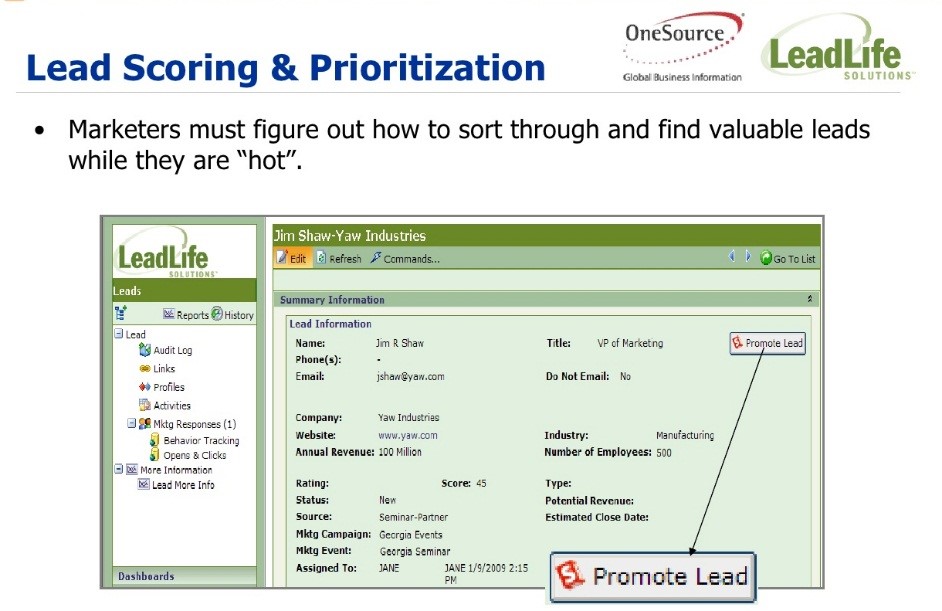
When OnceSource applied lead scoring model to their leads, they found many benefits. For starters, their marketers were able to sort and find valuable hot leads based on various metrics like annual revenue, campaign source, industry, and so on.
This eventually helped them see an increase in qualified leads by 78 percent and reduced sales cycle from months to weeks. Their conversion rate tripled and their first call contact success rate jumped from 12 percent to 85 percent.
All in all, you can get the following benefits from using lead scoring to plan customer communication:
- Sales teams can close more business.
- Marketing teams can run the right campaigns.
- Sales and marketing stay on the same page.
- Potential customers get relevant messages.
- Sticky points within the customer journey are eliminated.
In Conclusion
Engaging potential customers with relevant messages simply replicates the time-honored sales technique of getting prospects to say yes. But to get to that positive response, you have to communicate the right way format, channel, timing, et al. The more worthwhile you make it, the faster theyll move through the funnel. Customizing messages for each persona and each buying stage influences how prospects respond, and how fast. Thats why lead scoring is so important and integral to a successful communication strategy.
