


Artificial intelligence is making large-scale, traditional research processes adjustable. This means that these processes need to change as we move into the digital age. In addition, AI has enabled companies to produce predictive models and insights which can affect many aspects of a company‘s life.
From meeting customer requirements to creating chatbots and data mining systems, AI is impacting business research in ways that are just not possible without it. AI is becoming an essential part of business today and has been adopted at a fast pace.

(Image Source: HolonIQ)
Let’s review some AI applications that are transforming business research processes:
1. Predictive Modeling and Insights
Developing predictive models and insights have become a critical part of every customer journey. Every decision that involves making predictions requires information and data from the company’s KPIs, external data sources, and customer data to produce intelligent insights. These insights can be predicted with the help of AI.
2. Personalised Customer Experiences
AI is used in combination with other predictive tools to deliver personalised experiences by offering users answers to their questions right when they need them. These solutions can be based on customers‘ previous responses and behaviours. AI can also improve the overall user experience by suggesting relevant products and content for users.
3. Chatbots
Chatbots are now becoming the first point of contact with your company, which means they are no longer just an online-only tactic. With help from AI, chatbots can process what customers say to them and respond in a way that feels natural and conversational. This micro-conversation is directed towards building a relationship rather than completing one task. AI is also used to help response escalation processes in organised ways where employees can handle the right customer with the right response when needed.
4. Data Mining
AI is capable of looking at a considerable volume of data quickly and accurately in order to find information. This has been used for many years, but now AI is being used to mine more information from less data. That means that it takes less time and energy for companies to get valuable insights from their big data. With the help of AI, companies can also do more with their data without spending as much money on hiring people to work on the projects.

(Image Source: Digital Transformation Pro)
5. Optimised Marketing Campaigns
Marketing campaigns are valuable if they are built with ample research and data-driven insights- but also if they are planned out strategically. AI has helped companies to come up with intelligent campaigns for their customers that offer a seamless journey. This means that customers don’t get stuck trying to make sense of products, services, and messages. They can use messaging more naturally with the help of artificial intelligence.
6. Improved Customer-Centric Customer Retention
The ability to engage customers effectively is essential for any business today. AI makes it easier for companies to create solutions that serve customer needs and help them make positive customer experiences from every interaction, and boost earnings. AI also provides insights that allow businesses to suggest products or services based on previous purchases, ensuring they are produced just how customers want them.
7. Ability to Understand and Embrace New Technology
AI is not just limited to identifying patterns in data. It also makes it possible for companies to quickly and efficiently incorporate new technologies, such as chatbots, into their operations and businesses. This means that companies can take full advantage of the capabilities of AI. For example, they can use machine learning to make sure their chatbots are able to understand conversational nuances and are able to suggest products or services that best suit the customer.
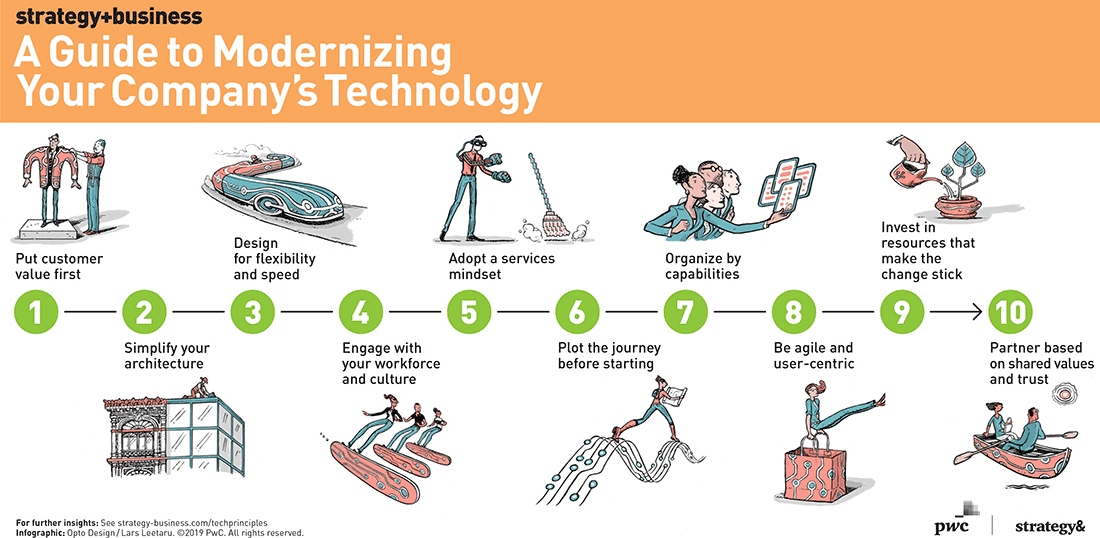
(Image Source: Strategy+Business)
8. Intelligent Applications
The ability of AI tech has made it possible for companies to create applications with intelligence, which can learn from thousands of customers simultaneously through extensive data collection. This means that companies can build applications that adapt to the needs and wants of businesses and consumers. For example, collecting and analysing big data has made it possible for companies to create virtual assistants with intelligence. These v-assistants use artificial intelligence to understand conversational nuances and are able to offer a human-like experience, which makes it easier for customers to interact with businesses.
9. Business Process Improvements
Improvements in business processes have resulted in increased efficiency within a wide range of industries, including manufacturing, retail, healthcare, finance, and more. This means that businesses now have more streamlined approaches for handling customer interactions, resulting in more efficient responses. In some cases, companies that have access to more information than ever before are even able to take a proactive approach to customer service.
10. Business Operations Optimization
As processes become more streamlined and efficient, companies are able to focus on improving business operations. This can mean sharing data and information between departments in order to improve and enhance collaboration between teams, or it could mean implementing new technologies, such as robotic process automation or artificial intelligence, that will help drive greater efficiency across the board.
11. Improved Customer Experience
Increased customer experience is one of the top benefits of AI in customer service for today’s businesses because it offers a way for consumers to interact with businesses in completely new ways. It also provides a way for companies to provide real-time answers to customers‘ questions. All of this leads to a more positive customer experience, which is essential for businesses that want their customers to be happy and loyal.
Business research is becoming increasingly reliant on AI applications in order to create modern predictive models and insights and deliver better experiences for customers. These applications are being used today and will continue to grow as AI continues its rapid growth. This will make it easier for businesses across all industries to use AI in their business research processes and improve the customer experience they offer for both consumers and employees alike.
