

These days, there is no question that Artificial Intelligence (AI) is on track to revolutionize just about every aspect of our lives, especially from a business standpoint. It allows companies to analyze loads of consumer data for better customer experiences and predict trends. Additionally, AI also revolutionized the medical field, manufacturing industry, and education in ways that were never before imagined.
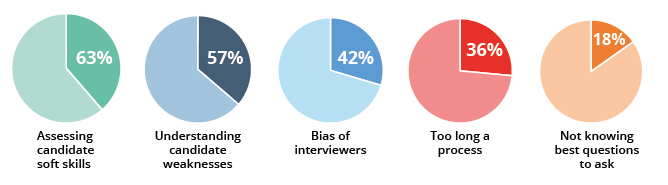
It should be no surprise that AI can also make an impact on your HR department, particularly when it comes to the recruiting and hiring process. Today’s recruiters are faced with an exhaustive list of challenges. According to Talent Now’s latest report, 73% of hiring managers say that finding qualified talent is their most difficult task when it comes to recruiting. Moreover, 21% are unable to provide the kind of candidate experience that leads to successful hires.
Thankfully, AI can provide solutions to these problems and help create a recruiting strategy that attracts and retains qualified talent. Here are three ways recruiters should embrace AI digital adoption for a better hiring process.
Resume Bots for Faster Candidate Screening
Once a candidate submits an application, their resumes are typically screened by a recruiter to see whether or not they possess the skill levels needed to fulfil the available role. Unfortunately, the traditional approach is leaving a lot to be desired. Talent Now’s report also found that even the most skills recruiters and hiring managers struggled to properly assess important qualities, such as soft skills or strengths and weaknesses. Furthermore, 36% found that the assessment process took too long, causing some of the most qualified candidates to slip through their fingers and find a better job opportunity elsewhere.
AI-powered programs are making it incredibly easy to scan through large amounts of applicant data in a short amount of time. Additionally, with more applicants using template resume builders with keyword suggestions, like Resumonk, the process of interpreting bits of relevant information with resume-reading bots is becoming even easier.
AI parsing tools, such as Ideal or Newton, can scan through these resumes much faster and pick up on keywords and synonyms that signal whether or not the candidate is truly qualified. Further, by using AI tools, recruiters are essentially able to eliminate human bias from the equation, a challenge that 42% of HR professionals agreed to impact hiring decisions.
Chatbots for Pre-Screening
The majority of recruiters are inundated with a large number of applications from both qualified and unqualified candidates. To weed through the potential fits, most hiring teams will conduct a short pre-screening interview on the phone to ask some basic questions that signal whether or not the applicant might be a good fit.
However, there is plenty of room for error in this approach. If a candidate is not available for a phone call during regular business hours, they could be passed up – even if they are highly qualified. There is also a great deal of potential for human error and bias, which could certainly stand in the way of a candidate’s acceptance.
AI-powered chatbots are a very efficient pre-screening tactic – as opposed to the initial call from the recruiter. AI has no bias and bases an applicant’s qualification on their responses and skill levels. Moreover, chatbots like Mya make the experience mobile-friendly for candidates and allow them to complete the qualification process on their own schedule.
Mya utilizes a highly conversational chatbot that interacts with applicants to answer many of the common candidate questions, such as the starting salary rate or questions regarding benefits. By utilizing AI chatbots in pre-screening, recruiters can save copious amounts of time in weeding out the non-qualified applicants, so they are dedicating their time to only the most qualified.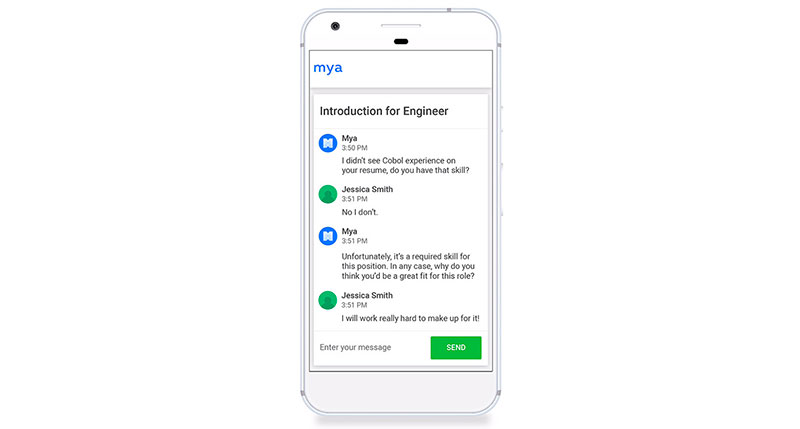
Personality Assessments to Gauge Soft Skills
You can only learn so much about an applicant based on their resume or cover letter – or even an in-person interview – and your first impression may not always be correct. Candidates can easily fake their way into a position with a charming personality. On the other hand, a candidate who is extremely shy or nervous may be passed upon due to poor interview performance, even though they possess the qualities needed to succeed.
Thankfully, there are tools these days that run AI-fueled assessments designed gauge personalities, communication skills, situational judgment, and so on to get a better idea if the applicant would be a good fit. AI-powered recruiting tools, like Harver, use a data-driven approach to candidate assessments with personalized questionnaires that measure each applicant’s skill levels and aptitude. This program even uses predictive technology to calculate the likelihood of success and culture fit within your company.
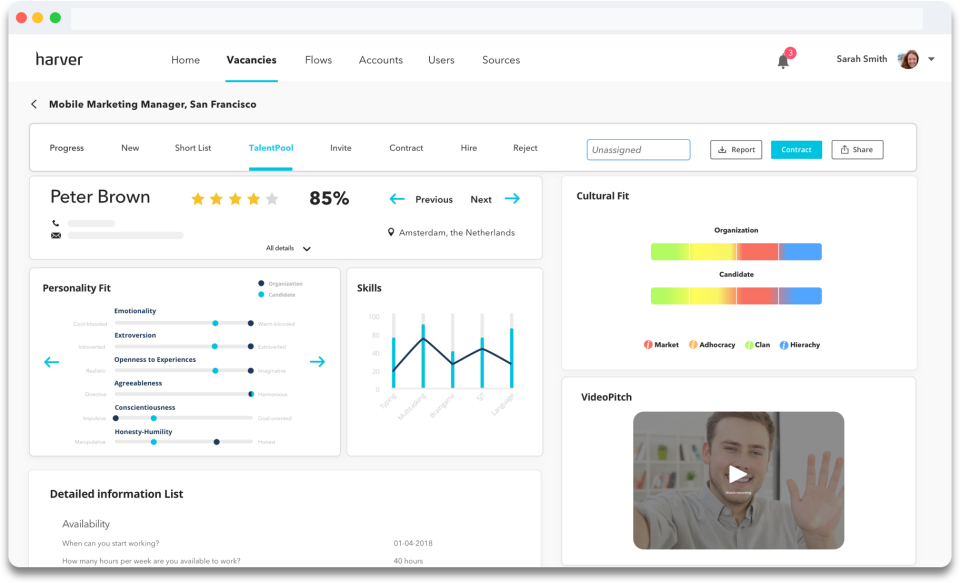
Once again, AI makes this process not only easier but more effective for the hiring process. Rather than relying on recruiters to assess this information through an interview, AI technology can more accurately gauge a candidate’s skills and qualifications to provide hiring managers with the data they need for an informed decision.
Conclusion
Great talent will always be difficult to find.
Using AI technology makes this task much easier for recruiters. By integrating data-driven technology into the hiring process, recruiters can rest assured that they are making smarter final hiring decisions by qualifying candidates and assessing their skills properly.
