


Introduction
Â
Lifestyles have slowly become more digital over several years now, and this trend has been accelerated since the beginning of the pandemic, even in regions of slower adoption. Having transformed the way customers interact, telcos have since been trying to keep up not only with unprecedented demand for digital services but also the need to engage with customers using contactless methods. As more operators modernize their networks, zero–touch networks help pave the way forward, helping telcos remain relevant and competitive by providing a digital-first customer experience (CX).
How does the zero-touch strategy work?
Â
The all-digital network strategy takes all customer interactions online. It revolutionizes the customer lifecycle from end to end, which includes:
- Enabling faster lead generation and management, attracting younger and more digital lifestyle-oriented customers
- Running marketing campaigns directed at specific customer segments
- Acquiring new customers and activating their accounts
- Ensuring more meaningful customer interactions
- Enriching customer value management through targeted campaigns, promotions, and loyalty programs
- Providing upselling and cross-selling opportunities
- Implementing chatbots, community forums, and other self-support tools
- Automating back-end processes
Top four challenges addressed by zero-touch networks
Customers are increasingly reluctant to visit physical stores and want to be able to resolve issues anytime, anywhere.
Â
Zero-touch networks enable all customer interactions through a website or mobile app, minimizing the need for physical touchpoints. Anyone with access to a connected device can explore and buy services, receive instant support, and more. They help operators implement process automation and AI chatbot integrations for 24x7x365 availability. Operators can automate and digitize everything from sales and marketing activities to customer onboarding and support services.
Customers want more control over their accounts and services with little to no human interaction.
Â
Zero-touch networks let customers control and modify their accounts on their own through self-care apps and using integrations through the social media and chat platforms of their choice. They can customize plans, set the contract term, select the number they want, decide what notifications they want to receive, and more. AI chatbot integrations can be programmed to escalate only issues that cannot be resolved through automated responses to be escalated to a human agent.
Growing competition from other telcos and OTT services.
Â
With zero-touch networks, operators can remain competitive by:
- Swiftly introducing innovative new services, leveraging data to modify their offerings as the market evolves
- Delivering contextual products services for diverse customer segments
- Automating interactions while enabling personalized CX through data insights
- Accelerating sales and support activities through advanced lead generation
Ensuring profits while providing advanced and competitive services.
Â
Zero-touch networks help operators keep their initial investments in network infrastructure and resources low and reduce operational costs. Additionally, the network operates in the public cloud, so operators no longer need to manage elaborate network systems, call centers, and physical stores. Real-time data insights help provide a clear understanding of customer behavior, and since the network and processes are digital, operators can rapidly test and modify their business strategy.
Key capabilities enabled by zero-touch networks
Digital onboarding
Â
Subscribers can self-register online through the operator’s website or mobile app. Once they select the services and plan/s they want and upload their identification documents, operators can verify these documents using eKYC solutions. On verification and payment, the SIM is sent to the subscriber’s postal address, and the account is activated. The whole process is completed online, saving time and ensuring convenience for all involved parties. Operators can streamline the process by implementing automated workflows and RPA in the backend.
Advanced BI insights
Â
Operators can collect and analyze data at every touchpoint and for each interaction, giving them the opportunity to gain a clear picture of what customers want. With advanced analytics, they can generate custom reports to understand individual preferences as well as broader market demands.
Automated customer journeys
Â
By automating digital touchpoints, operators provide more personalized, dynamic, and intelligent customer journeys through various platforms, including chat apps, social media, community forums, and more. Through a holistic view of the customer, they can provide relevant recommendations based on customer behavior and usage patterns of first-time and returning customers. They can also enhance the journeys through guided searches, cross-platform continuity, and more.
Secured networks
Â
More international and regional compliances give operators a framework to ensure improved security for digital networks to counter threats such as identity fraud. In addition to robust eKYC platforms, this also includes technology such as eSIM to securely transmit identity data online.
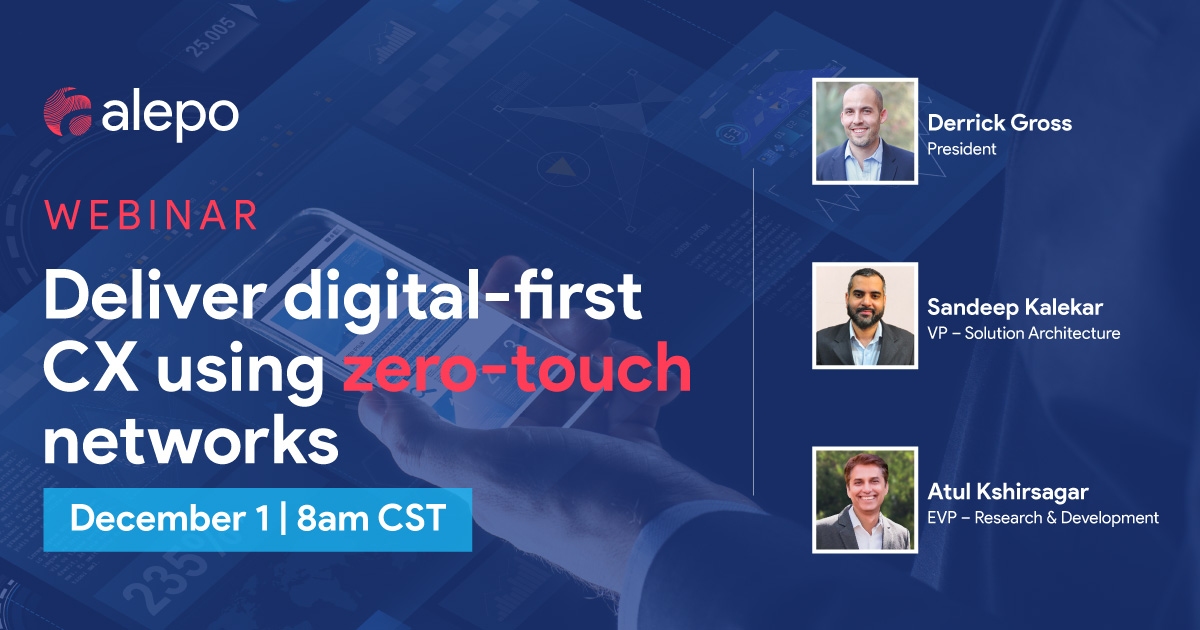
Want an in-depth understanding of how zero-touch networks enable digital-first CX? Attend this free and interactive webinar.
Â
