

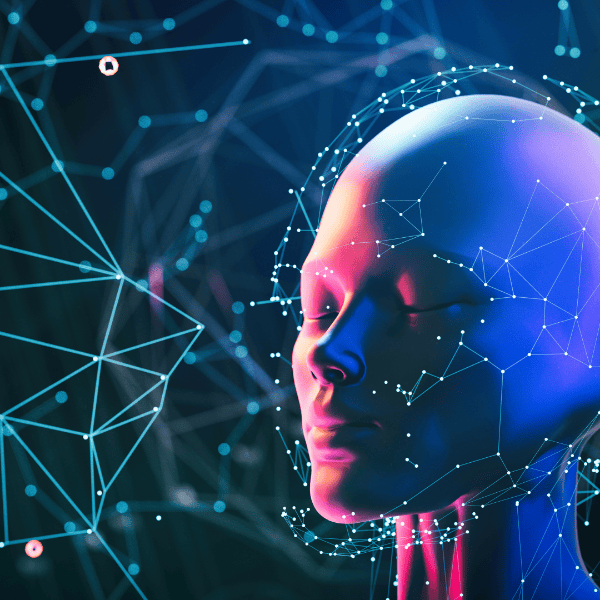
The role of A.I. in business is ever-expanding, with companies increasingly relying on the nascent technology for everything from analysis of data streams to brand representation. However, Markets Insider reports that consumers might not be too keen on A.I. in business ” at least, not if they don’t know about them.
A digital agency group called SYZYGY recently produced research titled Sex, Lies, and A.I. , which yielded interesting finds:
Research ¦ reveals that 79% of Americans believe a new Blade Runner rule’ is needed to make it illegal for A.I. applications such as social media bots, chatbots and virtual assistants to conceal their identity and pose as humans, writes Markets Insider. Nine in 10 (89%) of Americans believe that the use of A.I. in marketing should be regulated with a legally-binding code of conduct and almost three-quarters (71%) think that brands should need their explicit consent before using A.I. when marketing to them.
This is an interesting find, considering that advertising professionals who are turning to A.I. are generally looking at how they can make these machines seem more human. Neil Davidson of HeyHuman argues that software that imbues machines with emotional intelligence (EI), a trait increasingly valued in the human workplace, is the beating heart of AI.
Its ability to understand human feelings and emotional input means AI can learn from information to provide human-like responses, writes Davidson. While the applications for EI have, to date, been largely within the medical field, there’s little doubt the commercial applications for advertisers are hugely significant. As these become more apparent, there’s little doubt funding for this technology will rise exponentially.
However, Davidson also concedes that the impact of public opinion which is influenced in great part by popular culture “ notably films like The Terminator and The Matrix “ may well put the brakes on the confident adoption of AI.
Considering that SYZYGY’s research focused on a Blade Runner rule, Davidson’s analysis of public opinion and pop culture isn’t too hard to believe.
Like It Or Not, There’s No Stopping A.I. ” So How Do You Present It?
Regardless of public opinion, the general consensus is that A.I. will affect all of our lives directly in one way or another ” it’s just a matter of when . The Motley Fool reports that the entire artificial intelligence market will be worth $59.8 billion by 2025, especially as it advances in and across multiple industries. The number of lives saved by driverless vehicles unbound by human fallibility is often brought up as a point of contention in the face of A.I.-naysayers, but there are plenty of other ways this new technology can serve humanitarian efforts, including Artificial Intelligence for Disaster Response (AIDR) solutions. Imagine how those hit by hurricanes and earthquakes the world over could benefit from rescue efforts that are less time-consuming, safer, and more optimally coordinated.
However, what’s really up for debate isn’t whether A.I. will disrupt our industries, but rather the manner in which this technology is presented when it does. In the event that marketers really are hit with a Blade Runner rule, or at the very least face a public that is negatively influenced by pop culture, it’s entirely possible that human interaction with customers will become exclusive premiums instead of standard practices. TranslateMedia’s staff imagines as much in their article, Are You Bold Enough to Let AI Represent Your Brand? :
Luxury brands are probably going to excel at this, offering human service where other less exclusive brands let AI manage their customer interactions. Having a human server is going to create exclusive dining experiences; the best hotels will have human staff. Human interaction could ultimately become a mark of distinction and a key selling feature ¦ It’s worth considering how your brand will approach this issue “ should robotic customer service agents be explicit about their non-human nature right from the start? Fundamentally, your brand needs to be open and honest with its audience, even if that means they are less accepting of your AI brand representatives.
This scenario could lead to greater incentive to create even more human A.I., the likes of which we would forget are machines, even when explicitly told they are.
Stuck In An Uncanny Valley
It seems that A.I. in marketing is already suffering from the effects of the so-called uncanny valley, where the closer it gets to replication of true human intelligence as well as physicality, the more uncomfortable it makes those interacting with it feel. Curiously, we’re nowhere near creating A.I. that could really pass as human in marketing, so it’s really more our fear of the future, our knowledge of an upcoming valley in the landscape, that is guiding public perception of this issue.
In the end, it will likely be performance that decides whether it’s better for brands to employ living, breathing humans, or the artificial specter of one. Even if customers find that human interaction is what draws them to one brand over another, A.I. usage will drive down costs and become so commonplace that brands and consumers will both benefit from them.
The next step would be development of A.I. with robust enough E.I. software that they, and our interactions with them, seem so human as to be indistinguishable from the real thing ” even if we know they’re not. This would allow us all of the positive social aspects that come with human-to-human interaction, without the capacity for human error or negativity. This experience will have to overcome the public fear and perception sowed by pop culture movies that paint A.I. as a social antagonist.
While that day is a long way away, it’s worth it to start contemplating how your brand will handle A.I. in its marketing and interactions sooner, rather than later.
