

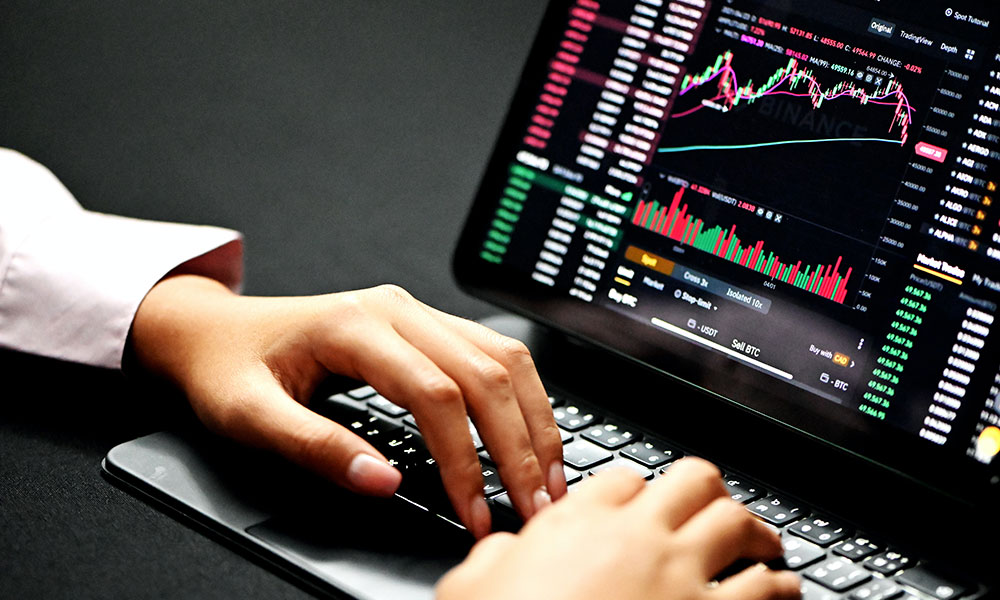
As inflation rises, we see an increase in ads and guides for online trading. While many currencies are decreasing in value, traders can invest in other assets to secure their capital or even benefit from falling market rates.
When you are new to trading, you can easily make mistakes. Learning the right skills, knowledge, and behavior is critical. Here are the most important competences and traits for online trading beginners.
The Risks and Chances of Online Trading
Online trading allows regular individuals access to the stock market from the comfort of their own home. Online brokers give us the necessary platform to invest into several assets, and build a portfolio to increase and secure our capital.
Different types of markets, assets, and trading strategies have varied characteristics. Some allow us to benefit quickly from volatile market rates, like CFD and forex trading. Others help us increase our income slowly but steadily with high security, like ETF trading.
Many online brokers cover multiple markets and assets. Others specialize on specific trading strategies and instruments, like foreign exchange trading.
By choosing the right broker and the trading strategy that suits our talents and goals, we can gain revenue. However, trading is always tied to a risk, as well. When we make wrong investment choices, we can lose the money we spent and more.
To trade effectively, we need to fulfill some requirements. Some of them are innate characteristics, others can be learned with some effort and the right resources.
Important Prerequisites for Online Trading
The prerequisites we need for successful trading can be divided into three categories. They are:
- A Trader’s Traits
- A Trader’s Knowledge
- A Trader’s Skills
Traits
Some people have traits that make them more suitable for trading than others. That does not mean that it is impossible to improve the lack of these traits, it just makes it easier for some individuals to trade successfully.
- Risk Tolerance
A certain bravery is needed when you start trading. Since risk is not 100 % avoidable, it is always possible to lose the money you invested. You need to be able to take these risks, both financially and mentally.
- Self-Reflection
A part of this mental fortitude is to be able to bounce back after you have failed a trade as long as you are able to recognize and adjust flawed behavior, and have enough capital to risk without tempting bankruptcy.
Professional trader Andre Witzel, for example, started trading without preparation and lost a lot of money. Instead of giving up, he learned from his mistakes. Now he is both a successful trader and shares his experiences with others to help them avoid the same starting problems.
- Patience
Some trading strategies are based on waiting for the opportune moments to open and close trades. If we buy or sell assets too soon, we can miss out on revenue.
Additionally, for most investors, trading does not immediately end in wealth. Impatient traders might abandon trading or won’t fully take advantage of trading strategies. ETF trading, for example, will often only start to show benefits after several years.
- Analytical Mind
Traders benefit from an analytical and alert mind. Much of trading is based on market analysis. You use statistics and a lot of data to find patterns and predict market movements.
At the same time, you need to be able to watch the markets and recognize the most beneficial moments. Naturally, an attentive mind and mathematical talent help with this.
- Discipline
Self-control is an important ability for traders. You need to be able to both recognize uncontrolled behavior and stop yourself from making emotional decisions. The same applies to failed trades, which can frequently lead to increased trades in hopes of making the lost money back. Being able to stop yourself and make data-based decisions is critical.
Knowledge
Traders need to learn what they can about the markets, trading itself, and everything that influences market values. This way, they can make informed decisions and efficient use of the trading strategies they are implementing.
They need to know which markets exist and how they work. This includes:
- any processes on the market, like how values are created, and the specific characteristics of different markets and asset types.
- Information about the different trading strategies and which fit which goals.
- knowledge about the interdependencies that influence the markets. These might be political events, pop culture, and much more.
Skills
Naturally, learning how to use trading methods is critical for investing. You need to know, which trading strategy should be used on which market, with which assets, and in which moments. Over time, we build expertise in our trading strategy and can use this skill efficiently.
- For example, when we are Scalping, we make many transactions that never last longer than a few minutes. That’s why we should use volatile markets, in which the values rise and fall often. With this strategy, we make a lot of small revenue that adds up over time. This makes it important to pick a broker with small fees for individual transactions.
Risk & Money Management
Risk & money management are essential tools for trading. You use these methods to determine, how much capital you have and how much you can afford to lose. This helps you find the assets and trading strategies that align with your risk tolerance and goals, and minimize losses. Here, you examine your wealth and options, and implement limits to avoid bankruptcy.
Conclusion
Trading gives us the chance to increase and secure our capital. However, to benefit from the investments, instead of worsening our financial situation, we need the right prerequisites.
These include both the appropriate skills and background knowledge for trading. Successful traders also profit from certain character traits. Characteristics like patience and an analytical mind help us make good trading decisions with ease.
The experiences and knowledge of successful traders can help us find the right resources and starting points. Many of them share them online.
