

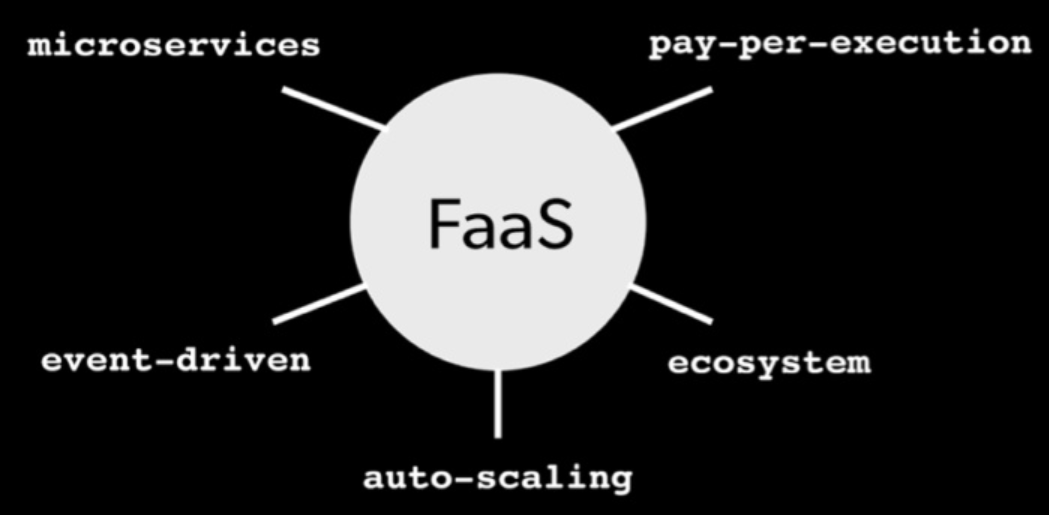
FaaS and serverless are two terms that get tossed around often, but for many people, they still remain mysterious.
What is FaaS?
FaaS is short for Function-as-a-Service. It’s an on-demand serverless application platform that helps you instantly deploy and run complex cloud applications with very little code.
It enables developers to create serverless applications that run in the cloud with zero hassle; allowing them to focus on building their business and reap the benefits of having cheaper costs, better scalability and access to premium resources without having to manage their infrastructure
What does it mean to be “serverless?”
A serverless architecture is a software model that deploys your code to the cloud without having to manage servers or infrastructure. Serverless computing has revolutionized the way businesses tackle modern challenges, with data centers becoming more compact, sophisticated and decentralized.
Serverless refers to the “stateless” architecture of an infrastructure where components are managed by a third-party provider. With a serverless architecture, you don’t need to maintain and run your own cluster.
Why should you care about FaaS or serverless?
A FaaS or Serverless cloud platform is a serverless environment. Specifically, it is an environment that does not need to load and store its own application data and flows in the same manner as a traditional programming framework. Such a cloud platform on the other hand, has application servers that are responsible for taking care of different aspects of user interaction. FaaS or Serverless is a technology that allows developers to run applications with little to no effort.
There are many benefits of FaaS or Serverless, but the biggest one is that it gives you more freedom to adapt. You don’t have to worry about constantly rebooting servers, or upgrading hardware.
Whether you’re considering a move from traditional infrastructure or just want to learn more about these buzzwords, this post will help clarify the difference between FaaS and serverless — and why it matters in the long run.
Serverless Isn’t Perfect
Serverless computing is not a silver bullet. It has its downsides and limitations, but it’s still an important alternative to traditional servers.
- Serverless computing can be expensive: You have to pay for the underlying infrastructure that handles your code and data (e.g., containers) on top of which you’re running your applications. This may not be cheap, especially if you’re using Docker or Kubernetes as an orchestration tool instead of AWS Lambda and API Gateway as examples here-but even if these tools cost a few dollars per month each, they should still save money over running the same functionality on a traditional dedicated server with an entry-level virtual machine instance running Ubuntu 1604LTS Linux Enterprise Edition (LTS), Ubuntu 1404LTS LTS Server Edition (LE), CentOS 7 RHEL 7 etc..
- It isn’t good for large-scale applications: Since there are no servers involved in this model, scaling out becomes much harder than with other models because there aren’t any single points where application code can be run; instead each instance runs its own separate app within its own container image/executable file (Dockerfile). In addition, there are no shared resources between apps so if one app needs something from another then both need access through their local network interfaces rather than via internet connectivity provided by cloud providers like Amazon Web Services Incorporated(AWS).
FaaS Has Its Drawbacks Too
FaaS is not suitable for every application, workload and business. It’s also not the right choice for every developer or team. It’s also not the right choice for every developer or team. A FaaS platform needs to be flexible, secure and fast in order to be successful. If you’re working on an application with high latency requirements, you can’t expect the same kind of performance that you did in the cloud.
- FaaS isn’t suitable for all applications: If your application requires a high degree of customization or integration with third-party services that aren’t supported by serverless architecture, FaaS may not be a good fit.
- You can’t just slap some code on top of an existing function library and expect it to run smoothly you need a solid understanding of what’s going on under the hood before you start working with these frameworks (and even then there are many considerations).
Serverless Wouldn’t Resolve Every Problem
With serverless you get better manageability, flexibility, and control, but that doesn’t mean it won’t come with its fair share of challenges. If you’re doing serverless architecture, it’s important to ensure each service is well deployed. A serverless architecture can be powerful, but serverless coding will introduce errors and problems to your applications. But it’s just not that bad either. We have now reached the point where we can actually handle errors with ease because of the nature of serverless environments and a lot of automation built into the entire environment.
The crux is that serverless is a new concept, and it may not be perfect for every problem. But it’s an excellent option for some companies and developers.
Serverless Computing is a new Concept and needs More Time to Develop
Serverless computing is a new concept, so the industry is still in its infancy. While serverless computing can be useful for some applications, it’s not perfect. The biggest problem with this approach to cloud computing is that you’re paying for infrastructure that you don’t own or control and the cost of running your code on someone else’s infrastructure still comes out of your pocket.
For example: Let’s say you want to build an application that runs on user accounts (users). You need two things: A database and one or more servers as servers (or “infrastructure”). The costs associated with these two things are included in your bill every month (or year). That means any time one of them goes down or needs maintenance work done, you’ll have to pay again until everything is back up and running smoothly again.
Conclusion
Serverless computing is a platform-as-a-service (PaaS) that drastically reduces the demands on application servers and cloud infrastructure. With FaaS, developers can create two types of applications: an integration layer that sits directly on top of a stream in the digital world and a frontend service such as API gateways or virtual machines (VMs). Serverless architecture simplifies Dev/Ops operations for teams working with real-time data, mobile and IoT devices, heterogeneous environments spanning private, public clouds and hybrid architectures.
In conclusion, serverless technology is set to revolutionize many aspects of software development, including the process of adding new features. Moreover, it can help startups save on operational costs and provide huge value for operators.
The bottom line is that both of these concepts are still in their nascent stages. They’re getting better every day, but they aren’t yet the end-all be-all solution for all of your computing needs. In fact, it’s unlikely that either of them will ever be the perfect solution because different people have different needs out there. That said, we believe that serverless computing has a lot more potential to truly change how people look at IT services than FaaS does at this point in time. If you’re looking for something new and exciting but don’t want to commit too much capital upfront then look no further than serverless computing!
