


If theres one thing that social media companies specialize in, its data. And this they have a lot of it, thanks to their tendency to get users to share information about each waking minute. The large body of data at the disposal of social media companies mirrors how people interact with each other, and at the heart of these interactions lies invaluable information about what individuals and societies hold important. This volume of data, together with the fast rate of data flow for which social media is well known for, represent the essence of big data.
By applying analytics to social media data, big data applications in different industries go beyond the mechanics of interaction to seeing how the content contained in the interactions will affect business performance and peoples view of a brand. Content analytics allows companies to zero in on actionable information from the messages that users post. For instance, analytics tools can be programmed to track negative or positive sentiment about a brand as this could threaten reputation and revenue.
Big data is a Driving Factor Behind Every Marketing Decision
Just like any other industry, social media companies find big data useful for analyzing markets and predicting consumer behavior. In 2012, Jay Parikh, engineering VP at Facebook, revealed that Facebook handles over 500 terabytes of data every day, 300 million photos daily, 2.6 billion likes and 2.5 billion content uploads. All this data is processed in mere minutes giving Facebook insight into user reactions and the ability to roll out or modify its offering.
Whats more, correlating content to demographics of users age, gender, marital status, geographic location, income levels, educational achievement, inclination to purchase certain products allows a company to know more about the people its dealing with. Such analysis also reveals how adverts are doing among different customer segments. This is very beneficial as advertisers can react in near real time and adjust campaigns to make more revenue. Analysis of social media data collected by a retailer could for instance reveal that unmarried females between 25 and 35 are suitable candidates for a discount offer on gym equipment.
Based on this information, the retailer might decide to target these candidates with discount offers through Twitter, Facebook and other media. If analytics show the uptake and comments are bad, the offer can be refined to improve performance.
A lot of companies appreciate the powerful nature of social media for personal-level interaction with their customers. Though product customization existed since before social media, the extent and granularity to which its done by businesses that collect social media data is astounding. Through social media analytics tools, these companies can make data-driven decisions by the minute.
Furthermore, social media analytics tools mean that businesses can look beyond the chatter contained in unstructured data to find meaningful information that can guide decisions and action. Through analysis of statistical data such as impressions per post, audience distribution, interactions on mobile versus desktop, responses (e.g retweets), click-through rates for URLs embeds, and transactional history, a company can measure the effectiveness of its social media strategy for promoting brand recognition and loyalty.
Big data also makes it possible to gain insight into the roles people play within social media groups. Users with a large number of followers for instance, can be considered to be influencers. By singling out such people, a company can monitor trends in discussion threads and even participate in such discussions.
The Future: Big Data Will Continue to Accelerate the Intrusion of Social Media Companies into Peoples Privacy
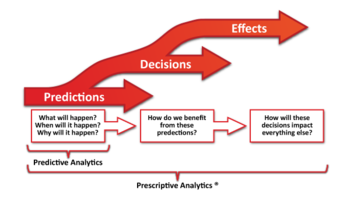
As Facebook, Twitter, Instagram and Pinterest continue to monetize their offerings, it would appear that the benefits that big data will have for social media in the future will become even more personalized. A study published by researchers from Cambridge and Stanford Universities shows that Facebook can use its data to predict peoples personality with more accuracy than close friends and families. Every like, share, follow and comment, is data that tells social media companies what you like or dislike, what your actions will be, which cause or brand you will support and what youre likely to buy. Not to mention, any action you take on browsers and search engines today will most likely link back to your social media profile, leaving behind a long trail of digital footprint that can be used for detecting your next moves. This situation will only intensify as people become more reliant on social media platforms for accessing and sharing information.
