


Each day, 2.5 quintillion bytes of big data are created. More than likely, youre familiar with the concepts of content marketing and big data. But, you might not know exactly how they can work together to create the best possible output.
A common practice that a lot of marketers immerse themselves in is judging their content content purely based on how many pairs of eyes they attract. In actuality, branded material needs to be focused on drawing in the eyes of people of whom are most likely to buy. More often than not, you are only selling to a specific subset of the population that is exposed to your messaging.
While the primary goal of any content marketing strategy is to spark interest in your product or service, randomly creating material without data-driven reasoning is a shot in the dark. Effective storytelling as all about being in the right place at the right time. Lets talk about the profound impact big data has on your ability to do so.
Precise Targeting
Perhaps the biggest advantage of big data is that you can conduct in-depth research and craft your content according to popular demand. There are many ways to mine information across different channels to pinpoint the type of content you should create.
For starters, its important to know that social media accounts for roughly 80% of the big data currently available. Tools like Mention will give you a deeper look into what your target audience is buzzing about.
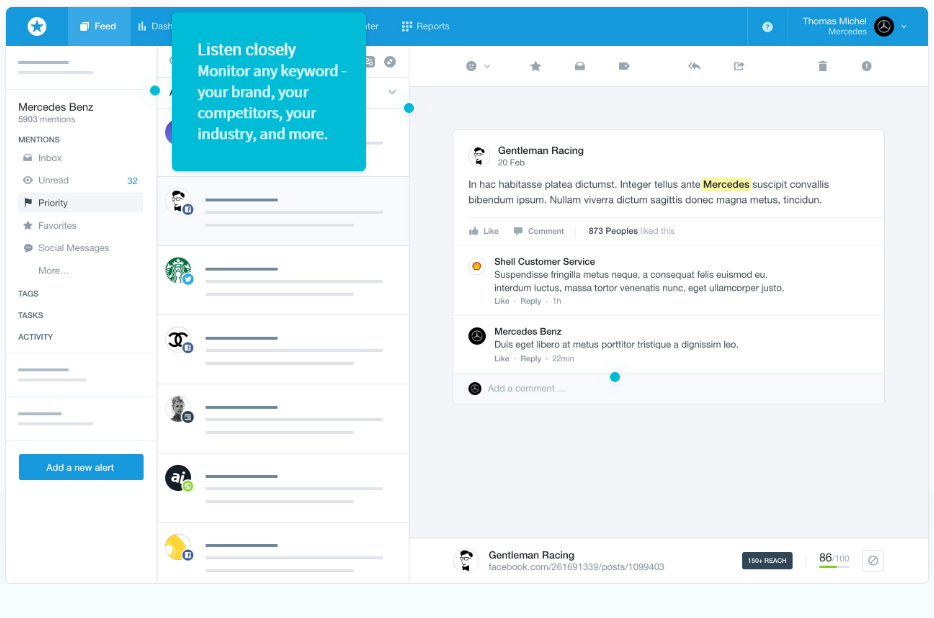
This platform enables you to analyze real-time data on what people are saying across social media in terms of your brand, competitors, industry as a whole, or specific keywords. From here, you can identify pressing issues or concerns and get a much better idea about what types of people are more likely to consume your brand material.
Buzzsumo is another great research tool that lets you crawl the internet and index all the latest content being produced in relation to certain topic. With this resource, you see statistics on performance such as how many times a particular piece was shared, or how much attention it attracted overall.

Basically, big data gives you insights that enable you to look before you leap when developing a content strategy. Profitable storytelling depends heavily on your ability to create material that is relevant and sparks a strong reaction from the consumer.
By understanding your ideal customers preferences, you can shape your messaging to connect directly with their interests, socioeconomic profiles, and other demographics. When you have a consistent, in-depth grasp on your target audience, your storytelling abilities will skyrocket.
Fuel the Buyers Journey
The buyers journey, or sales funnel, is the process in which a consumer goes from being unaware of a specific problem to actually purchasing a solution from a company.

The buyers journey can look very different across certain industries. When defining yours, take into account factors like pricing, business model, and audience. Each industry will have a stronger emphasis on different stages of the journey. B2C customers typically spend less time in the middle of the funnel whereas B2B customers require a higher level of lead nurturing, relationship building, and engagement prior to making a purchase.
Big data allows you to enhance specific aspects of your content so fits the mold in the buyers journey.
It is crucial to gain insights early on about the digital body language being used. From here, you can leverage this information to seamlessly move prospects down the marketing funnel with personalized content relevant to their interests.
This concept opens the door for more efficient lead scoring with predictive analysis. Predictive lead scoring provides data-driven insights that leverage historical information and creates an educated model on how to best advance your tactics. It also sheds light on certain patterns in sales or marketing efficiency. With this information, you can look for certain traits in consumers and pinpoint an ideal lead to target with your content. This can do wonders to save time and resources while boosting your ROI.
Digital body language is typically created in regards to the online activities of consumers. Data in this area can be harvested for metrics on things like:
- Website visits
- Social media activity
- Prior research the prospect has conducted
Using these insights, you can identify which products to offer to specific customers with the best chance of converting through targeted content.
A study conducted by SiriusDecisions found that 90% of organizations surveyed agreed that predictive lead scoring provides more value than traditional methods. 6Sense is a phenomenal tool that uses predictive models to extract key information on the most qualified leads to target with your content strategy at each point in the buyers journey.
Doing this effectively will require a good amount from collaboration of your marketing and sales team.
If you havent already, consider implementing campaign management processes to keep everyone on the same page, from content research all the way to the point of sale. As most businesses know, a single lapse can result in the loss of a lead, or more importantly, loss of a sale. Use a collaboration and file sharing tool like WorkZone to go beyond simple to-do list project management by identifying task dependencies and speeding up lagging phases.
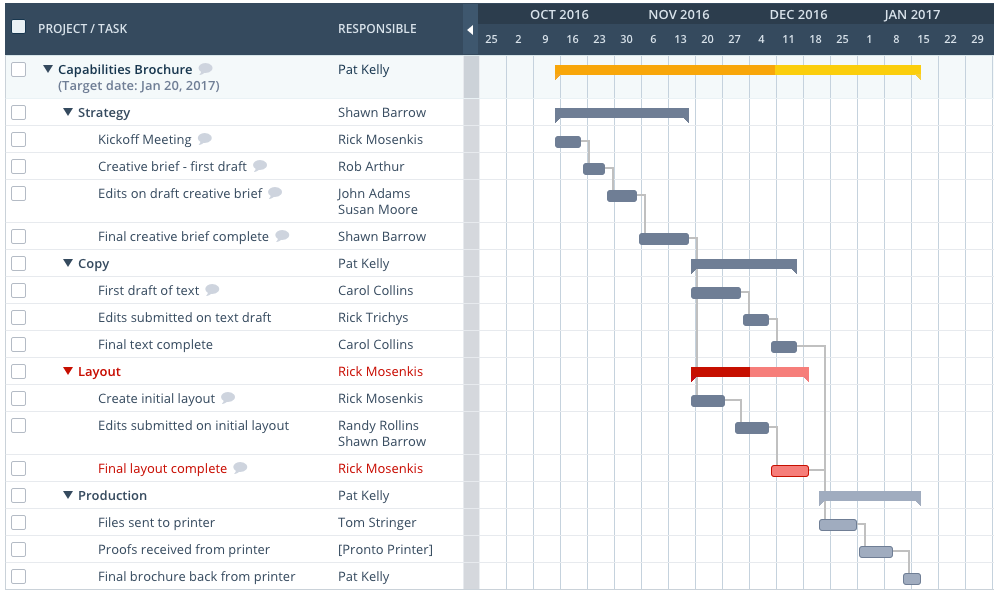
Creating a more engaging buyers journey that results in stronger leads should be one of the primary objectives in your content strategy. Leveraging the right data is crucial in making the entire operation run smoothly both internally and externally.
Measure Performance
One of the most important things to remember about digital marketing as a whole is that there are very few (if any) guarantees.
So youve spent a lot of time doing research on how to craft your content strategy to receive the best ROI. Once it hits the airwaves, its time to track and measure how well it performs with the masses.
Think of your content marketing strategy as an entity that is constantly growing and evolving. Each piece of branded material you publish will yield data shedding light on what works and what doesnt.
Improving content performance typically follows a pattern of:
- Hypothesizing
- Publishing based on that hypothesis
- Collecting data
- Analyzing results
- Refining your approach
Now, there are a plethora of different metrics to keep an eye on when looking at your content data. Here are some of the most important ones to analyze:
Engagement
This tells you how the audience received your piece of content and what they did with it. Basically, the more compelling your material is, the longer the audience will be inclined to stick around, share it, and reply to it. Tools like Chartbeat help you measure this information and provides insight on how to capitalize. Chartbeat is an incredibly useful resource for publishers wanting to increase viewer engagement and grow advertising revenues (who doesnt). The tool offers in-depth information regarding engagement patterns of readers on your site. It also tells you what type of content resonates with users and what doesnt, allowing editorial staff to tailor site content accordingly.
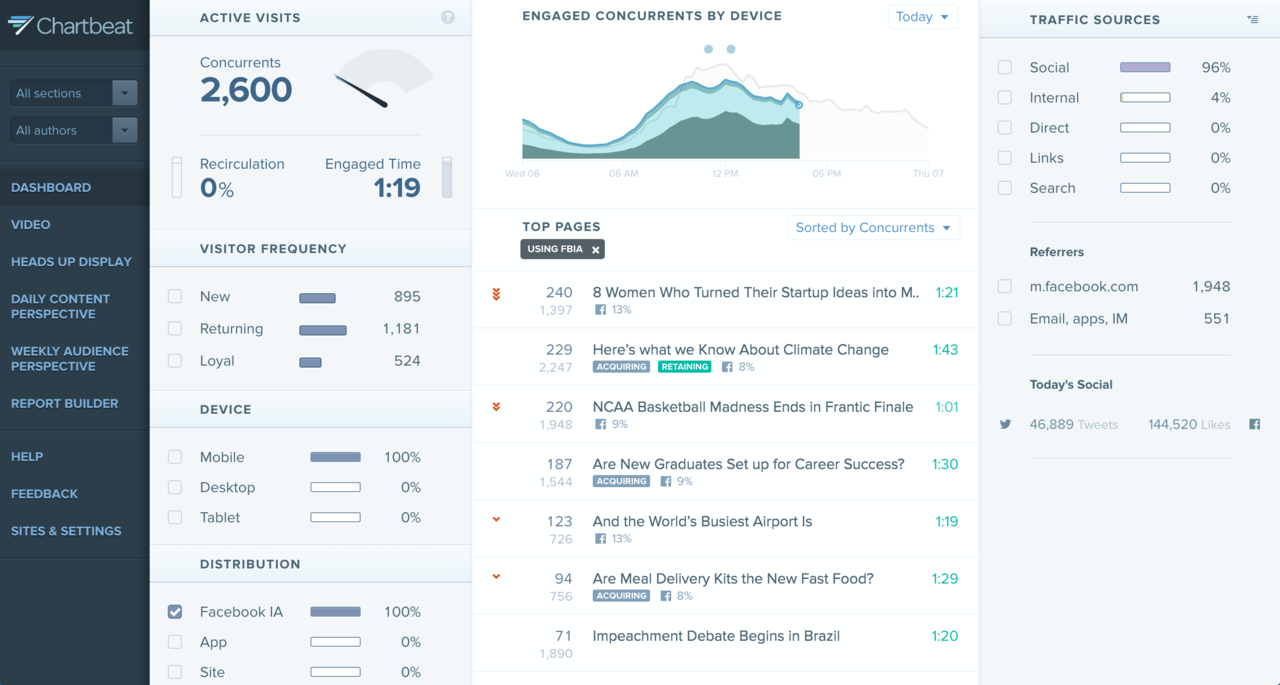
Such data has far-reaching implications in marketing your content. Unconventional behavioral insights from content interaction not only allow advertisers to target the right audience with the right ads, but also help publishers earn premium pricing for their inventory.
Most valuable referrers
Using Google Analytics, you can pick up information on your traffic sources. From there, you can make inferences on how to gear the content itself. For example, if a good deal of your traffic is coming from Twitter, from viewers using mobile devices who spend an average of 35 seconds on your content, it might be a good idea to make your content short and concise to fit their habits and preferences.
Repeat vs unique visitors
While establishing brand loyalty is great, you should always be working toward a certain number of new visitors that can turn into potential leads. Almost all analytics tools capture this metric. However, it is important to define what loyalty actually means when it comes to repeat visitors.
ROI
Putting it all together, comparing the cost of creation and publishing to the amount earned is what truly defines the value of your content. This is where you pinpoint what kinds of pieces you should invest in further, and which ones to leave behind.
The way you measure and refine your content determines the life and death of your strategy. Each decision you make should be backed with the proper data from previous attempts.
Over to You
As you can see, content marketing and big data go hand-in-hand. The trick is harnessing the power of both. In the world of digital marketing, there will always be plenty of opportunities to grow. The rise of the conversational interface brings AI, mobile commerce, and collaborative apps into the mix, in order to deliver a frictionless experience for the content consumer, making the complexity paradox truer than ever.
With the vast amount of big data available, tuning in on which metrics are most important can be like finding a needle in a haystack. This is very much a game of trial and error. The more you conduct research and analyze returns, the clearer the needs of your content marketing and storytelling efforts will become.
