


The worlds of business and retail never stay still for very long. New innovations and technologies appear that can turn entire industries on their head in a moment and if you are not paying attention to them, you can quickly get left behind by your rivals and competitors.
3D printing is one of these new technologies looking to revolutionise the sector and it will affect every industry around the world. However, one of it’s more significant effects is that it is currently playing a key role in transforming the supply chain. It is impacting every stage of the product development lifecycle, from the inception of the product itself to the very nature of the packaging, presentation and delivery processes associated with it.
Firstly, if you are unaware, 3D printing is a process of using a three-dimensional digital model to create a physical object by adding many thin layers of material in succession. So let’s take a look at how 3D printing affects supply chain and just what is the role of 3D printing in SCM?
How 3D Design is Revolutionising The Supply Chain
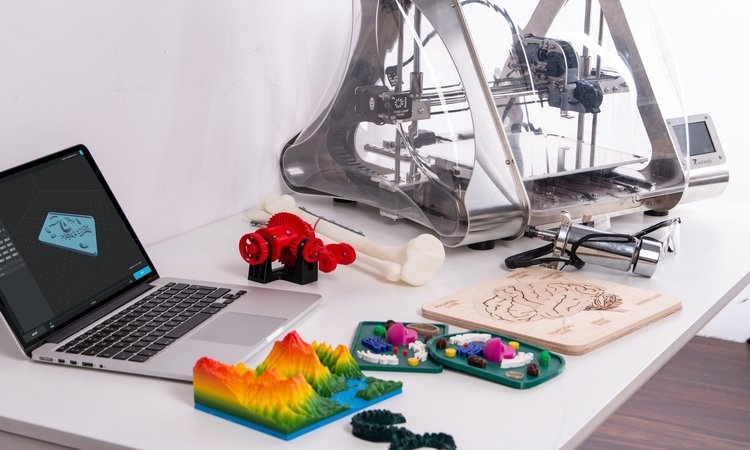
What 3D printing in the supply chain offers for modern retailers is the chance of transforming your marketing approach as well as your supply chain management in order to make your entire business operations more efficient. The enormous impact that 3D design and printing can have on a supply chain cannot be understated. It has the potential to entirely revolutise the process of it from the ground up. But the main ways that 3D design is set to shape the supply chain of the future are:
1. Drastically Improved Efficiency Levels
3D printing is inherently better for the environment and an energy-efficient solution to a number of stages of the retail cycle. All this reduction in the amount of stages a product has to go through makes the entire production method much more cost-efficient for your business which means you can offer items to customers at a more reasonable rate. The very nature of 3D printing itself means that there is essentially zero waste in the manufacturing stage. This level of efficiency drastically lowers the potential of overproduction, overstocking, inventory errors and dramatically reduces the carbon footprint of your company.
2. Product Customisation
As a process which requires no tools or manual labour to form, 3D printing allows a manufacturer a level of freedom that has previously been unattainable. Catering to specific client demands and requests is made easier than ever before as you can offer your customers a much more personal and unique experience. In terms of your supply chain, it becomes much more agile and adept at adapting rapidly to any changes or fluctuations in the market allowing you to always stay on top of current proceedings.
3. Portable Production
The nature of the 3D printing technology means it is incredibly mobile. In relation to your supply chain, this means your business will be able to make production to individual or local markets much more effectively and efficiently. Your company will have the ability to produce components closer to home or closer to your customers, speeding up production times and deliveries as well as reducing the reliance on any imported products. This lets you keep costs down and not be beholden to changes in markets overseas.
4. Improved time-to-market
As previously mentioned, one of the most desirable aspects of 3D printing technology is the speed of which it can occur. The sheer number of components, processes and people required to manufacture something is reduced which in turn impacts on your supply chain. You will be able to save money on production costs, implement improvements at a faster pace all of which reduces your products time-to-market, getting your goods into customers hands sooner.
5. Quicker Production Rates
On average, 3D printing can produce the parts you need at a faster rate than traditional manufacturing technologies. Some 3D printing technologies even let you print interlocking parts. All of this speeds up production of products and reduces the time and effort required to assemble things. One specific area where 3D printing is incredibly helpful is in relation to prototypes. Through making the design process quicker, as well as production as a whole, 3D printing helps deliver working prototypes that are able to be assessed in a shorter time than humans would be able to do. This means you can iron out any kinks or problems in a shorter time and get the product you want more efficiently
6. Lower Overall Costs
By involving 3D printing in your supply chain, you can save a lot of money that can add up along the way. Through modifying and streamlining the current way a supply chain operates, with the use of suppliers, manufacturers, distributors, and retailers, 3D printing can help reduce costs at every single stage. It may be the case you no longer even need manufacturers and distributors due to the fact that you are able to create everything you need inside your stores or warehouses themselves. By impacting on every part of the supply chain itself, 3D printing could be a solution that ends up not just saving you time, but a lot of money as well.
Companies Already Utilising 3D Design Processes
When it comes to finding a 3D printing supply chain case study, it helps to look at some leading examples from across a variety of industries. So here are some companies to take inspiration from when it comes to involving 3D printing into different areas of your supply chain:
Home Depot: Customer experience is key for every business but Home Depot tried to take their approach to it one step further by involving 3D printing. Many of their customers want to find replacement parts or tools for either their homes or businesses. However many may also be unfamiliar with or uncertain of using 3D printing tools when compared to what they have always been accustomed to. To alleviate these concerns, Home Depot allowed their customers to observe 3D printing demonstrations in an attempt to familiarise them with the concept of the new technology. By involving customers in the process and helping them understand how a 3D printed part or tool can be just as good as an original one, people were more likely to trust the concept of 3D printing in relation to a Home Depot store. Through involving their customers into the very process of the supply chain itself, Home Depot was able to gain an added level of trust and perceived expertise from the very audience they were targeting.
Skoda: As a multinational automobile manufacturer, Skoda needed to find an edge, no matter how small or significant, over the competition in an incredibly competitive marketplace. One way they found that worked was to involve 3D design into their customer experience. Skoda launched a campaign where a client would get a miniature 3D printed Å KODA car that had been entirely created via 3D printing. The customer was able to design their very own dream car, and once complete, the 3D printed model would be ready for them whenever they wanted it. By doing this seemingly small promotion, Skoda were able to offer an incredibly high level of personalisation to their customer service, as well as collect data on the sorts of things that their customers were looking for in relation to car designs or features.
Danit Pelag: Arguably no fashion embraced the potential of 3D printing with as much fervor as Danit Pelag. On her website, customers are able to personalise and order 3D printed items of clothing that are available to purchase online. With a focus on offering sustainable and environmentally-friendly clothing, 3D printing is one way to achieve this. This approach also streamlines the entire manufacturing process significantly as customers can acquire the exact clothes they want without ever having to leave their house. That means: no more waiting for delivery times, no more cancelled or mislaid shipping mishaps, no more added fees for delivery and no more added carbon footprint due to transportation. With this revolutionary approach to fashion, customers are able to get the clothes they want, when they want them, and all they will need to make it happen is a 3D printer, something that is becoming much more available as the years go by.
Final Thoughts
3D printing is not just about reducing costs, time of production and delivery times, but it can also affect customer experience with levels of personalisation that were previously unattainable. The supply chain is changing and 3D is one of the main reasons why. It can be applied to almost any industry and the possibilities it can offer your business seem essentially endless. With many of the world’s biggest companies already incorporating 3D printing into their supply chain processes, from manufacturing and production to delivery and packaging, it’s important that you start involving 3D printing into your business operations before it’s too late
