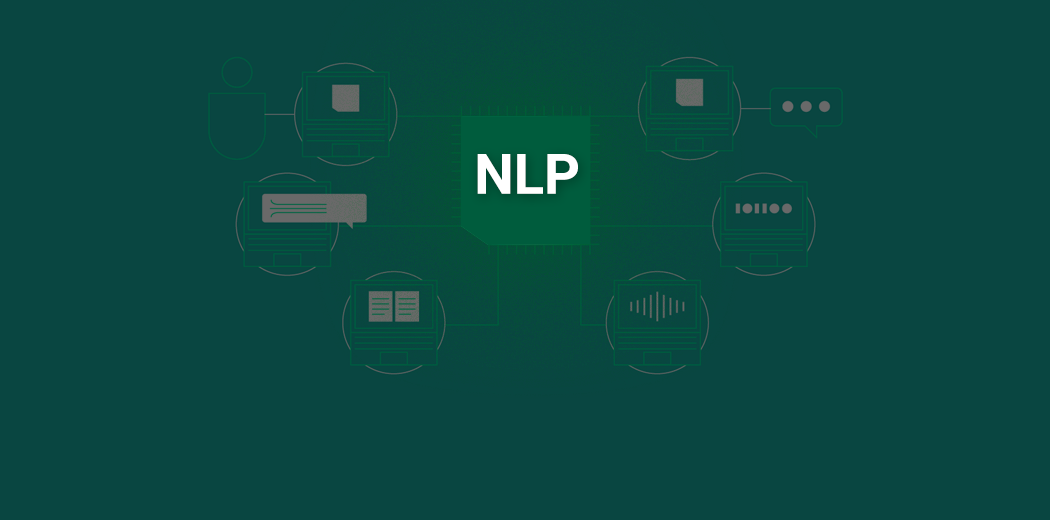
Natural Language Processing (NLP), an artificial intelligence area, seeks to understand the semantics and implications of human languages.
It focuses on extracting relevant data from the text and using that data to train data models. NLP power the capabilities that include text mining, text classification, text analysis, sentiment analysis, speech recognition and among others.
So, why are so many businesses interested in NLP method? Essentially because these advancements may provide them with a wide variety of critical bits of knowledge and arrangements that solve llanguage process-related challenges that customers may confront when interacting with a product.
As a result, in this post, we’ll go through the best 10 Natural Language Processing (NLP) method and libraries that may use to create real-world applications.Â
Hugging Faces TransformersÂ
Thousands of pre-trained models are available in Transformers to execute jobs in various modalities, including text, vision, and audio. Text (text classification, information extraction, question answering, summarization, translation, text generation in over 100 languages), images (image classification, object detection, and segmentation), and audio (audio classification, object detection, and segmentation) can all benefit from these models (speech recognition and audio classification).
Optical character recognition, information extraction from scanned documents, video categorization, are all tasks that transformer models can handle.
SpaCy
spaCy is a Python and Cython-based open-source library for Natural Language Processing. It’s based on cutting-edge research and was constructed from the ground up to be utilized in industrial settings. spaCy enables tokenization and training for over 60 languages and provides pre-trained pipelines..
It comes with cutting-edge speed and neural network models for tagging, parsing, named entity identification, text classification, multi-task learning with pre-trained transformers like BERT, a production-ready training system, and simple model packaging, deployment, and workflow management. spaCy is a for-profit open-source project that is licensed under the MIT license.
Rosetta
Rosetta is a TensorFlow-based privacy-preserving framework. It works with common privacy-preserving computing technologies, including encryption, federated learning, and trusted execution environments. Rosetta takes advantage of TensorFlow’s APIs and enables the easy conversion of regular TensorFlow code into a privacy-preserving format.
Gensim
Gensim is a Python package for extensive corpus topic modeling, document indexing, and similarity retrieval. The NLP method and information retrieval (IR) communities are the intended audience. Popular algorithms such as online Latent Semantic Analysis (LSA/LSI/SVD), Latent Dirichlet Allocation (LDA), Random Projections (RP), Hierarchical Dirichlet Process (HDP), and word2vec deep learning have efficient multicore implementations in Gensim.
CoreNLP
Stanford CoreNLP is a Java-based suite of natural language analysis tools. It can normalize and interpret dates, times, and quantitative amounts, mark up the structure of sentences in terms of phrases or word dependencies and highlight which noun phrases belong to the same things from raw human language text input.
Pattern
The pattern is a Python web mining package. It includes online services (Google, Twitter, Wikipedia), a web crawler, and an HTML DOM parser for data mining. Part-of-speech taggers, n-gram search, sentiment analysis, and WordNet are among the Natural Language Processing models available.Â
Machine Learning models are implemented, including vector space models, clustering, and classification (KNN, SVM, Perceptron). Network Analysis: graph centrality and visualization may also be done using patterns.
Snips NLU
Snips NLU is a Python module that allows you to extract structured information from natural language phrases. When a person uses natural language to communicate with an AI, their words must be translated into a machine-readable description of what they intended. Snips NLU’s NLU (Natural Language Understanding) engine first recognizes the user’s purpose (a.k.a. the intent), then extracts the query’s parameters (called slots).
NLP ArchitectÂ
NLP Architect is a Python toolkit that allows you to experiment with advanced deep learning topologies and approaches for improving Natural Language Processing and Natural Language Understanding Neural Networks. It’s a library meant to be adaptable and extensible, allowing for the quick and easy integration of language process models into applications and the display of optimized models.
Conclusion
After learning about the functionality and Nlp method of each library, we can see that while they all do similar NLP tasks, they all have different features/approaches for certain NLP methods and applications. The use of these NLP libraries in Python is mostly determined by the NLP job at hand.