


Using AI for sales has long been on the charts.
Why?
Because 50% of businesses have reportedly adopted AI in at least one business function, so how could sales stay untouched?
When we talk about the music industry, artificial intelligence has traditionally been used for music composition and production. Using AI for sales is practically unheard of.
However, using AI for sales offers countless benefits to music creators, aggregators, and brands. Let’s talk about that in detail.
4 Benefits of Leveraging AI for Sales in the Music Industry
When talking about using AI for sales, we need to go beyond direct sales. We also want to explore how AI helps with customer experience, price forecasting, and cost-cutting ”all of which impact sales in some capacity.
Here are the top benefits of using AI for sales:
1. Personalized Customer Experience
Ever wondered how YouTube and Spotify can recommend on-point music tracks every single time?
That’s AI at work!
AI analytics reveal hidden customer insights that can be used to create personalized and hyper-focused customer experiences ”one of the sure-fire strategies to increase your sales.
Why so?
Because modern consumers crave personalization from brands.

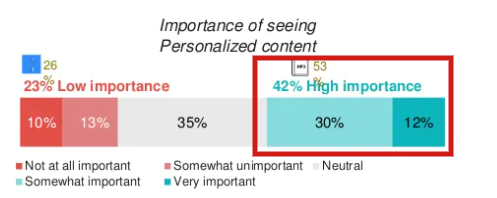
                                                               Image via Adobe
At the same time, 63% of consumers don’t like brands to use creepy tactics to access their behavioral data.
That’s why it makes sense to collect consumer data subtly (and ethically) through AI-backed analytics tools. Then, then use those insights to refine your product recommendations.
How does that work?
AI-backed CRM tools track customers across multiple touchpoints to learn which websites they visit, which music genres engage them, and which artists they like.
They also analyze customer interactions with your brand ”the kind of music they’ve downloaded, their listening habits, and average listening time.
There are some AI-driven social listening tools that can identify customer sentiment about music from the social media conversations of your target audience.
Since AI tools excel at number crunching, they can convert all that raw behavioral data into actionable insights that your sales reps can use to create precise buyer personas and personalized recommendations.
But, that’s not all.
AI tools can tag tracks appropriately without human subjectivity. That helps them match tracks to users with precision.
By using predictive analysis, AI tools can accurately guess what kind of music a listener would prefer to hear or download in their current state.
Need an example?
Adaptive music apps like Weav Run (meant for runners) harness the power of AI to create dynamic soundtracks and playlists that adapt to each runner’s footsteps.
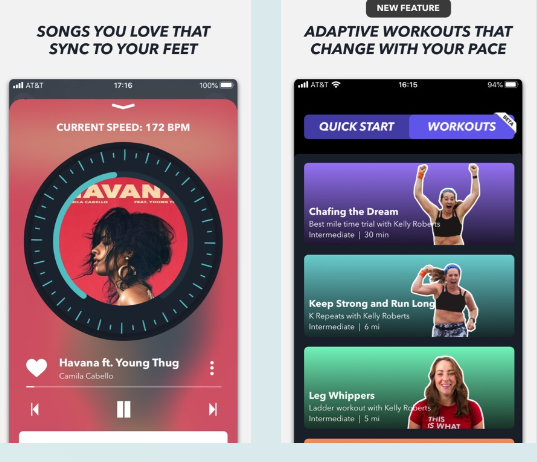
                                                              Image via Weav Run
There are apps that tailor playlists according to listerens’ location, mood, and local weather. By providing such personalized experiences, businesses are sure to win customer loyalty and sales.
2. Reduced Costs
Cost of music production comes down drastically when you use AI-powered music libraries. Royalty-free music is suddenly within your budget, that too without copyright issues, thanks to AI bots.
Similarly, AI studio tools can predict the best compression settings for different music genres. They can also extract background music from multiple tracks to improve music quality, without the added costs.
By using this tactic, music companies like Mubert have targeted low-budget YouTubers looking for cheap background music.
There are other ways in which AI reduces costs.
Sales and distribution are an important part of any business.
But, did you know that sales reps spend only 26.6% of their work time actually selling? The rest of their time is spent in reporting, client communications, and admin work. Often, these tedious tasks drive up overheads in a big way.
However, that was before companies started using AI for sales.
Now, AI tools automate core sales tasks like tracking appointments and entering updates in CRMs. With more free time on hand, sellers can focus on forging client relationships, honing their skills, and making more money for your company.
3. Price Optimization
AI-based sales tools can remove the guesswork out of product pricing and risk-proof your music business. These tools can predict (with a high degree of accuracy) the best price for your products (apps, events, etc.) using industry benchmarks.
What’s more?
AI can identify and score high-potential accounts (from their history) so that your sales reps can prioritize them in outreach campaigns and upsell effectively. Data-driven pricing decisions become super-easy when you use these machine learning-enabled tools.
What else?
AI-based tools can create dynamic and time-sensitive pricing deals for each customer, further improving your conversion rates. Pre-approved discount limits are automatically factored in to protect your investment.
In short, leveraging AI for music sales makes your pricing proactive rather than reactive.
4. Get More Out of Your Music
One of the best ways through which AI can help you market your music to boost sales is by helping you get the most out of your music tracks.
Through AI, you can seamlessly edit your music to get similar soundtracks, which are still different from the original one. For instance, you can extract the audio or background tracks from your music using AI-powered tools. As a result, you’d be able to get multiple songs or background tracks from the same primary audio track.
These tracks could then be promoted separately. This, in turn, would mean even greater overall sales, all thanks to AI for music.
Conclusion
As you can see, there are many applications of AI in music. By using AI for sales, you can improve your listeners’ experience with tailored product recommendations.
Your music production costs and labor overheads reduce drastically, and your pricing models become competitive. That’s quite a case for using AI for sales!
Do you now feel confident about harnessing the power of AI for sales? Comment your thoughts below.