

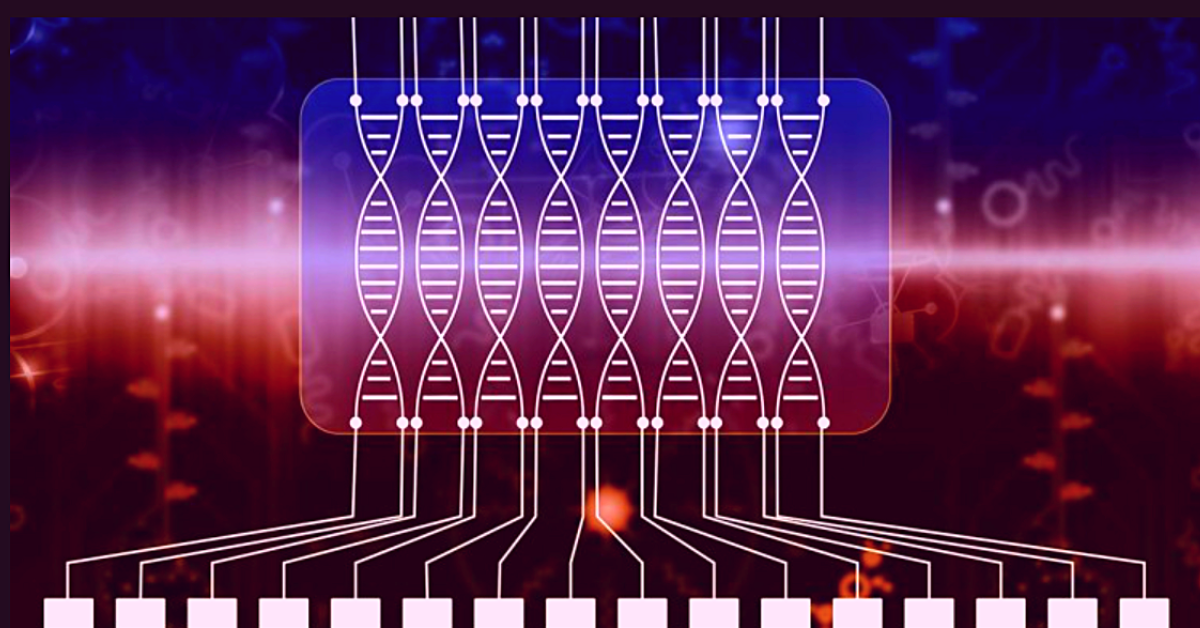
DNA computing is a new field of research that uses DNA as a data storage device and biological computation to solve problems. The idea stems from the study of DNA replication and transcription. However, it has been limited to simple computational tasks like finding optimal solutions for combinatorial problems. In this article, we will look at what DNA computing is, how it works and what challenges it faces before diving into its potential applications in future technologies including medicine and engineering.
As DNA computing uses DNA, Biology, and Molecular Biology Hardware instead of traditional electronic computing, DNA-based storage computing can be recognized among the top disruptive technologies for data.
According to Stanford Computer Science, DNA computers might not replace conventional computers in near future; however, they hold limitless potential for other applications.
Technology can revolutionize both the healthcare and technology sectors.
What Is DNA Computing?
DNA computing is a type of biological computing. It’s a relatively new field in computer science that uses DNA molecules as the medium for data storage and processing. DNA computing is also called molecular computing or biological parallel computation.
The idea in DNA computing is not to replace traditional computers but rather to complement them by taking advantage of nature’s ability to perform complex tasks at low cost, using minimal energy and producing no pollution.”
Benefits of DNA Computing
- DNA computing is a very powerful tool that can compute faster and with a lower energy consumption than electronic computing.
- DNA computing can solve complex problems that are not possible with electronic computing.
- DNA computing can help solve problems that are difficult for electronic computing and human beings to solve, such as: predicting the future climate change on Earth by feeding all the data related to climate change into the computer system; finding out if there is any life form in outer space by sending an artificial satellite there to look through its telescope at different objects in space; determining whether it’s safe for humans to drink water from rivers or lakes because some chemicals might have polluted them (this was done using an artificial intelligence program called “Deep Blue” created by IBM); creating new medicines from existing chemicals found in plants or animals (for example, penicillin was first discovered accidentally when Alexander Fleming noticed bacteria growing on staphylococcus cultures).
Challenges of DNA Computing
- DNA computing is still in its infancy.
- DNA computing is expensive.
- DNA computing is slow.
- DNA computing is not yet practical.
- It’s not yet scalable, either.
Future of DNA Computing
DNA computing is the future because it will be more efficient and faster than electronic computing.
DNA computers will be used to solve complex problems. DNA computers will be able to solve problems in medicine, biology, engineering and cryptography, artificial intelligence, and data analysis.
Conclusion
The future of DNA computing is very bright. In fact, it could be the next big thing in computer science. DNA computing has the power to compute with a far lower energy consumption than electronic computing.
You may have heard about DNA computing. The term itself is quite a mouthful, but the concept is simple: DNA computing uses a living cell (the genome of an organism) to store and process information in a way that mimics traditional digital computers.
The idea of using biology for computation isn’t new, but it hasn’t been practical until recently due to technological limitations. However, we’re now on the cusp of being able to harness the immense power that DNA holds by encoding data into its physical structure and running computations on them at unprecedented rates. This has huge implications for our future because it could solve many problems that would otherwise take years or even centuries with conventional computational methods!
The ability to read and write information with DNA has given us new ways to think about information management, which could lead to more efficient ways of storing data on hard drives, and better ways of interacting with devices like smartphones and laptops. At the same time, some challenges will have to be overcome before DNA computing becomes mainstream technology-but if we can do it right now by using synthetic strands of DNA as computing units instead of silicon transistors then who knows what else might be possible in the future?
