



The information regarding the Enterprise Internet of Things is produced at a breakneck speed at various levels: from tons of comments on LinkedIn to major international conferences devoted to EIoT. Why is there such a demand for elevating knowledge on this topic? We believe that interest in EIoT is directly related to the high customization of enterprise IoT solutions, which is an essential condition for IoT implementation in an enterprise to be successful. While going from conferences, to studying articles, and listening to expert opinions, you are trying to reproduce success within your production environment and business case.
It would be pointless to provide you with a list of IoT technologies, tools, or products that will ensure an ROI within a year or less. It would be much more beneficial to align you with an enterprise IoT development path optimal for your business needs. This is exactly what we are going to do now. PSA, being an expert in machine-to-machine interaction for more than 30 years, has tracked the main things – the principles of technology, and the patterns between operational parameters and business goals. We use this in order to help clients choose the optimal solutions for implementing the Internet of Things in an enterprise.
What Does “Success” Mean for the Enterprise IoT? Significant Figures
The success of the enterprise IoT implementation project comes when it can be concluded that the goal of the initiative has been achieved. Having a clearly defined goal is crucial for the success of an IoT project. It is one of the key factors. Recall that there are two main target models for the EIoT project: solve the problem of a particular business and offer a new opportunity for a range of businesses.
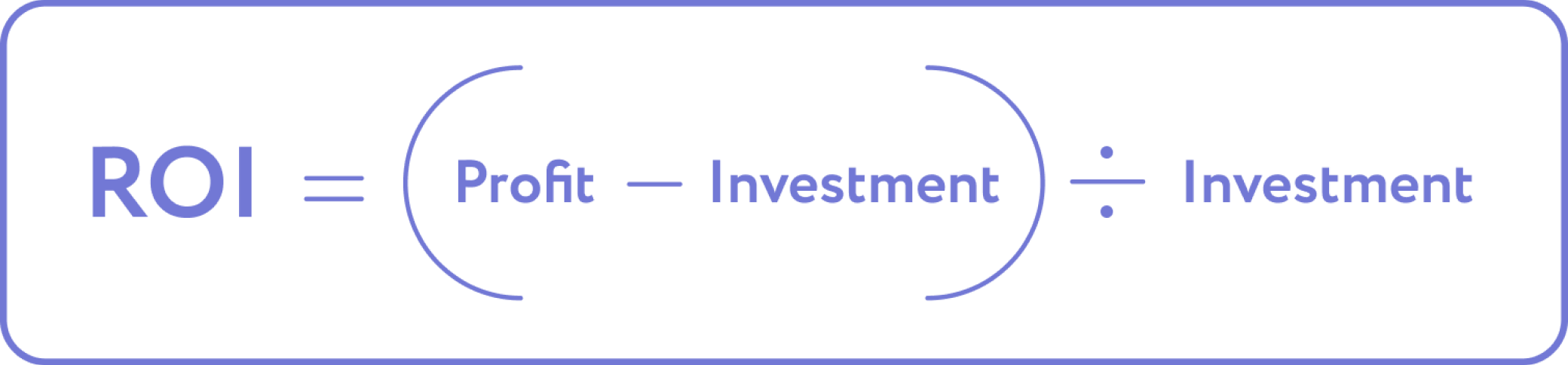
Although an IoT project has one main goal, it usually brings various indirect benefits. For instance, having the data on the upcoming equipment failure, you can not only reduce costs on downtimes but also enhance procurement processes. All the benefits that can be quantified should be taken into account when determining ROI. Unfortunately, according to our HBR pulse survey, 80% to 90% of enterprise IoT adopters can’t accurately measure ROIs for their IoT initiatives. However, about 70% are optimistic about success in the first year and it is natural that about 60% fail their IoT implementation projects. So the facts explicitly push to the conclusion – calculate, calculate, calculate.
Another parameter that can be converted into “IoT success units” is the Break-Even Point (BEP). After the moment you reach it, the IoT initiative starts to bring profit, and savings become substantial. However, both ROI and BEP for IoT projects depend on the nature of the industry, and the business conditions. These indicators are limited for every particular case and can’t be artificially inflated. Thus, the question of how to speed up the success should be transformed into the question of how to correctly quantify the benefits. And then – how not to ruin this plan.
How to Correctly Calculate ROI for the Project Involving Enterprise IoT?
Unfortunately, we have seen cases when clients inadequately assessed their requests and opportunities. Then they either changed on the fly, which caused us to suffer, or stretched the IoT implementation in time to comply with the budget, which caused them to suffer. Neither in the first nor in the second case it can be said that success has been achieved.
Indeed, calculating both potential income and investment to calculate ROI can be challenging for enterprise IoT endeavors for the following reasons:
- There is no direct connection between operational indicators and KPIs
- Many indirect costs are easy to miss
- Due importance is not given to the replacement of equipment
Well, first things first. While we strive to streamline operational processes, we often fail to establish a seamless connection with the business objectives, so we must build one. So, we need to build it. Let’s take a predictive maintenance solution as an example. By implementing IoT sensors, you can track the change of parameters of the equipment, such as vibration, inclination, temperature, and so on. We should do it to make accurate predictions on when equipment might fail to avoid significant downtime expenses. However, there is no connection between the parameters and final savings, which forces us to rely on statistics when making assumptions.
When it comes to investments, companies mostly do an excellent job of calculating the one-time costs of technology, namely the cost of sensors and other IoT devices, application development, network infrastructure, etc. The situation is a little worse with regular service spending, like cybersecurity, subscriptions, electricity, etc. As for spending on upgrading processes within a company, that’s the trouble. The point is that your processes will no longer work the same way with an IoT solution incorporated and will need to be adapted accordingly. It may become urgent to upgrade the skills of the team or requalify it. In fact, enterprise IoT might affect lots of things, such as the terms or even the product requirements.
It might happen that the company decides to implement an IoT-enabled app as an experiment and continue to operate its equipment in a hybrid format. Thus, they violate the financial sense of the IoT project, since the maintenance costs for legacy equipment are not eliminated.
Thus, calculate all the direct and indirect costs meticulously, and then apply a familiar formula:

How Not to Fail the Implementation of Enterprise IoT
As we’ve already said, you can’t jump over your head with the EIoT project, but there is an opportunity to establish perfect process controllability in order to get the most expected result in the expected time frame. Accelerate the coming of success = minimize the risks that can postpone the implementation.
Clearly Define Business Goal for Enterprise IoT
A clearly defined and quantified business goal is the basis for implementing an EIoT solution. Key performance indicators should be defined correctly. Although a request can be expressed in different ways, here it is important for us to “squeeze out” emotions to see that any request comes down to 3 main goals that enterprise IoT helps to achieve:
- Increase income. The request is common, especially in digital commerce, as having more relevant data can significantly boost performance. The common business request from production enterprises is to decrease the number of defective products that burn your income due to returns and refusals. In such cases, an IoT-enabled QA solution can be proposed to promptly detect defective items and analyze the data about causes of defects. Generally, any request that sounds like “to beat competitors” or “increase overall market share”, should be translated into “Increase revenue”.
- Cut costs. Most often we are talking about labor costs and maintenance costs. In the first case, IoT undertakes human tasks beyond traditional automation, thereby automating business processes. IoT-enabled maintenance of the equipment opens up fantastic opportunities, such as eliminating downtimes and related costs, optimizing efforts for maintenance, and enhancing procurement procedures for equipment parts. Also, enterprise IoT helps optimize energy consumption costs through precise monitoring and leakage detection. Generally, all requests that came from “inadequate waste of resources” should be redirected to “cut costs”.
- Open new revenue streams. In fact, this goal also leads to an increase in income, but IoT is utilized differently here. It does not optimize the existing products or processes but creates new ways of getting revenue from them. For example, if you enhance your end-user device with IoT functionality, you can collect usage data and sell it, or if you decide to launch your IoT-enabled business solution to the market. Also, enterprise IoT might open up new use cases for the existing product. When your business growth is slow or you are eager to enter a new market, it means that you want to open new revenue streams.
How to handle a request for enhanced safety & security? Well, the KPIs of this goal can be measured through decreased costs due to introducing accidents, insurance, failed certifications, etc.
As we can see, Enterprise IoT allows for setting far-sighted business goals. That’s why versatile connectivity is an absolute benefit, yet deep analytics reveal its major business value.
Estimate Uncertainty by Interval
The question of how to contribute to the early success of enterprise IoT implementation can often be transformed into the question of how to reduce the inaccuracy of investments and returns forecasts. Due to a range of factors, we mentioned above, the forecasts do not really come true more often than they do. We should take this into account and create more trustworthy models when proving the business value of the prospected solution. For instance, you can assess the BEP not as a “point”, but as an interval.
It may become challenging to assess the uncertainty in advance, since your system is complex and may change rapidly or when external factors substantially affect your system’s behavior. Remember, that uncertainty increases if the IoT project implies the following:
- A large number of diverse devices within the prospected IoT solution
- An intention or need to scale the IoT ecosystem
- A wide scale of use of wireless data transfer through possible latency issues
- The share of human involvement is undefined
- Data management can’t be configured precisely
Thus, estimate investment at a range in view of the above mentioned parameters of uncertainty. It subsequently affects the BEP and ROI, which should also be assessed as a range.
Take the Data to the Key Place
Data needs to pay special attention when architecting enterprise IoT solutions. It is especially relevant for IoT solutions with the advanced analytical component. To receive reliable analytical results, you should make sure the data is high-quality, accurate, redundant, and relevant. In view of this, the EIoT solution should provide:
- Continuous data collection on the relevant parameters
- Data processing and clearing to make it suitable for analysis
- Appropriate analytical model
The more responsibly you approach data, the more business value it will generate.
When it comes to real-time IoT-based applications, the key issue comes from the optimal distribution of data flows over the IoT ecosystem. To avoid high network latency that violates real-time operations, you can implement a real-time computing app at the edge while leaving analytical tasks to the cloud. However, every special case requires a custom solution on how to organize it.
Sum up on Rapid Success of Initiative Involving Enterprise IoT
The success of the Enterprise IoT initiative does not come by default, not to mention the success of the first year. The key challenge here is to competently assess investments and expected ROI, and then make sure that the solution is deployed as planned.
To perform this, we advise:
- Clearly define business goals, operation indicators, and KPIs.
- When calculating ROI, consider as many direct and indirect factors as possible. Pay attention that ROI for EIoT solution is also associated with uncertainty.
- Optimize your operations after the implementation of the EIoT solution. If an IoT-enabled solution was designed to replace some outdated machinery, do not allow a hybrid operation mode.
- Devote enough time to establish reliable data collection, processing, and management. The quality of data is the key when it comes to enterprise IoT solutions.
In PSA, we are pleased to provide you with complex technical assistance, as well as estimate your idea and advise optimal ways of how to implement it. We help you not to miss crucial details to get comprehensive control of your updated business processes.