


Introduction
Mechanical engineering is a broad discipline that includes industry, business, medicine, and even law. Mechanical engineers are primarily concerned with the planning and design of mechanical objects, whether they produce engine and motor components or complete devices such as refrigerators and robots.
Mechanical engineers benefit from design software such as AutoCAD. Using the best mechanical design software allows them to create preliminary designs and identify flaws before going into production, saving time and money.
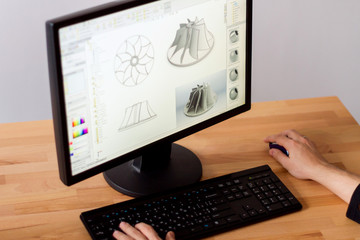
Image Source: Adobe Stock
CAD is an abbreviation for “Computer Aided Design.” AutoCAD is a two-dimensional and three-dimensional design software suite created by the Autodesk company. It comes with a set of tools for improving workflow and creating realistic maps, diagrams, structures, and schematics.
CAD software combines design and analysis. The design is required to create models and prepare for component production, while the analysis aids in calculating stress levels, the influence of forces, and the influence of finite elements in a design. Students and educators can obtain free AutoCAD programmes through different learning platforms.
How AutoCAD Mechanical is Revolutionizing 3D Design
Mechanical systems are frequently used by businesses in a variety of industries, particularly the manufacturing sector, to achieve the desired outcome or end product. In general, these mechanical systems are expected to produce precise and optimal results with minimal downtime or required maintenance. As a result, these processes are given special attention and monitoring to ensure that these performance standards are met and profit targets are met or exceeded.
Mechanical engineers are responsible for providing effective and cost-effective solutions for the development of processes and products. This can include the development of new machinery as well as the reconfiguration or enhancement of existing products and technologies. These projects can range in scope from micro-components to motors/engines to large-scale machines and beyond. In this article, we will take a step-by-step look at how AutoCAD is dramatically improving the Mechanical Industry.
While creating full-scale models of components, processes, products, machines, and so on is theoretically possible, it is unlikely to be feasible, either economically or physically. Especially if the initial design is particularly intricate and does not produce the desired result. As a result, the use of AutoCAD software plays an important role in mechanical engineers’ jobs.
This article will take a step-by-step look at how Autocad positively impacts the mechanical industry. Users of AutoCAD software, also known as AutoCAD drafters, can benefit in a variety of ways by incorporating this technology into their jobs, including but not limited to the following:
i. Design Fabrication and Debugging
ii. Simulation Models and Potential Scenarios
iii. Digital Paradigm
iv. Cost-Effective
v. Significant Competitive Edge
vi. Optimized Correspondence
vii. Control and Assurance of Quality
i. Design Fabrication and Debugging
AutoCAD for mechanical engineering is used in the early stages of a design project to begin sketching ideas and analysing them to determine the best solution for a given problem. The software speeds up and simplifies the process by eliminating the need to draw new blueprints for each version of an idea and first drafts of designs. This not only allows them to fine-tune their design before it goes into production, but it also saves them a lot of other resources. The software also aids in the interpretation of these designs, detecting flaws, errors, and inconsistencies that the mechanical engineer might overlook.

Image Source: Adobe Stock
Likewise, the mechanical engineer can use AutoCAD to identify the source of a mechanical fault in an existing product by entering the specifications and letting the software find the problem, allowing the engineer to be more proficient by going straight to the problem and finding a solution.
ii. Simulation Models and Potential Scenarios
AutoCAD’s
ability to provide a graphic simulation of how a constructed machine will
function is one of its most useful engineering functions. When a design
prototype is finished in the software, AutoCAD can generate a simulated version
of the prototype and display it in action. This is a function that a mechanical
engineer cannot replicate without investing time and resources in developing a
real-life prototype. Mechanical engineers can use this simulation to determine
if the machine will perform as expected and make any necessary modifications or
fixes before it goes into production.
Â
AutoCAD enables mechanical engineers to begin putting down their ideas in detail, resulting in a much more detailed first draught of their components than would otherwise have been the case. After they have detailed their ideas, they can move on to analysis to perfect their design in order to save resources and get the best possible version of an object.
iii. Digital Paradigm
Rather than making physical changes to any designs or products, AutoCAD software allows the engineer or drafter to simulate different iterations and test how each one operates and responds in different conditions and environments. This speeds up the testing and refinement steps as well as the time to actual prototype development.

Image Source: Raw Pixel
Not only that, but AutoCAD can be used to correct errors in betas of existing machine equipment, so it can also act as correction software for the design that is input, making it incredibly dynamic. It eliminates the need for conventional prototyping, which takes a significant amount of time and resources.
iv. Cost-Effective
The function of AutoCAD that can be mentioned is the reduction in the cost of the design process. By removing the need for physical materials and man-hours to build prototypes, AutoCAD makes it much easier for individual companies or startups with limited capital to create extremely complex and sophisticated mechanical drawings without investing any money.
AutoCAD can significantly reduce costs after the initial purchase of the software by eliminating the need to buy or use physical materials in the preliminary design phase. In addition, AutoCAD allows engineers to test large-scale installations or jobs that would otherwise be outrageously expensive.
v. Significant Competitive Edge
All of this is done in minute detail, so it is a highly viable and close indicator of what is most likely to occur physically. As a result, when working on projects, engineers can be confident in their designs and whether they are applicable in the real world. AutoCAD assists engineers in reducing the time it takes them to complete projects, allowing them to meet project deadlines faster than they would have in the past.
Designing a marketable product is a highly competitive process in which the sooner your product is ready for sale, the greater the profit. AutoCAD software’s speed and flexibility can mean the difference between being the first to secure a patent, the first to implement a system or process, or the first to market versus falling behind in highly competitive fields.
vi. Optimized Correspondence
AutoCAD enables mechanical engineers to consult with various departments within the company for design input and to meet design requirements digitally, saving time. They can then ensure that the design complies with all of their employers’ regulations without having to physically demo their project and, if necessary, return to the drawing board. This method makes it much easier for everyone to collaborate with the engineers in a convenient and efficient manner.

Image Source: Freepik
Communication has been simplified in cases where some design and manufacturing stages are decentralised, with data on prototype iterations and test results being stored in digital form for more consistent and seamless communication between these groups or departments.
vii. Control and Assurance of Quality
Mechanical engineers can recreate a variety of environments and stresses on a prototype using AutoCAD’s analysis components. This use of CAD in mechanical engineering enables them to calculate the functionality of a part or machine in extreme conditions or under high-stress conditions that are difficult to test outside of the simulation.
These simulations also demonstrate a prototype’s expected performance over time, allowing precise estimates of a machine’s functional life span before needing maintenance or replacement. AutoCAD enables mechanical engineers to create useful specifications and provide clients with exactly what they require in a timely manner.
Conclusion
AutoCAD Mechanical’s mechanical design and engineering biassed toolset simplifies and accelerates the design process by including a mechanical library of over 700,000 mechanical parts and components, machinery generators and calculators, and Autodesk Inventor Fusion, which allows intelligent re-use and direct manipulation of a variety of 3D file formats.
AutoCAD Mechanical’s extensive drafting capabilities, which include smart layer management, automatically generated hidden line functionality, power dimensioning tools, and mechanical drawing tools, result in additional productivity gains, making this mechanical CAD software solution highly recommended for mechanical design and engineering professionals who want to stay within a predominantly 3D workflow.
Â
As a result, we can consider AutoCAD to be one of the most important applications for a mechanical designer to learn. Several online platforms that provide professional AutoCAD tutorial for mechanical engineers under the supervision of expert trainers who cover important aspects of this drafting application. So, sign up for the AutoCAD Master course, which covers the 3D aspects of AutoCAD, and learn AutoCAD mechanical online course free.
