


Stateful applications need to store data to maintain the functionality whenever the app restarts. It is like your laptop that hibernates on closing the lid and then wakes up on opening the same. Here, stateful applications are databases that process requests based on state information generated from earlier transactions. APIs or Application Programming Interface facilitates the interaction between representation layer and database for relay of request data.
With a stateful architecture, you will need storage resources which means higher costs. According to Gartner, worldwide IT spending is set to rise by 6.2% and reach $3.9 trillion by the end of 2021. On the other hand, stateless architectures offer support for containers that can be scaled independently without storing the data on a database.
Stateless services seem to be a great choice as they don’t need an extensive database and cost less. But, stateful applications are essential for use cases where state information stored is vital to core services. So, let’s discuss each one in detail and understand which one is suitable for your web development projects.
Stateless vs. Stateful APIs: An Overview
The difference between stateful and stateless APIs is essential for designing application architecture. Furthermore, it helps organizations to form extensive API documentation that allows developers. Such documentation will have all the related data on the structure of APIs, especially for Restful applications.
Stateful APIs are essential for web services. For example, when you log in to a web account, a checkbox indicates Keep me logged in, which means that your session data is saved. When you revisit the same website, the backend of the web service will use the same data to keep you logged in. It is just the tip of the iceberg, and there are many different stateful API use cases that you can leverage for your business.
Pros of Stateful API integration
- The state is essential for developers to understand the type of users.
- Paid users will have special access to specific content on the website
- The state information can help in determining access code in APIs for such users
- It enables interaction between the UI and backend smoother, user’s state, especially when the state of the user is variable.
Cons of Stateful API integration
- Needs extensive storage to store state on each user request
- The database should be constantly available for stateful applications to function
- Due to the need for high storage and availability of servers, running costs increase.
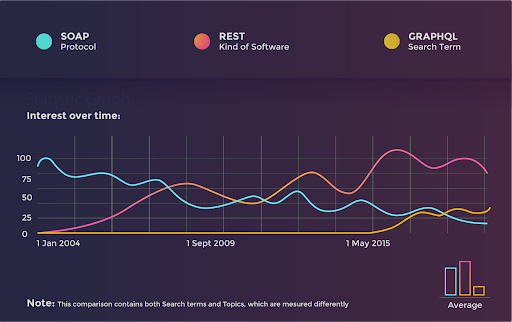
Integration of stateless APIs offers more benefits than stateful APIs. It has more to do with the evolution of API protocols over the years. In the early 2000s, SOAP (Simple Object Access Protocol) was a popular methodology for the integration of APIs.
Source:Â https://www.virtasant.com/blog/stateful-vs-stateless-architecture-why-stateless-won
The next phase of evolution took the SOAP-based API development to REST(Representational State Transfer) which was more than just a protocol. It was a design pattern based on a stateless approach that brought the RestFul Apps to come alive.
Another stateless API technology that has been quite popular recently is GraphQL. It offers more control over the data fetched from the server for users. Stateful APIs can be complex due to multiple states that you need to configure for the execution of each user request. Stateless APIs offer loose coupling between client and server for higher flexibility.
Pros of Stateless API Integration
- Improves scalability due to compatibility with modern architectures
- Supports agile approach for incremental iterations
- Updates and version deployments become easy with stateless APIs as it does not affect the server.
- There is no need for session synchronize logic on the server-side.
- Lower suspense time due to the facility of caching for every service request
- Seamless integrations with HTTP protocols
Cons of Stateless API Integration
- No user data posts at the end of service, especially in applications where APIs need to offer access to specific content
- Stateless APIs can have authentication issues due to no state, which leads to needing a broker to authenticate users.
Stateless vs. Stateful APIs: Impact on Web Development
There are many different aspects to web development where the difference between stateful and stateless API can make a difference. Let’s understand some of them.
Cost of Development:
Stateful APIs need access to different states for multiple user requests, which will require a reliable database. So, the cost of web development increases drastically. But, at the same time, stateless API integration can help you reduce development costs as you don’t need an extensive database.
Apart from the database, stateless APIs support REST and GraphQL applications make them cost-effective in terms of development resources. REST is high on performance and uses less bandwidth, plus you don’t need to refactor the website code from scratch to integrate them. So, stateless integrations offer rapid development leading to a lower cost of engaging developers.
The complexity of Features:
Based on the type of features you want to add to your website, APIs will differentiate. For example, if you plan to integrate Artificial Intelligence to create dynamic content for users, then stateful APIs make more sense. The creation of dynamic content needs elaborate planning which is reduced through pre-built AI-based templates. These applications can store data from users that AI algorithms can analyze and create content as per the user requirements.
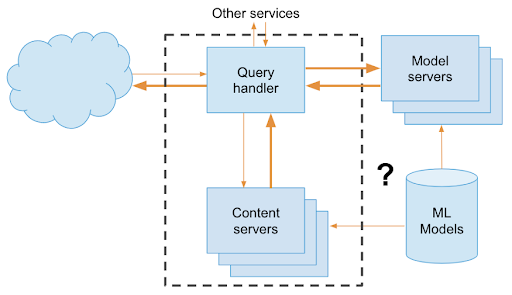
Similarly, stateless APIs are leveraged in Machine Learning models for classification, text generation, object detection, and translation. Here the evaluation is done once per query, making the stateless architecture more reliable. But when the results are presented mixed with past data like product recommendations or content suggestions, the stateful architecture makes more sense.
Support Function:
Whether you want a B2C or B2B business website, customer support becomes essential for your organization. One of the most significant ways to ensure that you attend to all the issues faced by customers is to use a ticketing system. It enables businesses to categorize problems and allocate resources to offer better assistance.
As every interaction between your business and customer regarding support occurs through a user interface, APIs are important. However, while stateless APIs are outstanding for companies to scale their support services, they may not be enough. The reason is simple, for enhanced customer support, you need data of past interactions, user sessions, and other information which is stored as a state by stateful APIs.
Web Architecture:
Stateful architecture is based on SOA or Service Oriented Architecture, where the client-side and server-side are tightly coupled. So, making changes on either of them leads to disruption for the application functions. On the other hand, Stateless APIs follow microservice architecture where the client and server-side are loosely coupled, allowing changes with zero disruption.
Microservice architecture is a suite of independent services that can be tweaked individually without disturbing others. Stateless APIs also support containers with microservice architecture to enable higher scalability with less downtime.
Signing Off:
Deciding whether to choose stateful APIs or stateless APIs for your web development can be difficult. However, it depends on the type of features and business logic of your web development.
For example, stateful APIs are excellent for financial organization and payment gateways due to support for SOAP. It allows them to store the state of transactions. At the same time, stateless APIs are excellent for web applications as they support REST. So, the choice will always differ according to the use case.Â
