


The facial recognition market is expected to grow to more than $2 Bn by 2020. While that’s a small figure compared to that of the analytics market which is expected to grow to a whopping $200+ Bn around the same time, the demand for face analytics continues to grow in-line with the expectations and, therefore, the application of big data and analytics in many spheres of our lives.
Facebook, Google, Amazon, Microsoft, and a host of other technology majors, have acquired continue to be on the look-out for start-ups and companies delving deep in the area of facial recognition. This is a testimony to not only the growing demand of facial recognition tools but also the power it can equip organizations with to do so many wonderful things that weren’t even imagined earlier, much less possible. One of the many premises being how companies and organizations understood people (customers, prospects, visitors, strangers, patrons, commoners, suspects, etc.) beyond online footprints and such other touch-points.
Admittedly, facial recognition software has been in use for quite some time now. However, that was limited use by a select few such as the state and federal investigating agencies, security organizations and, perhaps, a handful of businesses, where it hadn’t fully matured into a reliable resource. This was owing to the inherent short-comings of the solutions back then. A dependency on the subject’s involvement, limited angles of the face for matching and, above all, they were matching a capture with an existing image in the database “ which meant one needed to have had recorded the presence of a particular person at least once before to be able to return a match.
But, technological advancements both, in terms of hardware and software have now equipped solution providers to conceive and build solutions that can go beyond the traditional and limited use of facial recognition techniques so as to help users with much more potent information with which to decide and take actions, for the better.
On the hardware front there are many types of cameras, surveillance systems, etc. that work at various resolutions and frames thus allowing capture of more than just the image. The software aspect of it has concepts such as artificial intelligence (AI), cognitive analytics, neural networks and machine learning fantastically well complemented by some of the latest visualization tools such as Microsoft Power BI, Tableau, Kibana, etc.
These advancements are firing the imagination of solution providers and enabling them to build very advanced and yet practically useful solutions that can be put to use in areas ranging from biometrics, information security and access control to law enforcement, surveillance systems, and smart-cards, etc.
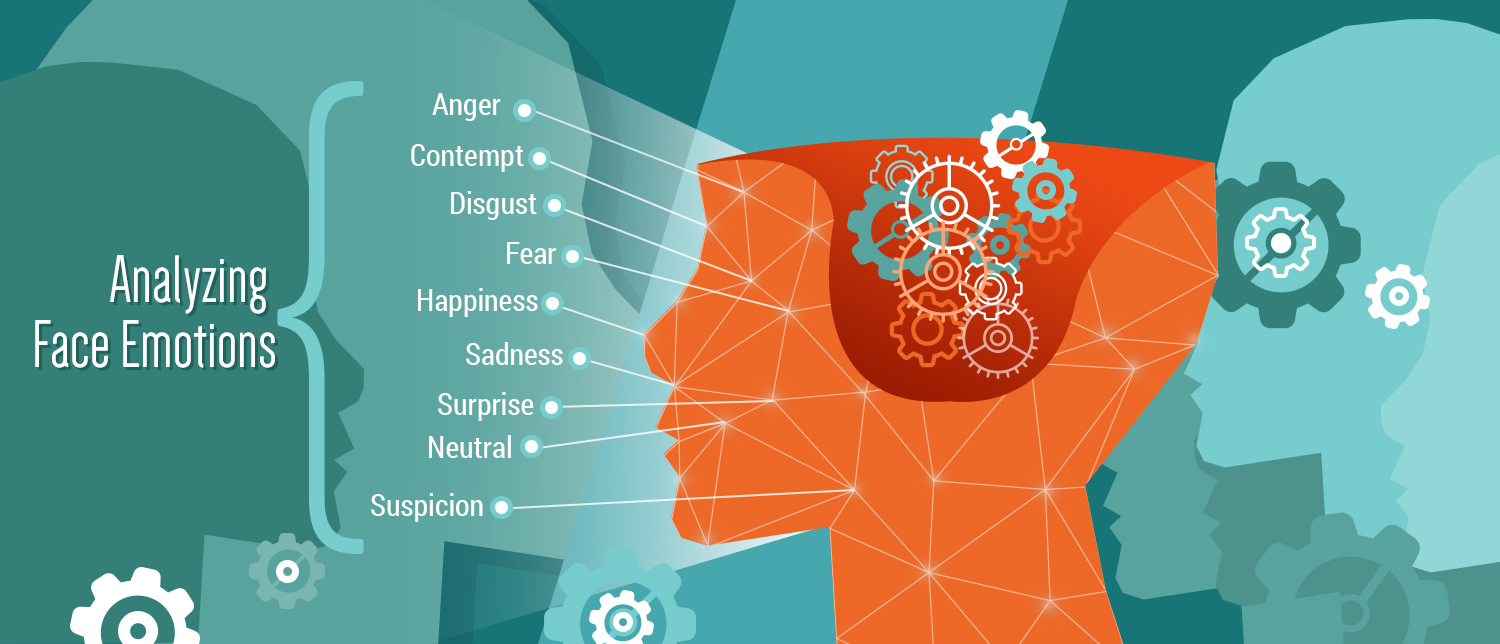
The new solutions have gone beyond just matching a person with an existing image. They are capable of doing a lot more: from identifying and verifying a person and detecting his/her emotions as indeed the depth of those emotions to gauging that person’s attention to multi-face recognition (identifying more than one face) from a digital image or a video frame and also helping in demographics identification to boot!
Now, let us look at some of the use-cases of facial recognition:
- Authorized entry into a stadium, building, or office premises
- Authenticity verification of patrons throughout the games “ regardless of the number of times one moves in or out of the stadium, as well as spotting suspicious behavior or activity at even such a crowded place
- Virtual Persona Creation & Make-up: Players can get themselves into other people’s skin say celebrities, sports-stars, etc., e.g. video game players can use the avatar of the Undertaker and wrestle with The Rock on the other side!, or women can try out various make-up options and arrive at the best that suits them – without having to actually put on any grease paint at all!!
- Security
- Facial identification even if the person’s facial features have changed over time from the earlier instance when his/her image was captured and stored in the database
- Spotting suspicious behavior based on a set of facial emotions (neutral, anger, fear, contempt, etc.)
- Facial verification in cases such as schools where it is required that only verified personnel have access to students
- Investigations “ Image-based investigations help in quicker identification of facts relating to a crime, in faster disposal of cases, as well as in taking precautionary measures
- Customer satisfaction / feedback review through sentiment detection. E.g. An existing customer, or a walk-in with the potential to be one, interacts with the business representative (enquires, explores, buys, transacts, etc.) and walks out. A facial recognition tool will instantly gauge the emotion and sentiment of that person and let the relevant stake-holders know of whether that person was satisfied or not (based on positive, negative, or neutral sentiments of the face). These will be extremely useful in all B2C segments where there is the direct interaction of customers with the brand or a business.
- Since the solutions also identify demographics, it can be employed in all the places where there’s age-related prohibition such as cinema theaters, vending machines (for allowing only certain drinks to be had based on age), elections, etc.
While a lot of work is still to be done in this area to arrive at the most impactful use-cases, why not explore the benefits of these advanced facial recognition tools to improve your organization‘s operational efficiency as indeed performance?
