

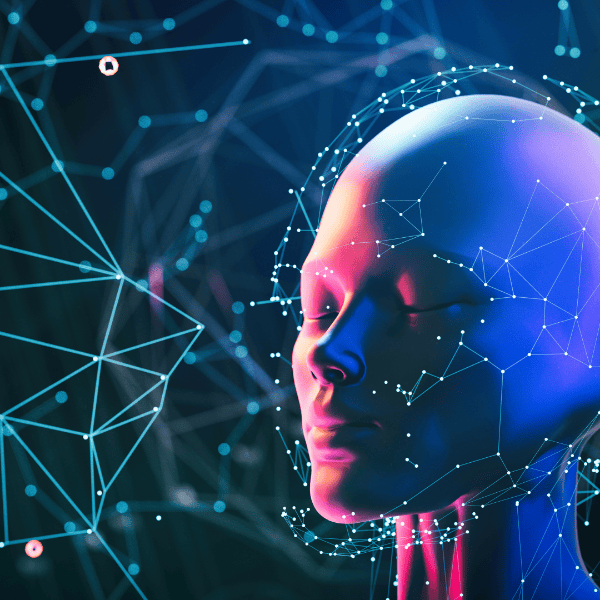
Blockchain and Artificial Intelligence are two of the biggest technology trends for 2020 but their full potentials are far from being fully explored. Yet, experts continue to research into what capabilities a fusion of both technologies would have.
What is Artificial Intelligence
Artificial Intelligence is a computerized technology that aims to mimic and surpass human intelligence through algorithms. The strength of AI is machine learning, through which AI systems can optimize processes by automatically connecting patterns within data, without being explicitly programmed. AI is the affirmative answer to Alan Turing’s question in 1950: can machines think?
AI has recorded so much success and has found applications in many industries from transportation to finance, agriculture to healthcare, and many others, powering innovations in IoT, image recognition, predictive analytics, etc. Yet, it is believed that its full potentials are still ahead of us, yet unexplored.
What is Blockchain?
The first bitcoin block was mined in January 2009, on the back of the global financial crisis that rocked the previous year. It heralded a new technology that would be a major talking point within a few years of its existence. However, the blockchain idea was conceived way back in 1991, in the works of Stuart Haber and Scott Stornetta. A blockchain is a distributed digital ledger that stores details of transactions publicly but securely.
The primary application of blockchain technology has been cryptocurrencies and banking, like the private and lightweight mimblewimble blockchain, Grin Coin. However, it has begun to find its way into other industries. Its three pillars are decentralization, transparency, and immutability. Users carry out transactions directly, on a peer-to-peer (P2P) basis, eliminating the need for the oversight of a central authority.
The details of the transaction are stored publicly, guaranteeing the transparency of the process. Each transaction is linked to every other transaction in chains that, together, form blocks of data. That makes all actions performed on a blockchain irreversible, and the system is virtually unhackable.
How Blockchain Impacts Artificial Intelligence
The confluence between blockchain and artificial intelligence is data. Big data is the soul of AI systems. AI algorithms are constantly analyzing data for efficiency, and the more the data, the better the results.
On the other hand, blockchain is a secure data storage. Being a decentralized technology that is virtually unhackable, it provides the perfect platform to store AI data sets, ensuring data privacy and security. Unlike the current method that has companies holding data of many individuals, which are often personal and sensitive, blockchain-based AI systems not under the control of a single company.
How can we draw upon the chief benefits of blockchain technology and apply them to AI for better systems? That’s what this section aims to answer.
Decentralization and Data Control
By eliminating the need for an intermediary when sharing data, decentralization puts the user completely in charge of their data. Therefore, rather than have multiple data sets held by different companies, users retain the ownership of their data and can determine who has access to the same.
For instance, in healthcare, patients would be able to share their data securely with medical professionals for personalized treatment plans. In the future, this arrangement of individualized data control can result in the creation of data marketplaces, where companies buy data from individuals themselves, rather from third-party companies violating the users’ rights and privacies.
Data Sharing and Machine Learning
In addition, data sharing does not only benefit customers but AI companies themselves. With machine learning, AI systems can improve themselves independent of human programming, as far as the are fed more data. Blockchain-based AI algorithms, through increased data sharing, access more data, by which companies can build better models.
Smarter Business Operations
The benefits of blockchain in AI also reflect on how business is done, with the rise in the adoption of smart contracts. Smart contracts are like traditional contracts, with set terms, conditions, penalties, etc. The main difference is that the former is coded as a computer program, and actions are triggered immediately when the preset conditions have been met.
Smart contracts run on the blockchain are immutable (just as every blockchain transaction) and neither side can manipulate the process. They eliminate the need for intermediaries, and their associated costs, and are error-free. Cortex, for instance, is a company that has demonstrated the efficiency of blockchain smart contracts in AI applications. Smart contracts are also much more transparent, as all records, contract details, and actions are stored on the blockchain and can be retrieved at any time.
Transparency and Trust
But transparency is not limited to just smart contracts, but to the entire AI framework. Decisions made by AI are complex and straightforward, even for the experts themselves, and especially as the data set grows and the algorithm becomes smarter. This reduces trust in the whole process, even though we know it works.
But that is where blockchain comes in. Blockchain immutably stores details of all transactions, enabling AI experts to understand how the algorithms work exactly and how they arrive at their decisions. This builds trust and would increase the rate of adoption of AI systems, by both individuals and corporate bodies.
Conclusion
The fusion of AI and blockchain leads to mutual benefits for both technologies, as each evens out the shortcomings of the other. For instance, AI can greatly increase computing time for blockchain systems to process transactions. The next important step, though, would be having global regulations to assess the application of both technologies.
Even though Elon Musk raised alarm five years ago about the potential of AI becoming existential threats, not much has been done in terms of regulation, globally. Bringing blockchain into the picture would mitigate the risks that AI poses, including the possibility of abuse by corporate organizations.
