


AI ”artificial intelligence ”is set to become the core of marketing strategies from 2020 onwards.
The current global situation has impacted how businesses work ”and the changes are likely to continue into the future.
With digital marketing strategies being strongly affected, the focus for businesses has had to adapt. While social media and SEO content has its place, AI is where the future lies.
Over the years, AI has seen a few ups and downs ”some of the AI errors in live chats have been meme-d relentlessly.
But the AI of old has seen massive improvements ”and it’s fast becoming the future tech all companies want to adopt.
We look at how AI is changing the marketing landscape in 2020.
1. Customer Acquisition
The digital world is powered by data ”now more so than before because of the number of people who are online.
The data generated from social media and website visits give marketers information about their target market.
Details such as demographics, interests, and pain points can be generated, giving marketers insights into their potential customers.
But while data is handy, it doesn’t complete the profile of the customer. For a thorough understanding of the audience, one needs to analyze the data and make inferences.
And the reason why data analysis is becoming so important to businesses is because of the need for personalized marketing.
That is how AI can be used. Over the past few years, AI has begun to be employed extensively in the collation and analysis of data.
While the human touch is still required, AI can extrapolate information and process the data faster than humans can.
There are so many data points ”across a multitude of channels ”it would require massive teams to go through it and make observations.
AI does the job that would take numerous individuals countless hours to complete ”with the result that personnel is freed up to act on the analysis.
The AI that is being used in data analysis today is far more efficient than the versions of yore ”which makes building a business or consulting report easier.
Machine-learning has ensured that it is more efficient and effective ”using predictive analysis, AI can not only learn from past inputs but continue to grow over time.
2. Online Search
People are more online now than ever before ”and they’re spending the time on Google search.
And if marketers are noticing how the search experience has changed over the past five years, they can thank AI for that.
Google’s AI algorithm is now the digital powerhouse that all marketers want a share of ”and it keeps improving the ways it understands human language and needs.
Keyword use has changed dramatically because Google’s AI has got smarter. It isn’t simply enough to plonk in a word numerous times to generate search traffic.
Content is now scoured for the exact keyword, alongside semantic keywords, long-tail keywords, sentence context, and even the context of the whole piece.
And AI can read all of the above to determine whether the content and subject are suitable for the user when they search for results.
The reason why Google’s AI is getting smarter is that it’s taking in more information and learning from every new input.
Then there’s the popularity of Google’s Alexa ”which allows users to simply talk to it instead of keying in their search.
For marketers, long-tail and semantic keywords have become the focus of their content. Ensuring that keywords are used within context is equally important.
Understanding how Google’s AI works will make it simpler to create landing pages that convert.
3. Product Recommendations

As a result of improved Google searches, a number of other sites are bringing in AI-powered systems to not only acquire traffic but also to retain customers.
Streaming sites like Netflix and YouTube and eCommerce platforms like Shopify and Amazon have been using AI extensively to make product recommendations.
The AI here works double duty ”not only to answer search queries made within the site but also to recommend products that are similar to the searches.
We have all seen this in action ”on Netflix, you can find the show you want to watch as well as similar shows that you can then come back to.
Amazon learns from products you have browsed or added to your cart to show you accessories for those items or the best products that go with your purchase.
This makes the job of marketers easier in one important way ”because the system is constantly recommending new material, the customer has a reason to remain on the site.
Retention of customers becomes an automatic process ”marketers no longer need to create new content to make audiences stay.
4. Customer Service
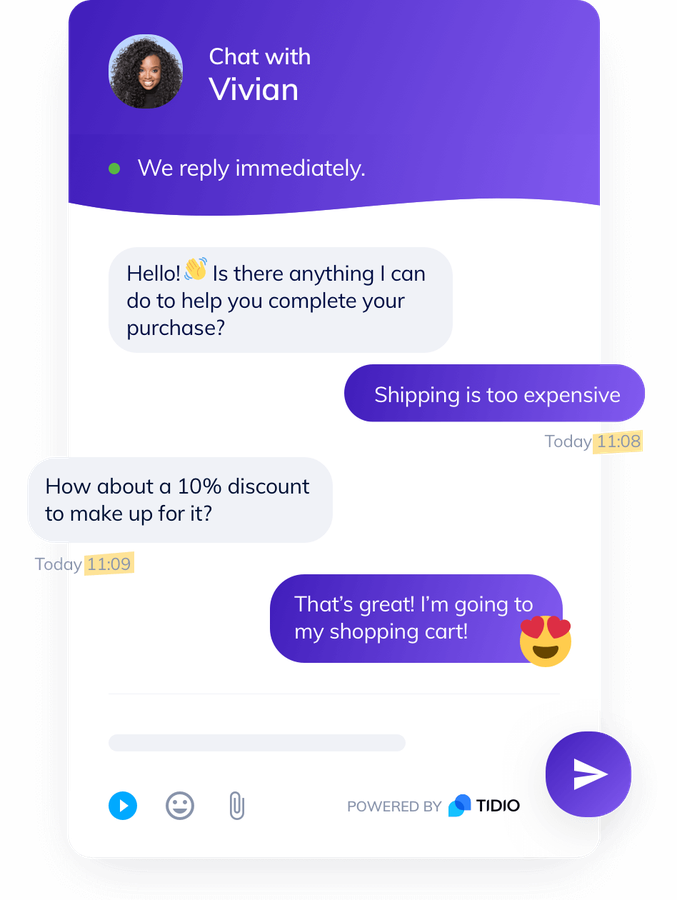
AI has massively revolutionized customer service ”and as a result, customer experience. This has mostly been achieved through the rapid implementation of chatbots.
Almost every website now has a chat window that pops up at the side of the screen. And numerous businesses have also begun instituting social media chatbots.
The chatbots we see now are powered by natural language processing (NLP) AI ”they are fed a few basic rules, questions, and answers, and learn from every new customer interaction.
On social media channels such as Facebook and Twitter, chatbots in messenger apps are programmed to reply instantly to queries, both simple and complex.
Eventually, depending on the nature of the query, the chatbot will have to hand over the interaction to a customer service agent.
The benefits of using chatbots are immense ”they hold fluid conversations with customers and keep them engaged, thus maintaining the brand relationship.
5. Social Media Monitoring
With more people using online networks to stay connected with friends and family, social media has become an even more prominent marketing tool now than in the decade prior.
Social media monitoring tools have been a staple for marketers, but a lot is being asked of them.
Not only do these tools have to examine brand mentions but they also need to parse together conversations around the company.
Initially, this was the task of social managers ”a tough ask for big corporations, and nearly impossible for smaller businesses.
Tools can monitor these conversations more thoroughly ”once again freeing up human personnel.
But with language ”especially social language ”changing and adapting, tools can struggle to keep up.
This means important conversations can be missed, leading to brands losing their reputations and appeal to audiences.
NLP-powered AI can mitigate these problems by learning from the inputs on social media to better understand which posts are positive or negative towards a company.
AI can also be used to respond to posts online ”sending thank yous to positive posts or replying to concerns or offering solutions to users aggrieved by a brand.
With the use of AI on social media, brands don’t have to worry about losing their customers.
6. Advertising

Advertising has moved largely into the digital field and AI is helping make it a success for brands.
With the use of AI, brands can study customer behavior on their social channels, their website, and even on search engines to determine what ads they would be most receptive to.
Using this information, brands can also create tailored advertising campaigns for customer segments in different stages of the buyer journey.
Customer journey maps ”often mapped out in a timeline infographic ”have a strong impact on the way users react to advertisements.
With AI, brands can learn what kind of ads are more suitable for people according to the stage they are in.
This makes targeted advertising more effective as particular types of ads are generated for the customer’s needs.
Plus, AI can follow customers across platforms to ensure that they see the same ad in multiple arenas ”thus improving ad recall and the chances of the ad leading to a purchase.
Key Takeaways
AI is undoubtedly changing the marketing landscape and will continue to improve in the coming years.
The impact it has had on businesses cannot be discounted ”but the human touch will always be required.
While AI certainly brings with it major advantages, it also needs to be given diverse enough input to avoid target markets being left out.
With the correct implementation, AI can make a huge difference in how brands acquire and retain customers in the long-term.
