

ERP implementation is a journey and not a destination. Organizations spend huge amount of effort in planning their ERP strategy and the ultimate success is measured by RoI and the user adoption. The key objectives and focus areas for organizations as part of their ERP rollout is around four major areas:
1. Reengineer their organizational process to global standards and best practices
2. Accelerate process efficiency and optimization
3. Centralize and control IT budget via savings
4. A platform for collaboration and innovation
Organizations may not be able to equate a RoI based indicator to these factors but one vital measure is the end user acceptance and their patronage. ERP applications provide web-based interfaces and they focus more on data integrity than usability aspect. With increasing millennial workforce, social media platforms, digital tools, and BYOD applications, there has been increasing focus on Customer eXperience than ever before. We will focus on two major areas to accelerate CX:
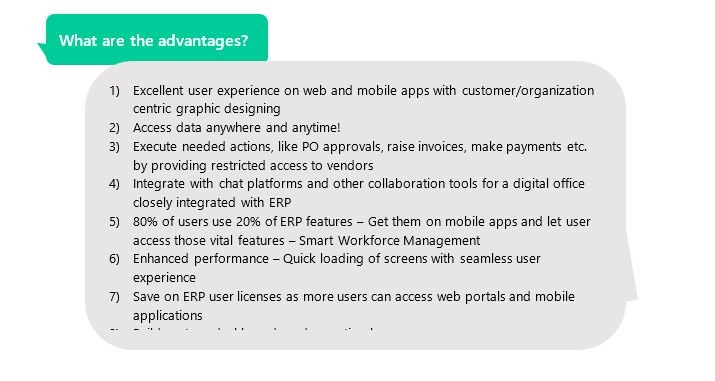
1) Digital tools around ERP “ web portals and mobility solutions
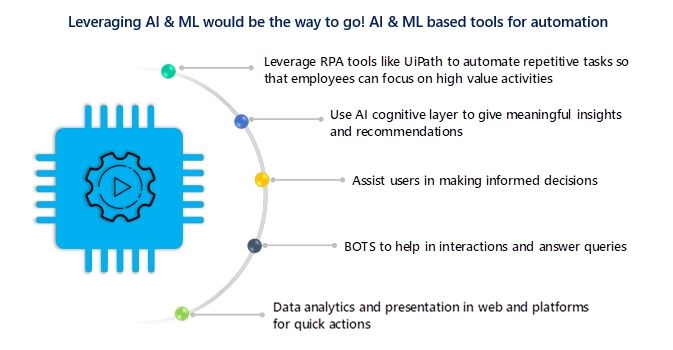
2) AI & ML based tools for automation
Digital Tools around ERP

AI & ML based tools for
Automation
Leveraging AI & ML solutions will ensure competitive advantage and will be part of vital strategy for any organization. Major challenge with ERP adoption is with mundane repetitive tasks that puts off the users and they avoid logging in as much as possible.
The other major factor is the end user expectation to get relevant data, recommendations, and reports similar to what they get in social media or ecommerce platforms. ERP applications and their data structure along with their application rigidity may not be able to provide such insights and user experience.
Though there are many routes to accelerate user adoption for ERP, digitization and AI & ML would yield maximum results and it directly connects with behavioral and usability aspects and also works well for the millennial workforce.
