


Have you heard the saying, data is the new oil? Heres a great quote by Davis Buckingham: Data is the new oil. We need to find it, extract it, refine it, distribute it and monetize it.
In fact, this comparison has been made before in 2006 by marketing commentator Michael Palmer: Data is just like crude. Its valuable, but if unrefined it cannot really be used. It has to be changed into gas, plastic, chemicals, etc., to create a valuable entity that drives profitable activity; so must data be broken down, analyzed for it to have value.
These statements could not be more accurate. Data is the new currency for those companies that take advantage of this valuable resource. And this mentality is not simply a result of the world of bigger and faster data. The real potential is in the insights that can be derived through effective data management. So if you are ignoring your data, read on. There is a goldmine of opportunity you may be missing out on:
- Businesses can leverage their data goldmine to improve sales, increase efficiency, enhance customer satisfaction, enable more informed decision making, and identify new marketing opportunities.
- Processes can be more easily automated and placed into workflows based on individual data elements.
- Organizations can make good decisions and trust that those decisions are backed by reliable, verifiable data.
- Organizational reporting becomes as simple as pushing a button to run even the most complex reports. The ongoing execution of those reports can be trusted because the underlying data is trusted.
According to a report by Experian, the top reasons companies report for maintaining high quality data includes:
- Increased Efficiency (63%)
- Increased Customer Satisfaction (53%)
- More informed decision making (51%)
- Costs Savings (45%)
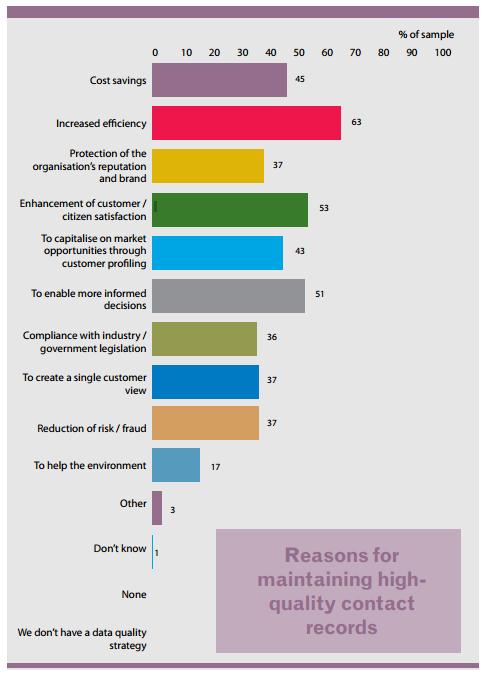
As you can see, when data is good, really good things can happen. But when data is bad, the consequence can be just as extreme.
Check out one of our recent posts: Dirty Data Horror Stories When Good Data Goes Bad.
Data decays at an average rate of 2 percent per month, which means you can expect 25 to 30 percent of your organizations contact data to go bad each year under normal circumstances (NetProspex). According to research firm, SiriusDecisions, the average company contains up to 25% of bad data in their most critical systems.
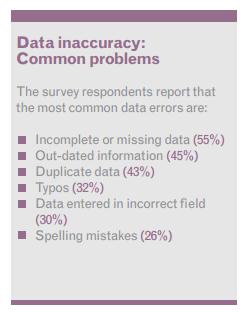
According to Experians survey, some of the most common data inaccuracy problems are:
- Incomplete or missing data (55)
- Out-dated information (45%)
- And duplicate data (43%)
While companies have long understood the value of investing in human capital, managing data for smarter decision-making requires a similar level of commitment and investment. Companies that embrace a data-driven mindset can be confident that data is of the highest quality to support business intelligence, increase revenue and grow the business. And ultimately, tap that data goldmine!
