



We’re never too far from experiencing some form of marketing automation. There’s likely to be some form of automated email in your inbox right now from a recruiter who left you a voicemail or a company that’s attempting to retarget you after a purchase you made six months ago. There might even be an email from a clothes store asking if you’re still interested in buying that coat you added to your basket but didn’t purchase.
Across various industries, automation can act as a significant tool in ensuring the success of businesses – regardless of whether they’re startups or established multinational companies. In fact, a VB Insight study found that as much as 80% of marketing automation users reported increases in their leads and some 77% reported increases in the number of conversions they receive.
Some small business owners may believe that automation is an advanced and expensive technology that’s reserved only for large corporations. However, startups and smaller endeavours too can enjoy automation within a range of operations – from capturing leads to troubleshooting customer concerns.
Automation can be an excellent tool in aiding businesses to communicate more efficiently and personably to customers and clients alike – at no extra expense or working hours wasted. Let’s take a deeper look at six ways in which automation is changing how businesses personalise their communications with clients and win new customers:
Effective Retargeting
For the majority of business owners, a sale isn’t an isolated event. Ambitious businesses will be aiming to encourage a customer to make purchase after purchase online – especially if a recurring service or disposable product is being bought.
Significantly, the likelihood of selling a product to an existing customer stands at around 60% to 70%, as opposed to 5%-20% for a first time visitor – according to figures published by Econsultancy.
Here, it’s vital to avoid waiting for customers to decide to make another purchase with you and act on gently reminding them that your business and its products still exist.
Automation software has the ability to act as a stopwatch once a sale has been completed, and has the ability to send a follow-up notification after a pre-programmed amount of time. For example, if you sold a subscription-based service, your customer can automatically receive an email two days before their purchase expires.
It’s possible to edit email templates to include product links for customers to effortlessly click and purchase without the need of manually searching websites. In such scenarios, automation provides unparalleled convenience for customers and tangible sales.
Adapt Your Business to Suit Market Demand
Automation gives businesses the scalability and adaptability to cope with changes in market conditions since there’s less of a need for new employees to be hired to handle fluctuations in consumer demand and conversion volume.
For instance, automation can help businesses to operate repetitive tasks such as data entry or metadata editing in order to avoid training new employees. This helps small businesses to be more cost-efficient and automatically manage orders without delays.
Assess Customer Satisfaction
Customer satisfaction can be effectively surveyed in order to provide businesses with the information needed to make improvements and secure more sales. If the feedback is largely negative, it’s possible to identify what’s going wrong and highlight what can be done differently. If the feedback is more positive, it’s possible to identify what’s making the company more successful and optimize the company to provoke more satisfaction.
By using automation software, it’s possible to email a survey link to customers after they’ve bought a product. The survey can come in the form of a web-based form asking how satisfied were you with your purchase?’ with five possible answers ranging from disappointed’ to delighted’.
Follow up emails can be automated to suit the customer’s levels of satisfaction. If a customer expresses a negative opinion, the software could automatically trigger a task to contact the client via phone or email. Here, automation can put businesses in touch with dissatisfied customers quickly in order to prevent further damage.
Statistically, most customers would be happy to let businesses have a second chance after poor customer service, however, almost 60% will ultimately change stores after repetitive negative experiences.
Likewise, if the response was largely positive, be sure to set up an automated email response to extend your gratitude to the customer and offer them the opportunity to share more about their experience. Customer testimonials are an excellent way to fill your pages up with positive content for other visitors to see. Services from SurveyMonkey can be readily optimized for customers to share their satisfaction with companies.
Deliver a Consistent Customer Experience
Automation allows businesses to standardize their marketing efforts, along with their order processing functions and subsequent shipments. Post-sale support can also enable companies to offer users a consistent on-site experience that can meet expectations and build trust among customers.
The act of fine-tuning processes to streamline the customer experience model is essential for businesses that are looking to forge some form of brand identity. Approaches to suit different types of target audiences can be automatically monitored using analytics engines like Google Analytics.

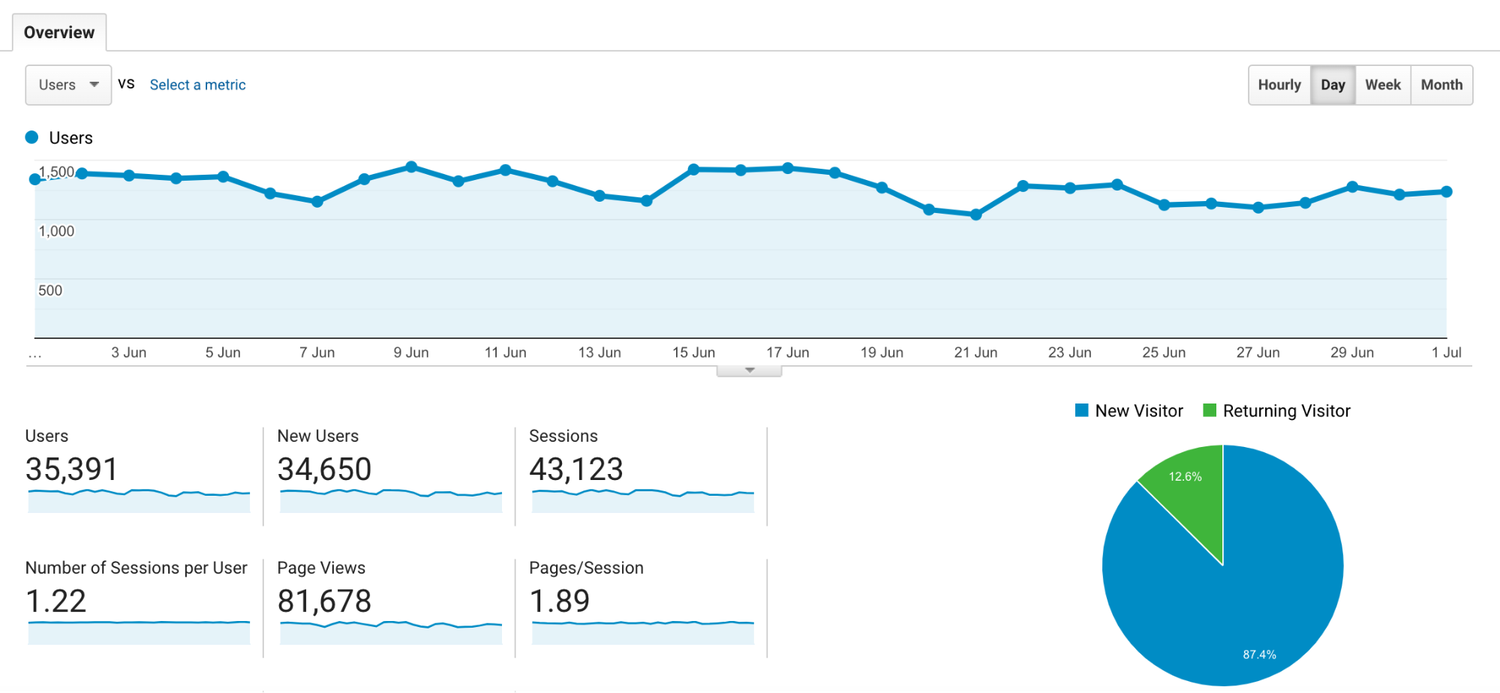
That said, in most cases, businesses are eager to see where the customers are coming from and which pages drive most conversions.
In such instances, conversion and funnel tracking tools like Finteza can be of good help. From identifying key audience characteristics to seeing where potential customers drop off, businesses are able to track, analyse and optimise accordingly.
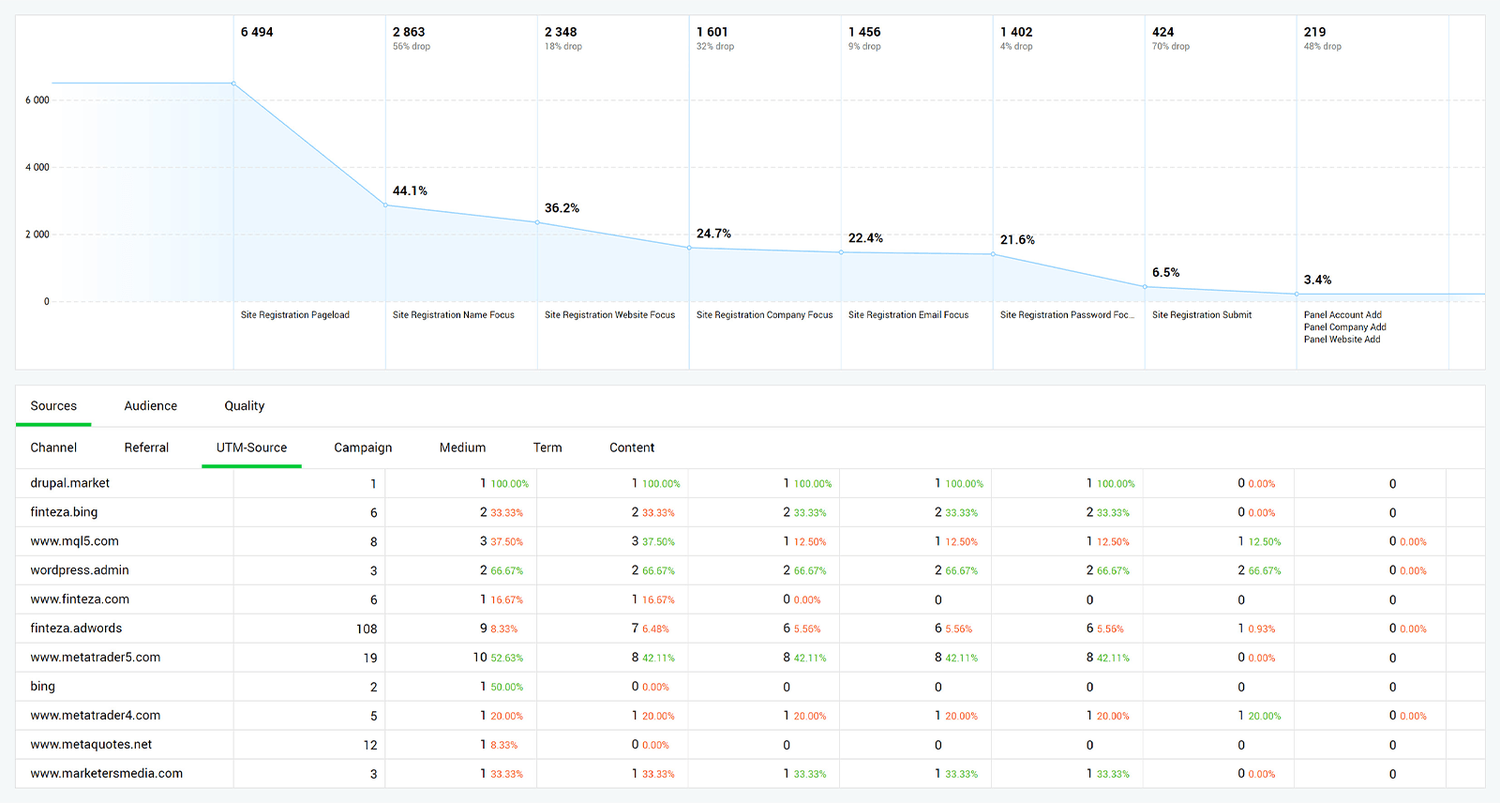
It’s through the adoption of analytics that businesses can effectively gauge the performance of different approaches to customer interaction.
Valuable Reminders
The world can be a busy place, and leads and customers may need reminders once in a while about their appointments. Sometimes they may even need reminders of their reminders. Forgotten appointments, for instance, can seriously waste time and money for businesses which can ultimately prove fatal for revenue forecasts. It’s illogical for employees to dedicate hours to acting as each client or customer’s PA, but intelligent software can pick up the slack without breaking into a sweat.
With automation software, it’s possible for appointment reminders to be distributed via email each time a web form is completed, featuring high levels of personalisation – such as the client’s name, email address, appointment time and date. The form can be used to supply users with a sequence of emails that can confirm their appointment times, along with subsequent notifications that can remind someone in the days or hours leading up to said appointment. If a client or customer cancels, the relevant staff will receive an instant alert informing them in order for a rescheduled date to be arranged.
When it comes to manually keeping track of appointments and work calendars, the act of scheduling new appointments can be extremely time-consuming for employees. Tools like Acuity Scheduling and Skedify can synchronize to calendar applications in order to automatically schedule the process of booking and alerting clients and customers to appointments.
Automatic Assistance
There will invariably be times when your client is in need of solutions to issues in the service or products that they’re using. Nothing hurts a business’ reputation more than an unresponsive company that features a difficult-to-navigate website.
Fortunately, it’s possible for automated emailing software to embed easy-to-follow Contact Us’ links within customer correspondence. This can be an important part of the re-targeting process, where a business can show that it genuinely cares about the satisfaction of clients and customers alike, and is agile enough to instantly action any problems.
When a customer clicks on the Contact Us’ button on their email link, the automation software will immediately alert a member of staff to follow up on the query.
Implementing a live chatbot is another great way to automate customer interaction and direct potential prospects to the right person within the business – as long as it’s not overused.
Most live chat software offer some sort of automation, including Intercom and LiveChat. These are fairly easy to implement.
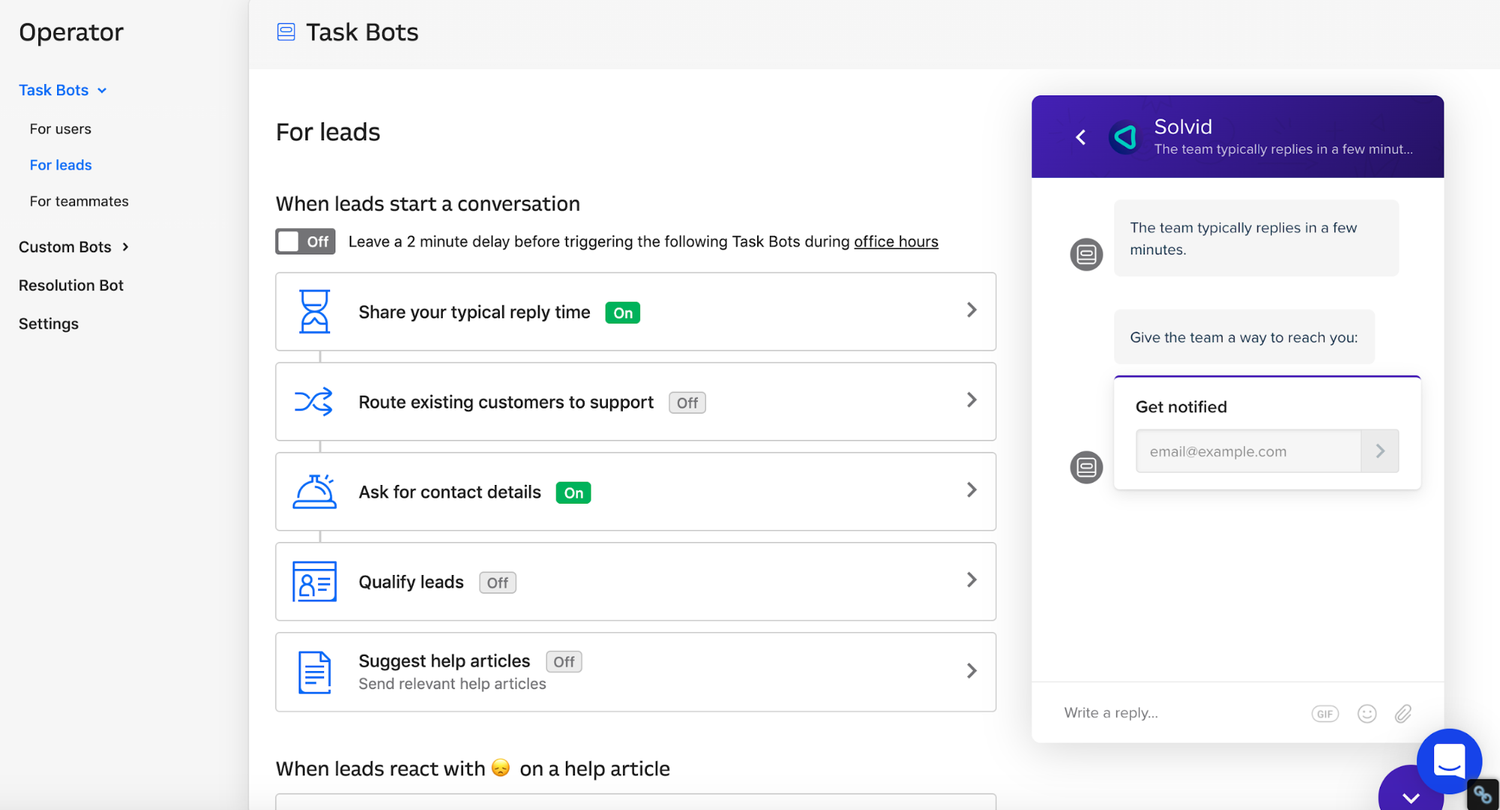
When it comes to automated processes, customers are able to experience a more personalized response to queries than they would have through phone calls or traditional emails. Automation software can even add employee names to drop-down menus in order to ensure that follow-up tasks are aligned with the right members of staff.
By automatically aligning tasks with specific customer issues, it’s possible for businesses to instantly connect users to the individuals who are best suited to help them out. Saving plenty of headaches for the shopper and business alike.