


World Wide Web, generally known as the Web, is a system of linked hypertext documents accessible over the Internet. Using a program known as a Web browser, you can view pages that can contain text, images, streaming media such as video or music, and almost any modern-day multimedia element.
One of the great successes of the system was the connection between the pages through hyperlinks. This allows for a non-linear walk-through between documents, known as navigation.
The original proposal for the Web was written at CERN (European Organization for Nuclear Research) in 1989 by Sir Timothy John Berners-Lee, taking as a precursor idea a never-materialized project called Memex. Devised by Vannevar Bush in 1945, it consisted of a device that would store documents of all kinds that would be consulted and edited through a kind of keyboard with levers.
March 12, 1989, is known as the birth of the Internet and positions Berners-Lee as a father of WWW. The formal proposal for the Web was officially presented at CERN on November 12, 1990, in part thanks to the collaboration of Robert Cailliau.
As a member of CERN, he was the one who decided to take up Berners-Lee’s idea and helped both in the writing and in the provision of resources to realize the project. By the end of 1990, they had already built the first web server on a Next system and the first browser-page editor software.
However, it was not until April 1993 that CERN decided to allow free use of the Web to the community. The appearance of the first MOSAIC Web browser from NCSA (National Center for Supercomputer Applications) marked the official beginning of the Web as a community-oriented system.
Â
In 1991 the first web page created by Tim Berners-Lee used a NeXT computer was published. This page, which you can see by clicking here, talked about the emerging and exciting world of the World Wide Web.
The web 1.0:
The web 1.0 is named to define all previously created the phenomenon of Web 2.0, so that both are synchronous.

During the last decade of the 20th century, we navigated through these static HTML pages, where the use of gif frames and buttons was abundant and subject to the control of a webmaster who occasionally updated them. The consumer had a passive role where he only received information from companies. Users could only interact through e-mail, chat or in the conversation threads of the first internet forums.
Â
The web 2.0:
The first conference on web 2.0 was held in October 2004, although the term first appeared in 1999 in Darcy DiNucci’s article Fragmented Future.

Regarding design, web 2.0 is based on web standards, to make it a usable page, accessible to all and efficient. You can learn more about web standards here .
Web 2.0 is purely social. It is based on active users. The rise of blogs, social networks, wikis, tags or labels, websites created by users … etc., makes companies change their vision of the market and marketing strategies completely and focus on interacting with their consumers, who go on to be clients 2.0 or adprosumer. The client demands transparency, information, advice, quick customer service, personal treatment, low cost … And that same client makes online evaluations of the products, complains or congratulates, promotes or boycotts … Now he is the one who has the power.
Â
The web 3.0:
The expression web 3.0 first appeared in an article about Jeffrey Zeldman , creator of the Web Standards Project.
“The technological advance towards artificial intelligence and the semantic web contribute to the emergence of web 3.0 or data web . This trend leads to the use of intelligent programs that use semantic data to create a language that can be easily understood, shared and integrated. A responsive design adaptable to any device is essential.” Said a spokesperson from website design by rank by focus Toronto.Â
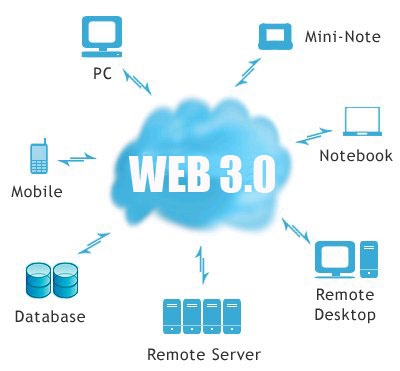
The concept of the 3D web also began to emerge, after the fashion that emerged from the cinema. There is still a long way to go, but already in CSS3 we can create transformations that use the third dimension and HTML5 begins to incorporate advances in this regard. More advanced, WebGL is being created, a standard specification for displaying hardware-accelerated 3D graphics on web pages.Â
Â
