


Where are technical developments in dentistry taking us? The digital change is in full swing, but which trends will determine the dental future? We look at innovations and future technical standards – at topics such as AI in diagnostics, at trends such as increasing networking (IoT) and at the fundamental change that dental practices are facing worldwide.
Will digitization determine the future of dentistry? Certainly not, because the future is made by people. And yet, no dental practice and no laboratory can ignore the digitization of processes.
In principle, the change offers many opportunities, but at the same time poses great challenges for dentists and teams. Digital language assistants, Internet-of-Things (IoT), artificial intelligence (AI), cognitive technologies, analysis algorithms, data-collecting devices, big data, platform business – all the smart-sounding buzzwords can be unsettling.
At the moment, digitization in everyday clinical practice for many dentists is as follows:
- Everyone reads and speaks about it
- Everyone thinks the other country is much further ahead
- Hardly anyone knows how it really works
1. Digitization And Ai In The Field Of Diagnostics And Analysis
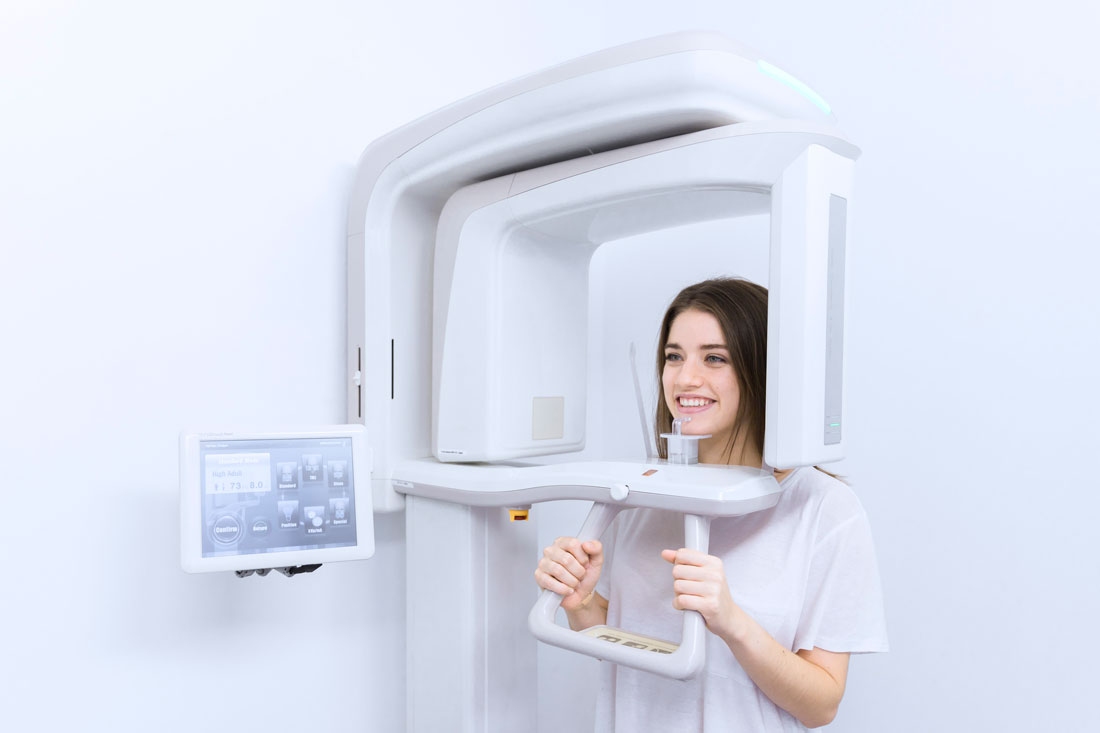
Artificial intelligence (AI) will be an important colleague to support the dental practice team in the future. The application ranges from diagnosis (comparison of risk factors, patient history, anamnesis) to the evaluation of digital X-ray images, the assisted planning of surgical interventions (e.g. implant position) to billing and bookkeeping.
The advantage of AI is optimized cognitive abilities. Cognitive systems derive conclusions and decisions from digital information on the basis of learning algorithms. Algorithms process significantly more information and recognize more patterns than the human brain is capable of. AI compares various symptoms and risk factors with the patient’s medical history and history and develops suggestions for action or diagnosis recommendations (probability calculation).
The extent to which machines should and may determine medical therapy is an ethical question that needs to be discussed elsewhere. The possibilities are there and in many cases can be used for the benefit of the patient. AI is already being used to analyze digital image data. In the near future, AI will also help dentists make decisions.
AI for caries monitoring, endodontics and orthodontics
AI has already found its way into the field of tooth preservation , among other things. Some intraoral scanners or their analysis software work with artificial intelligence to detect caries. In addition, caries can be detected by cognitive systems on digital x-rays before they are visible to the human eye. In endodontics, AI systems can have a positive influence on the treatment or assessment of the situation.
In orthodontics, cephalometric evaluations are carried out automatically; in a fraction of the time it would take a human to do it.
AI in the field of image analysis (diagnostics and planning)
Intraoral scanners already contain more and more artificial intelligence. The smart scanners are becoming diagnostic and communication devices. With the AI ‹ ‹crown technology, implant’s construction proposals are made based on deep learning algorithms.
The therapy proposal can be presented and explained to the patient with realistic visualizations (e.g. using a face scanner). And the development continues rapidly.
In digital implant planning, AI processes optimize the decision regarding the implant positions and the type of restoration. Still, oral surgery is a craft that requires many manual skills from the surgeon.
AI in the field of pathology (image-based information)
A method that is already in use is diagnostics using images from digital cone beam computed tomography (CBCT). It serves as a cost-effective and dose-efficient imaging method for the diagnostic assessment of dental diseases. The CBCT is ideal for preoperative diagnostics and planning.
Tools for aesthetic-functional rehabilitation (apps, FaceScan, digital set-up)
When planning prosthetic therapies, apps enable optimized communication with the patient, among other things. In addition, by merging the data from the face scanner, the intraoral scanner and the DVT / CT, a virtual patient can be created. This is the basis for the realistic, individual planning of an aesthetic-functional denture. Planning and analysis take place in real time. CAD / CAM drafts (digital set-up) can be “tried on” virtually.
Digitization in dentistry affects many areas such as automated production, networked devices (IoT), digital information exchange, artificial intelligence (AI) in diagnostics and analysis. Part 2 of the article gives insights into automated production.
2. Digitization, AI and Connected Devices (IoT) In Manufacturing
Digital manufacturing in dentistry has established itself. Hardly any practice or laboratory nowadays works without CAD / CAM-manufactured components. CAD / CAM milling and 3D printers are common manufacturing technologies with which dental laboratories in particular are driving digital change. Future-oriented trend here: The networking of devices in the process chain, the “Internet of Things” (IoT).
Examples of digitally manufactured components in practice and laboratory
- 3D printed models (e.g. aligner models) and impression trays
- CAD / CAM-milled (possibly printed) occlusal splints
- CAD / CAM-milled zirconium oxide frameworks (e.g. Zirlux) or monolithic restorations
- 3D-printed drilling templates
- 3D printed temporary dentures
- CAD / CAM-milled full dentures
- CAD / CAM-milled all-ceramic single tooth restorations
- 3D-printed partial denture frameworks (SLM process)
Networked devices will determine the future of manufacturing in dental practices and laboratories
Dental production units are developing rapidly. The focus is more and more on process chains. With 3D printing (SLA, DLP), for example, devices for post-processing (cleaning and polymerisation) must be matched to the materials and printer.
In the future, the various devices in a process chain will be networked even more closely and communicate with each other (IoT). Digital order documents are used for process monitoring and optimization. With software platforms, upstream and downstream processes can be accelerated and sources of error and costs can be minimized. Artificial intelligence allows processes to merge.
CAD / CAM production units allow almost autonomous work: Fully automatic warehouse management systems, intelligent tool management and integrated cleaning unit, automatic change between wet and dry mode are already possible today. Material information is read out and processes are controlled via chips on the milling blank.
For the dentist and dental technician, all these changes do not mean turning the entire day-to-day work inside out overnight. However, the change can be observed – with an open and a critical eye.
While many new possibilities promise simplified and improved dental therapy steps for the benefit of the patient, some innovations are nicely colored by clever marketing statements. In order to be able to assess this correctly, further training courses are helpful in which pioneers of digital dentistry talk about their experiences.
Digital orthodontics and 3D printing
The influence of digital impressions and production in the field of orthodontics is great, there are already fully digitized orthodontic practices. At the same time, it will be easier for dental practices to offer popular and lucrative orthodontic services. Orthodontics clearly show how digitization makes it easier to work in the interests of the patient and at the same time to expand one’s own business.
3. Digitization In The Dental Practice

Digitization in dentistry also affects areas that are not directly related to patient treatment. This change will accelerate in the future – entrepreneurial dentists as well as their patients can benefit from this development.
Permanently online and almost always available – that’s our society today. We are used to shopping comfortably and with just a few clicks, booking appointments, reserving a table in the restaurant, etc. This development does not stop at the health market. Many patients expect digital offers and smart services, especially the younger ones who are spoiled .
And the dental practice? It can benefit from these developments if the digital offering is expanded and modernized accordingly. What sounds like a big challenge at first glance is put into perspective at second glance. The process is usually gradual. Digital building blocks are gradually being established, as we know it from everyday private life. But that also means: stay well informed!
InvisLondon, a private dental clinic in London, has developed an intelligent AI assistant that analyzes existing patient records to automatically identify and schedule patients. Thus, generating more revenue for the clinic and helping patients at the same time.
Digital tools are also establishing themselves in the everyday life of patients and this gives the development renewed dynamism. The initiators include digital voice assistants and the Internet of Things (IoT).
Examples of digital technologies already successfully used in healthcare and dentistry
- Health apps
- digital patient record
- digital health applications (apps on prescription)
- digital health services research
- artificial intelligence (AI) in dentistry
- digital transformation in teaching and research
Company dental practice and the digital patient
With digitization, the patient gains “market power”. The increased awareness of oral health in connection with digital tools (platforms, apps, etc.) is changing behavior. Patients are well informed; about practice and health issues.
Dr. Google is always available, quickly contacted and ideally offers expert knowledge for lay people. Searchers will also find portals with solid information for dentistry. An alternative can be the individual practice website.
In addition, patients use doctor search and evaluation portals and exchange information on platforms. They have wearables and apps and can access their own health data (e.g. blood pressure, pulse, etc.). In addition, e-health is finally getting closer and closer in the West.
Well thought-out concepts (e.g. in Scandinavian countries) show great potential. Communication between specialists is mainly paperless. Appointments, follow-up prescriptions, etc. can be managed via a portal. E-prescriptions are common practice. The patient has access to their own electronic patient record (EPA). The basis is a good internet infrastructure and doctors and patients with the appropriate e-skills.
E-health concept advances in Germany
2021: Health insurance companies must offer their insured persons an electronic patient record. In order for this to be filled, patients are simultaneously entitled to have the doctor enter the data in the electronic records.
2022: In addition to findings, doctor reports or X-rays, vaccination cards, maternity records, U booklets for children and dental bonus booklets can be saved in the electronic patient file from 2022. Insured persons should be able to determine each document stored in the EPR via smartphone or tablet. The patient determines whether the doctor or dentist can access the EPR and which findings are to be displayed.
2023: Insured persons have the option of voluntarily making the data stored in the ePA available for research purposes as part of a data donation.
And the development continues. With blockchain technology, platforms could be implemented that manage, regulate and control themselves on the basis of algorithms. Manipulation is not possible, which could be useful in billing services, for example.
Digitization in communication and marketing
Communication with patients, colleagues, partners, etc. is also changing with digitization. E-mail, messenger services platforms are taking data protection into account. There are various ways of digitally consulting colleagues and exchanging information with patients.
And of course the modern practice website is an important component in communication and marketing. Although recommendations from friends / family are still the most important source for finding a new doctor, information on the Internet follows closely behind. In addition, the online booking of appointments is of great importance for the majority of people with a digital affinity. In many cases, this possibility even influences the choice of doctor.
According to a survey, 59% of patients wanted to make appointments online in 2018. 60% of people are fine with communicating digitally with their doctor.
All of these developments mean enormous changes for the dental practice. Patient orientation and transparency become success factors. Digital treatment and care processes for patients are becoming increasingly relevant.
Digitization in the field of corporate management
Put an end to the mess of paper – that is another advantage of digitization. The paperless practice can be easily implemented with modern software. In addition, practice management systems allow efficient and smooth processes. Administrative practice processes such as inventory management, personnel management and financial administration can be organized and simplified digitally.
The developments resulting from global digital networking in the area of ‹ ‹purchasing are exciting. New players, often from outside the industry, appear in retail and sell their products via digital platforms. Material orders are placed over the Internet. The networking of devices and platforms in conjunction with algorithms and AI software enables a strong marketing force that serves the targeted sale of products.
Digital marketplaces serve to obtain information and compare prices. Industry-specific platforms score highly here with expert knowledge and qualified answers to product inquiries. There are already platforms in the dental sector that provide meaningful information about products and developments. In the future, online marketplaces could also act as a merchandise management system. For example, minimum stocks are set or special conditions are stored and orders are triggered directly.
Final words
One thing seems certain: With digitization, an important “aspect” remains at the center of our activities, namely people. It is we who are shaping digitization and filling the intelligent tools and possibilities with life. Let’s stay informed and up to date.
