


What we know for sure is that the board-level role of Chief Data Officer is on the rise. Google Trends shows waning public interest in CIO and CTO searches as CDOs rise from the depths of obscurity into the limelight. Gartner estimates that 90 percent of large companies will have a CDO role by the end of 2019.
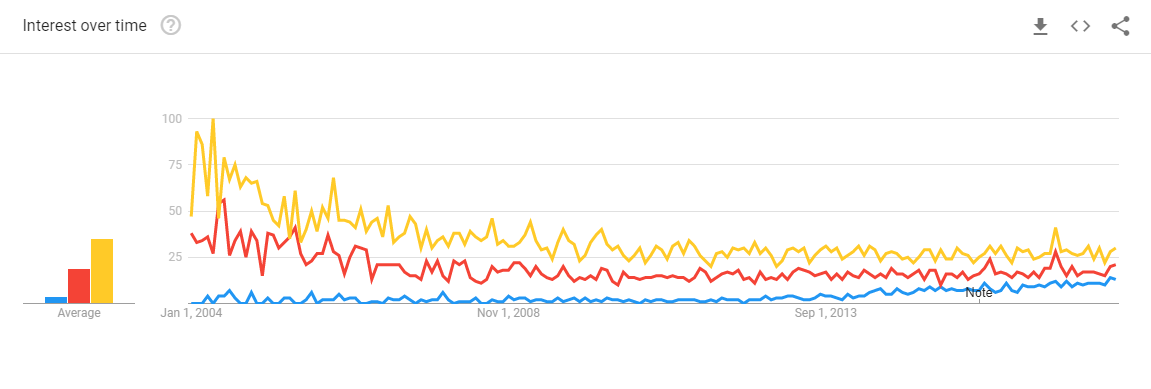
The popularity of Chief Data Officer searches (blue) compared to Chief Technology Officer searches (red) and Chief Information Officer searches (yellow) from Jan 2004 through present according to Google Trends. The period with the most searches is given a y value of 100, and all other periods are charted in comparison to that peak.
So we know the CDO is becoming a powerful corporate figure, but we’re only beginning to understand why.
First, every company has a different idea of what the CDO role entails. As Information Week‘s Lisa Morgan reports, Not all CDOs are created alike. Some report to the CEO, for example, while others report to the CIO or another board-level executive. CDO responsibilities vary from company to company and even evolve as business needs mature. In The Chief Data Officer Dilemma, Forbes contributor Randy Bean summarizes the problem like this:
So although the jury is still out on what exactly a CDO does, it appears to be to ensure that company data is used well. As Gartner puts it, The race to drive competitive advantage and improved efficiency through better use of information assets is leading to a sharp rise in the number of chief data officers (CDOs).
For the CDO, affecting better use typically means coordinating between the IT, executive, and finance departments to improve data quality and monetisation. Most CDOs, for example, contribute to a data management program of some kind, which program is designed to ensure that data is sourced, modelled, transformed, stored, and governed appropriately throughout its lifecycle. They likely also sift through that data in search of optimisation and/or business opportunities, bringing discoveries to the attention of the other C-level executives.
The point of disagreement appears to come down to the scope of the Chief Data Officer mandate, writes Bean, and whether the primary responsibility of the CDO should be to plan, coordinate, or implement data initiatives.
Perhaps the answer to this question will stem from the unmet need that inspired the CDO’s emergence in the first place. John Bottega, Executive Director of the Enterprise Data Management Council, was CDO for Citibank from 2006 to early 2009 and believes it was the 2008 recession that underlined the need for a CDO and catalysed the role’s ensuing growth.
Banks are responsible for understanding the aggregate view of the customer’s positions because the aggregate view dictates aggregate risk, explains Bottega. If you look at the financial crisis, it was that lack of ability to aggregate that left the industry blind to what was going on, how the risks were increasing.
So while the CDO’s role was introduced before the crisis, Bottega contends it did not become an imperative until regulators started telling institutions they had better have a data expert on staff. The mantra was get your data in order, he says, because if you don’t have your data in order, you can’t understand your risk.
But when asked whether the CDO should plan, coordinate, or implement data initiatives, Bottega dismisses the premise, calling it a strange delineation.
The Office of Data Management’s role is to ensure that data providers across the organisation deliver data that is accurate, timely and trusted, with minimal reconciliation. The CDO and CIO must partner to build the infrastructure needed to make this happen. How the CDO carries out these duties, it would seem, depends on the firm and the CDO.
Firms are starting to recognise more and more that content matters, that data matters, that technology has to be a strong partner with the content owners, and that neither of those exists without business process, says Bottega.
Given these trends, the role of CDO will likely continue to evolve and become a more established component of the enterprise C-suite.
