



Do you have an automation strategy for your small business?
You should.
Automation continues to take the business world by storm and has, over time, become available for everyone’s use. Currently, 79% of organizations use automation tools.
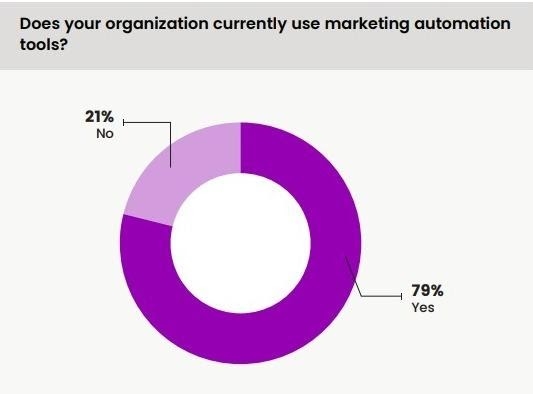

Image via Regalix
Brands of all sizes can now automate their processes and transform into efficient, productive, and profitable establishments.
However, despite the huge adoption numbers, if you don’t have an effective automation strategy for your business, you won’t get the desired results.
Not sure how to handle that?
Well, this post lists four ways you can develop an effective automation strategy for your small business.
But first, before we dive into the strategy, does your business need automation?
Why Do You Need An Automation Strategy For Your Small Business?
An automation strategy for your small business can help you:
- Adapt easily to market changes.
- Optimize your budget and boost returns on investment.
- Improve collaboration.
- Reduce labor costs.
- Free up resources to work on innovative and strategic initiatives.
- Streamline employee experience by addressing and meeting their needs on time.
- Improve client communication through timely information exchange.
- Standardize processes and offer consistent customer experiences.
- Streamline customer support and improve satisfaction.
- Minimize costly human errors and improve accuracies in operations.
And now that you know why an automation strategy for your small business is crucial, how do you develop an effective one?
Follow these steps:
1. Define Automation Goals
The more intentional you get with the automation strategy for your business, the more you can achieve.
So, before you can start automating any process, ask yourself:
What is it I want to achieve with automation?
Not sure why your business would need automation?
Well, the following are some of the common reasons brands adopt automation tools:
- Speed-up tasks: Seek to get more done with the resources available.
- Reduce errors and improve efficiency: Improve input and output quality.
- Free up employees for high-value work: Boost employee creativity and innovativeness by freeing them from tedious and repetitive tasks.
- Reduce human labor costs: Reduce the need to hire more employees and increase profits.
- Improve customer experience: Personalize communication, reduce response time, give timely follow-ups, and anticipate future customer needs.
2. Choose Areas to Automate
The decision on which areas to automate will depend on problems you need solving and tasks your team performs in a day. And for the automation strategy for your small business to work, you need to review which automated tasks would benefit you most.
But how?
Well, consider if they fit two or more of these criteria:
- You can perform them without putting much thought into them.
- They require repetition of the same process.
- They interrupt your team’s focus.
- They don’t need lots of personalized attention.
- They don’t challenge your teams’ skills.
Not sure what these tasks could be?
Well, here are areas your automation strategy for your small business can include:
Sales Automation
One of the benefits of adopting an automation strategy for your small business is that it can help you organize your sales funnel. This way, your sales team identifies quality leads and guides them to conversions.
Some of the processes to automate include:
- Sales progress mapping
- Follow-up emails and reminders
- Tracking transactions
- Upsells and cross-sells in ecommerce
- In-store couponing
- Pre-populating fields in proposal development
- SMS campaigns
Operations Automation
Automating operational processes can free up time employees spend performing repetitive tasks and ensure compliance. Some of the tasks you can automate include:
- Scripting customer data for agents
- Call center escalations
- Timesheets and payroll
- Employee onboarding, enrollment, payroll, vacation scheduling, etc.
- Security checks and software upgrades
- Inventory management
- Expense management
- Team communication
Marketing Automation
With automation software, your business can gain leads, nurture, convert, and retain them efficiently. Some of the areas to automate include:
- Lead management
- Coordinating email campaigns
- Ensuring the right people see your display ads
- Direct mail campaigns
- Customer support
- Social media scheduling, publishing, analytics, and social listening
- Scheduling appointments
- Retargeting
3. Integrate Automation Tools
Once you identify tasks your small business can automate, it’s time to choose tools to make this a reality.
But how do you choose the best?
The following are some of the best tools you can consider:
- Marketing automation tools: Eloqua, Marketo, Pardot, and ActiveCampaign.
- Email marketing automation: MailChimp, Constant Contact, Customer.io, and Drip.
- Social media automation: Hootsuite, Buffer, CoSchedule, and Mention.
- Lead management: Leadfeeder, Act-On, LeadSquared, and Keap.
- Advertising automation: Perfect Audience (SharpSpring Ads), AdRoll, and metadata.io.
- Referral automation: Ambassador and Referral Rock.
4. Track Results and Refine Your Automation Strategy
While the automation strategy for your small business won’t offer you overnight results, you should track performance.
Identify crucial KPIs related to your business goals and use them to find out:
- Whether you effectively use your automation budget.
- If the marketing automation tools help you launch more campaigns, send more personalized emails, and improve your team’s productivity.
- Which tools deliver great results, and whether you can dispense with others.
- What additional processes the tools can help you automate.
- Testing and rectifying errors of mobile game app development.
Most importantly, leverage insights from data collected to optimize your automation strategy.
Ready to Start an Automation Culture in Your Small Business?
Once your team gets comfortable with automation, it will become easy to recognize tasks they can automate.
And if you implement this automation strategy for your small business, you will find it easy to save time, improve efficiency, and increase profitability.
Would you like more help designing an automation strategy for your small business? Comment below, and we can offer customized solutions to help you make the most of automation.