


In the last couple of decades, there has been a massive surge in the number of data-intensive applications. Thus, companies nowadays are relying more and more on third-party cloud storage providers to store massive amounts of data. With cloud storage offering companies outstanding benefits such as cheap storage space, safe data backup, high data flexibility, and easy maintenance, it’s no wonder that more and more companies are leaning towards implementing it into their system.
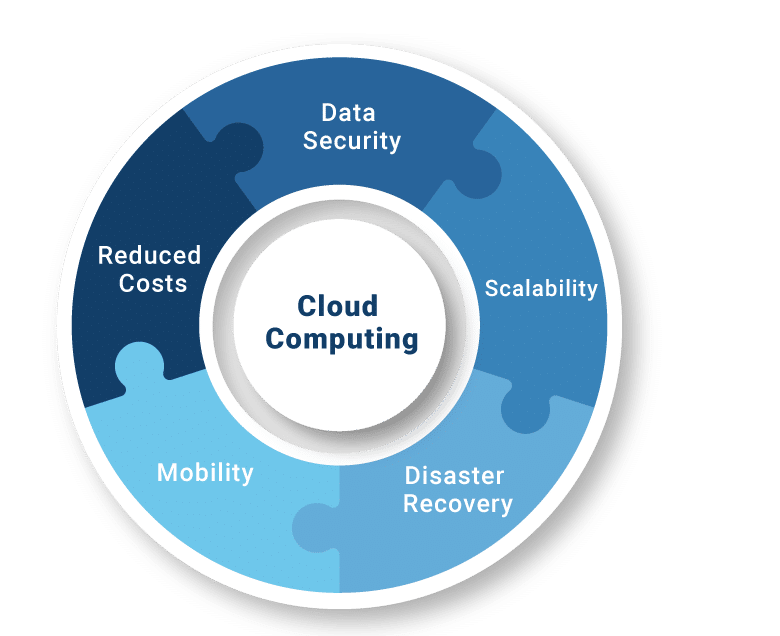
However, cloud storage still has some limitations, especially in the data security department. Since the data is not stored on the company’s premises but on external servers through the internet, there is a higher risk of someone gaining unauthorized access to the company’s data, making it much easier to access, manipulate, and delete.
Here is where implementing a security approach such as data security posture management comes in handy, eliminating any chances of security risks.
Data Security Posture Management
According to Gartner’s recent 2022 Hype Cycle for Data Security report, “Data security posture management provides visibility as to where sensitive data is, who has access to that data, how it has been used, and what the security posture of the data store or application is.”
To simplify things, data security posture management (DSPM) is an approach for managing and maintaining a system’s cloud data. Since its introduction, the DSPM approach has been widely implemented as more and more companies nowadays are utilizing more than one database cloud provider to do their bidding.
Due to the use of multiple cloud providers, there is an increase in these systems’ overall complexity, requiring an effective process for managing and maintaining data along all the cloud storages. The central concept behind the DSPM process is to identify a system’s sensitive data and its storage location, tracking who has access to such data, when it was last accessed, and how it is being used.
With that said, by integrating a proper DSPM process, organizations can identify and eliminate any security risks. So what are the three steps of the DSPM process?
1. Locating the Data
While it may seem simple initially, as what organization would not be capable of locating its own data, the process of data localization gets a bit more complex with cloud computing. With organizations utilizing third-party cloud providers, there is no definite way of identifying where exactly is an organization’s data located. This is due to third-party cloud providers storing data in thousands of data warehouses worldwide. The process gets a bit more complicated for companies that utilize multiple cloud providers, as the data will is distributed across different companies and data servers.
2. Identifying Sensitive Data
It goes without saying that for a data-oriented application, data is one of the most critical assets of a company. Companies need to make sure to keep their data safe and away from third-party breachers in all cases. The DSPM process categorizes data in order of their sensitivity, giving a higher priority to more delicate data. So how can we identify and categorize sensitive data?
Sensitive data is any personal data that relates to a person’s given traits, ranging from ethnicity and religious beliefs to age and even food allergies. While it is easy to identify personal data such as user name, age, address, and credit card number, it is more difficult for organizations to detect doubtful sensitive data, such as a person’s medical history and allergies.
3. Applying Security Measures
After identifying and locating the sensitive data, an efficient approach to securing such data must be implemented. First, on the list, we have access control. Access control is the process of identifying who has access to specific data and what they will use it for. Data access is usually distributed across different personnel with different access levels. Additionally, organizations should ensure that no third parties can have unauthorized access to their system.
Another security measure is anomaly detection, which is the process of identifying suspicious data. Lastly, we have data flow maintenance, which is securing the transfer of data from one part of the system to the next.
Conclusion
While cloud storage has become the go-to storage approach for companies nowadays, offering cheaper costs, more flexibility, and higher maintenance, it is still not perfect. It has some limitations in the security department.
To fix such security issues, we use the DSPM system, a new and effective solution for maintaining a system’s overall cloud activity. In this article, we discussed the three main steps of the DSPM process: data location, the identification of sensitive data, and finally, the three security measures that should be followed to keep the data secure.
While it is still new, the DSPM approach takes a great leap when compared to other security approaches as it focuses more on studying the data itself and not on higher-level system vulnerabilities, which are easier to detect.
