


The Cookies Moved Your Customer?
Chances are if you are reading this post, you are digitally connected either through a PC, laptop, tablet or mobile device. More likely than not there are “cookies” on your device that know what you viewed before reading this and where your digital journey will take you after reading this.
Somebody, somewhere, knows who you are (digital profile), where you are (IP address & geolocation), and what you do online (web browsing and cookies). Perhaps this publishing platform is also doing it (scary isn’t it). Or that LinkedIn would know all this. Why would they want to know?
There’s a race going on in the tech world. A race to get as close to you and your information as possible.
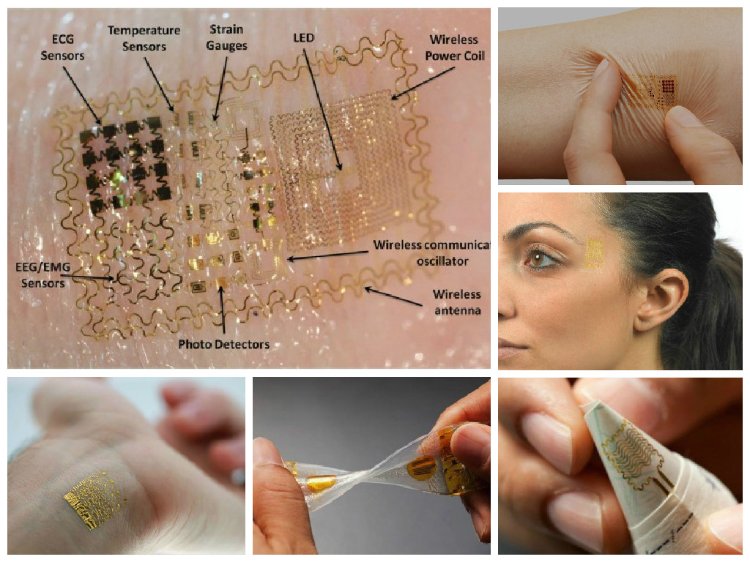
Hello Biostamp. Read ON. Video below.
Forget about knowing your IP address. That’s old technology. This thing will know your perspiration and heart rate at every single mouse click and web search, while you do your business, and even during your most intimate moments. Imagine the possibilities.
Democratizing Data
The new digital economy is spurring a movement. The movement to a new type of marketing dollar. One where data is the “commodity” and you are the hunted.
Yes, you read it right. Your every move is being tracked by everything that is connected. Why?….because they all want your data – the new OIL. Wearables will soon have a whole new meaning. The biostamp is like a piece of Scotchtape. YOU become the connection! An android or cyborg of sorts, constantly feeding a live stream of data into the cloud. Great things are on the horizon.
The New Digital Revolution
In this new Digital Revolution, you most likely own more than one “automobile”. Your home mobile, your work mobile, your TV, your home phone, your laptop, your tablet, the connected thingamajig you wear on your wrist to count your daily steps, your new digital thermostat, the new smart fridge you just bought…
Your new car is even connected through a multitude of sensors. A young household of two parents and two young adults most likely has 8-20 connected devices. That produces a lot of “oil”
Why? you ask?
The new tradable “oil” is data. The accumulation of quality data is becoming a mecca for marketers and business minds alike who want to know who you are by your digital actions and reactions.
By reading this post, somebody somewhere knows that you read a post with the keywords “data” and “life” in the title at X o’clock on Friday night, while your TV was tuned in to ” ” and you were receiving texts from your boss on your handheld. They even know you viewed “abc” online and bought “123” from amazon yesterday while you were streaming a song from “MNO” on your music device.
What’s your Digital Value?
Your habits just became part of an algorithmic function that will push an ad to your mobile or other device when you least expect it, but at just the right time. Or, allow an insurance company to measure the risk assumed when you call in for a car insurance policy. The true winners in the next phase of business will be the “data” companies that can aggregate the most precise and comprehensive data sets from connected devices including the IoE (Internet of Everything).
It’s a world where the heavy hitters like Netflix, Linked IN, Google, Amazon, GE, and a multitude of others are trading, enhancing and aggregating commoditized data sets to get that winning “big picture” of you. The question is, who will have the best picture?
The company who provides you that wearable device that counts your steps and your heart rate, well surprisingly they don’t really care how many steps you take in a day. They are exchanging the service of counting your steps and allowing you to analyze them through an online connected UX platform in exchange for “data”. Data that tells them that you are a “male/female” who is “not/moderately/extremely” active, who lives in “abc” city, that shops online for consumer electronics once a month, and buys frozen pizza at the local grocer every week.
The possibilities are endless, and the better the data, the more it is worth in the “data trading” market. That small print legal lingo that you so optimally agree to when you connect a device and activate an app through a connected medium is where the details are.
Don’t you think insurance and pharmaceutical companies would love to be able to evaluate what type of actuarial risk you are by perusing through your exercise, eating, driving habits, and medication regimen? What if they connected to the sensors in your car too, and knew that you normally drive over the speed limit and you stop at local watering hole every Friday to drink with your buddies. Linking all that to your credit card provider may even tell them that you drank too much and then drove yourself home.
Hmmm? The possibilities.
It only takes creative minds and the correct data sets to figure it all out. The question is, who has that last piece of golden information, and how much is it worth to them? i.e. The insurance company reduces payout risk by “x” hundreds of millions of dollars on automobile insurance policies by buying data from your automobile manufacturer on your driving habits. Will the auto manufacturer capitalize on that? Of course they will.
Who will determine what the information is worth? Chances are that a board of directors with a legal/financial/actuarial team will be having a few late night meetings.
The Data Supply Chain
These scenarios and others go all the way down the data supply chain. Wouldn’t that same insurance company be willing to invest in the tech manufacturing company that is producing those sensors that the automobile manufacturer is installing in your car? This way they may perhaps monopolize the installation parameters and usage rights. In so doing they could beat out the competing insurance companies by managing the risk better. The best data supply chain aggregators will win in this new Digital Revolution.
The point I am trying to make is that the data deluge is just beginning, and the value of it is huge. Everyone wants the right information so they can target you to spend money where they want you to spend it, or reduce their risk, or allow them to produce a new process or product to be consumed.
Aggregated Data Sets
It’s not the spending dollar of the final consumer that is important right now. The true dollars are being made in the middle market by companies that are finding ingenious ways to collect quality data and then trade this data for capital or keep it as proprietary information to optimize their business model and build new products.
What if Google, Amazon, Netflix, Alibaba, Linked IN, Facebook, and Twitter began aggregating their data sets to uncover billions worth in data nuggets? Well, it is happening, and it’s called the Cloud. That will be the topic of a subsequent post.
The Human Unique ID – It will Come
Will there come a day where we as humans could become a walking data machine? Will we be able to financially charge a mega data company for embedding a microchip in our offspring at birth? A chip that is instantly given a unique ID, and remotely connects to satellites millions of kilometers away. Any future connected device that this new birth connects to will beam to this embedded microchip and instantly, without a password, you are connected to the world.
The inventor of this chip embedding system will reign supreme since all connected devices will have to refer to the human interface unique ID. Interesting, isn’t it? How much will a new birth be worth to this microchip embedding company? Will mankind revert to having babies to financially gain from the data that they can produce over a lifetime?
Hopefully not, as if such is the case, machine has taken over.
Imagine the possibilities. Any single interaction you have with anything or anybody will be recorded. Everything! Your every step being tracked by a GPS, without even owning a cell phone. Instantly, you plug in your spouses Unique ID into a web portal, and Google Maps pinpoints to within three meters where they are in the world.
The first thing any company will ask for when starting a relationship with you will be: What is your Unique ID? Not your credit card number, not your cell phone number, not your date of birth or place of birth; but, your Unique ID.
Imagine the streaming data that would be available and what it could be worth. Trillions of dollars (more than that). How much money would this digital data silicone chip embedding company give you to embed you with it? That will most likely depend on how much you will be worth to them over the course of a lifetime.
Perhaps after a few years of analysis they will realize that white males born in city ” ” are the most profitable data sources. Will that cause a migration of pregnant women to morph to geo-locations that have the most valuable birth/data ratio for newborns. Will people start stealing microchips from eachother and selling them to embed in other people?
Well, honestly, I wish the world will never get to that.
