
Whoever says that handling data is an easy job, hasn’t met a data scientist. Data scientists perform the core job of handling massive data sets and creating meaningful machine learning models. Often, data is unstructured and highly inaccurate; in that case, identifying the data essentials for the ML model is among the persistent issues faced by data scientists. Data scientists look for data sets that are clearly structured and properly trained. This helps them begin working on practical machine learning models focused on the business problem and AI applications that can deliver results.
Training data forms the core in training machine learning models. While handling data, the data scientists face a lot of barriers. Extracting data from multiple sources, developing deep understanding of the business problem, collaborating with data engineers, adhering to data security guidelines and working out with unstructured data are some of the main challenges faced by any data scientist. Commonly, use of large as well as small data sets for training the ML models is carried out. Most of the time, for applying artificial intelligence, data scientists dig into all kinds of data sets and perform trial runs for identifying the best format of data set that produces accurate results.
The Generalization Challenge
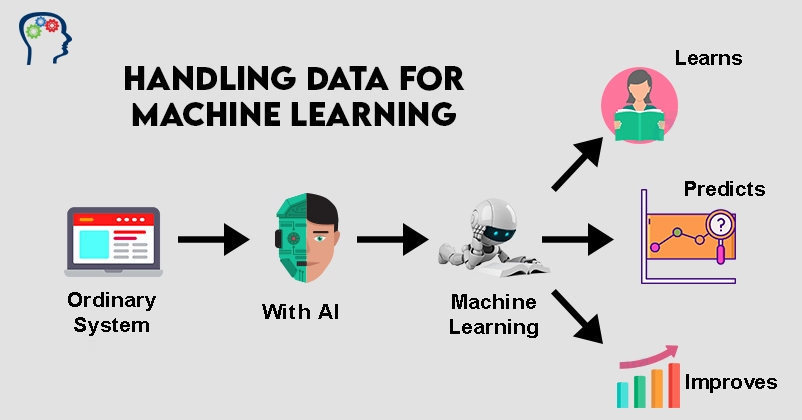
Data science and data annotation don’t meet directly but definitely act as distant relatives. The training data or data annotation is an integral part of making machine learning algorithms come up with results. A large part in carving out machine learning models is also powered with small data sets. Data annotation in machine learning has a significant role, in terms of making accurate predictions. Based on small sets, machine learning models are trained and help in generalization of new data sets. In the due course of the generalization step, data is often underfit, and also overfits. Sometimes, a data set fits appropriately and produces good results without a lot of sweat; something which the data scientist should run and interpret.
One of the main challenges for a data scientist while handling a small data set during generalization is overfitting. Sometimes, due to the small data set, a machine learning model acts excessively as per the data and also recognizes patterns which are irrelevant. The simple way to deal with generalization challenges is not using complex models and apply simple methodologies. In addition, adopt data regularization techniques such as L1 and L2 to make the machine learning model perform in a way that relevancy of applying data becomes the priority. The logistic regression model is useful in the application of a model which handles the data generalization barrier and curbs overfitting. Along with this, combining two or more models helps in reducing variations and assists in generalization.
Meanwhile, before making use of any data set, a data scientist must be well aware of the type of data he or she is dealing with. So, whether it is image annotation, semantic annotation or text categorization, understanding the type of training data for processing and producing results is important. Despite having a modified and structured training data, data scientists may have to perform data cleaning activity. Another crucial factor affecting the performance of ML models and how the data scientist works is that the data should be complete. Missing elements in the data only increases the botherations for data science professionals.
Endnote
Here with this discussion, what we derive is that perfection for data science in terms of handling training data can be difficult. Ensuring that the data performs as per the algorithms or methods chosen depends a lot on the business problems. Hence, while developing an ideal machine learning model, there is no limit on how much data is required for producing the model.