


Professional services network Ernst & Young and Microsoft have recently announced that they’re expanding their Xbox Enterprise Blockchain Platform in order for it to be used for Xbox’s royalties and payments systems.
Despite the project being announced back in 2018, the company has only recently deployed the infrastructure. Microsoft’s partnership with Ernst & Young means that the company will now handle the entire process, from contract creation to reconciliation and payments.
Alongside game publishers and developers, other parties like writers, musicians and other content creators stand to benefit from the relevant revenue flows.
(Image: Markets and Markets)
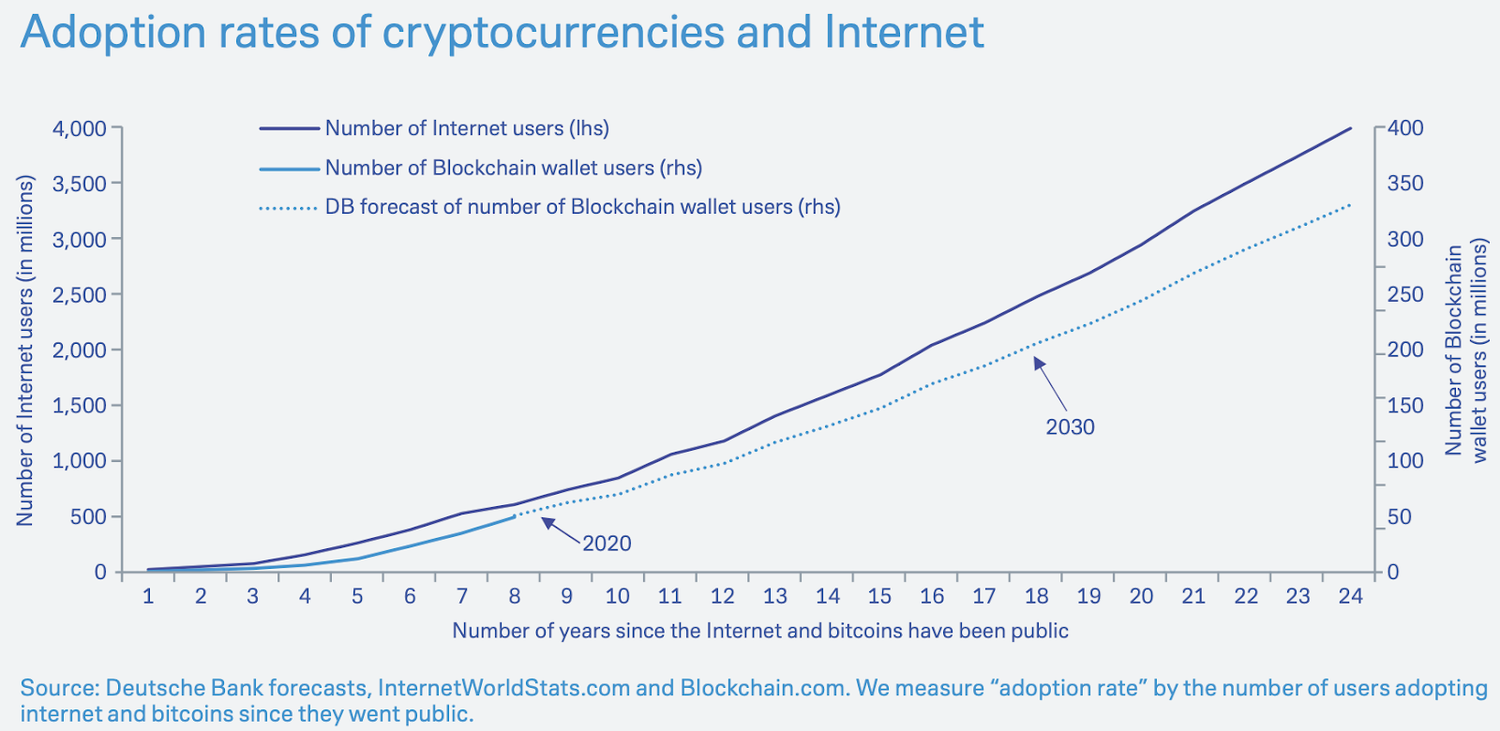
As we can see from the projections above, the blockchain market is set to exponentially grow in the early stages of the decade, and Microsoft’s utilization of the technology represents a significant bridge between the developing industry of blockchain and the sprawling gaming market.
What is Blockchain technology?
To better understand the significance of blockchain entering the world of gaming, let’s take a deeper look into what the technology actually is.
Fundamentally, blockchain is a system of recording information in a way that makes it virtually impossible to alter, hack or manipulate.
Blockchain is best described as a distributed ledger of transactions that are duplicated and distributed across an entire network of computers within the chain. Every block contains information on all of its transactions, and each time a new transaction occurs, a record is added to the ledger of every participant. The decentralized database managed by multiple participants is known as Distributed Ledger Technology.
Blockchain is a form of Distributed Ledger Technology where transactions are recorded with an immutable cryptographic signature called a hash.
This makes blockchain technology an extremely secure way of handling finance and leveraging secure and efficient transactions. Cryptocurrencies like Bitcoin and Ethereum are built on blockchains which help to promote greater levels of financial control over the assets.
The Expansion of The Xbox Enterprise Blockchain Platform
With its freshly expanded blockchain platform, Microsoft will now have the ability to accelerate contract creation using AI based on Microsoft Azure.
The Xbox Enterprise Blockchain Platform is also now capable of seamlessly generating and integrating statements and invoices with enterprise resource planning application to process and record royalties on a much faster scale with greater levels of transparency. Accounting entries can also be generated from the blockchain platform into enterprise resource planning applications, too.
This expanded solution will reduce processing times by as much as 99%, with 100% near real-time calculation of royalties using digital contracts across game development partners. The Xbox Enterprise Blockchain platform also accounts for high volume usage and is estimated to be capable of processing as much as two million transactions daily.
Luke Fewel, the general manager of global finance operations at Microsoft, believes that the blockchain platform has plenty of potential for the future: In this go-live, we successfully generated the first round of partner payments utilizing blockchain and smart contract technology, Fewel explained.
This expanded solution will help streamline financial and operational processes with the ability to scale, reduce heavy manual overhead and improve the experience for Microsoft’s gaming partners. We look forward to continuing to scale this solution across our royalties ecosystem ” improving our processes and the continuation of our modern finance journey.
Measuring Blockchain’s Impact on The Gaming Industry
While blockchain technology can help to bring greater levels of transparency, security and payment speeds, there’s still a question hanging over how this will impact the wider world of gaming.
Robby Yung, CEO of blockchain-based gaming development platform Animoca Brands, believes that a blockchain network for gaming royalties can bring a range of benefits to the industry.
A solution such as this reduces the time it takes for contracts to be paid, simplifies self-service content creation and reduces costs. Generally speaking, this is a good thing. That said, while it’s great to see further blockchain adoption in the gaming industry, back end payment processing is not necessarily what will capture developers’ imaginations about the potential of blockchain, Yung explained in an interview with Coin Telegraph.
As blockchain-based cryptocurrencies become more accessible thanks to the prevalence of reputable cryptocurrency exchanges, we may also see the rise of nonfungible gaming tokens within the gaming industry thanks to blockchain.
Nonfungible tokens behave similarly to traditional cryptocurrencies and can be incentivized and traded on secondary markets. This gives game developers the chance to create something of a collectable unique virtual currency within their platforms.
With the blockchain market expected to rise rapidly in the near future, we can expect to see much stronger bridges built between the technology and the world of gaming. With virtually endless capabilities, the breakout of blockchain could be a watershed moment for the future of video games.
