


Investment banking analyst, when this term comes to our mind, we see a lucrative career, we see international opportunities, we see career growth. All of this is true, but there is attached a lot of hard work, and endless hours spending at the workplace, post the office hours at the beginning of your career. An analyst is termed as an entry-level job position in the banking domain, and that calls for much hard work in the first couple of years in your banking career. If you survive that, you will easily survive your mid-career professional life, that’s a given.

Average Salary of Investment Banking Analysts in the US
Source: Payscale
As per Payscale, investment banking analysts in the US make $67,817 annually, which is certainly good pay at the entry-level because you don’t have any experience by then. You are supposed to learn more, then apply, in the first year of your employment as an investment banking analyst. For a banking aspirant, the best aid available to prepare for the entry-level job roles would be the industry-relevant investment banking certification programs that are available online.
The Role of an Analyst
Investment banking analysts help big corporations with expert advice on large-scale financial transactions, such as issuances (debt & equity), and M&A (mergers and acquisitions). In simple terms, he is the one who does everything that their senior counterparts ask them to do, in connection to closing or winning a deal. You, in the role of an analyst, would be in the assistance’ role to associates or senior analysts. The job position demands an amalgamation of financial skills such as deal-making, negotiation, marketing, and sales. Analysts while starting out lack this skill set, but they learn them on the job in the first couple of years, while assisting their seniors.
The Day-to-Day Work Responsibilities of an Analyst
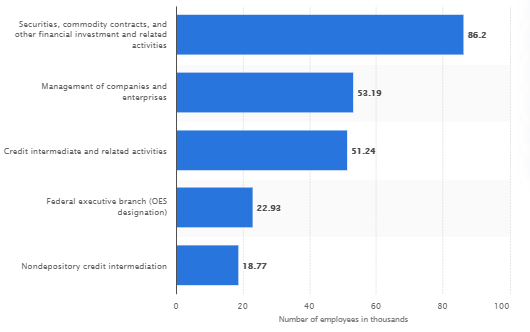
Employment of financial analysts in the U.S. in 2019, by industry (in 1,000s)
Source: Statista
Here are a few primary responsibilities of an investment banking analyst on a day-to-day basis:
- Analysts help their senior counterparts in sourcing information for key investment-specific decisions. They do analyse the information themselves before passing it on to their senior team members.
- Analysts assist their wealthy clients nurture their already-fruitful monetary investments in the financial markets. In this role, you need to understand well your clients’ goals.
- You do a lot of market research in order to keep a constant check on the effectiveness of your client’s existing market investments. If any of the investments feel like going redundant, it’s the analyst’s job to inform about the same their clients.
- You will be asked from time to time to analyze and assess an investment opportunity on behalf of the company you work for.
- A majority of analysts specialize in one or the other sub-function of investment banking, i.e. emerging markets, manufacturing, healthcare, among a few others. And hence, the specialized banking analysts take care of the banking operations in their specific area of expertise.
The Three Most Common Banking Operations That Analysts Deal With
Deals
Deal-making involves execution of transactions pertaining to companies being sold or bought. Analysts would be responsible for managing the schedule, the format of excel files, jotting down notes, and preparing PowerPoint presentations pertaining to investment deals.
Sales Pitches
Banking analysts need to prepare sales pitch books that constitute the key attributes of the firm, which is eventually leveraged by the bank’s sales teams to help sell services and products and thereby attract new clients. More than often, analysts are asked to draft PowerPoint presentations or a printed pitch book, ready for their senior counterparts to produce before the clients. Analysts would write slides based on industry shifts, executive summaries, and their analysis criteria.
Market Research
An analyst needs to track market trends, perform industry research, and search for financial information on a day-to-day basis. They will be asked by their team leaders and senior colleagues to perform comprehensive research on a specific investment’s viability. Additionally, analysts will be asked to provide recommendations and advice on a potential investment opportunity by submitting a written report, or a PPT to his senior team member.
Preferred Skillset for an Investment Banking Analyst
To ensure a rewarding career as a banking analyst, you must acquire the below-mentioned skillset:
- Great communication skills
- Analytical abilities
- Ability to work under pressure
- Investigation capabilities
- Problem-solving skills
- Market research abilities
- Quantitative skills and a keen interest in numbers
- Decision-making capabilities
- Familiarity with working on computers
- Expertise at analyzing and presenting data
- Being an efficient team player
- Drive to succeed and self-confidence
- A keen interest in current affairs, especially associated with the financial world
- Well-defined long-term career goals
Speaking foreign languages does help elevate your career fast. Besides, tech-savviness is rewarded in the investment banking industry, alongside a strong grasp on leveraging social media.
Concluding Words
In totality, the primary role of an investment banking analyst is to support their senior counterparts, and assist them with anything work-related, that they demand for. This might seem like a mundane job profile with little to no opportunities to grow personally in your banking career, but it certainly pays off immensely, once you become a senior banker after spending a couple of years in the said entry-level role.
