Information that has the ability to give investors an edge has long been coveted, but the nature of that information has evolved over time. Currently, traditional financial data, such as stock price history and fundamentals, is the standard for determining the health of a stock. However, alternative data has the potential to reveal insights about a stocks health before traditional financial data. Obviously, this has major implications for investors.
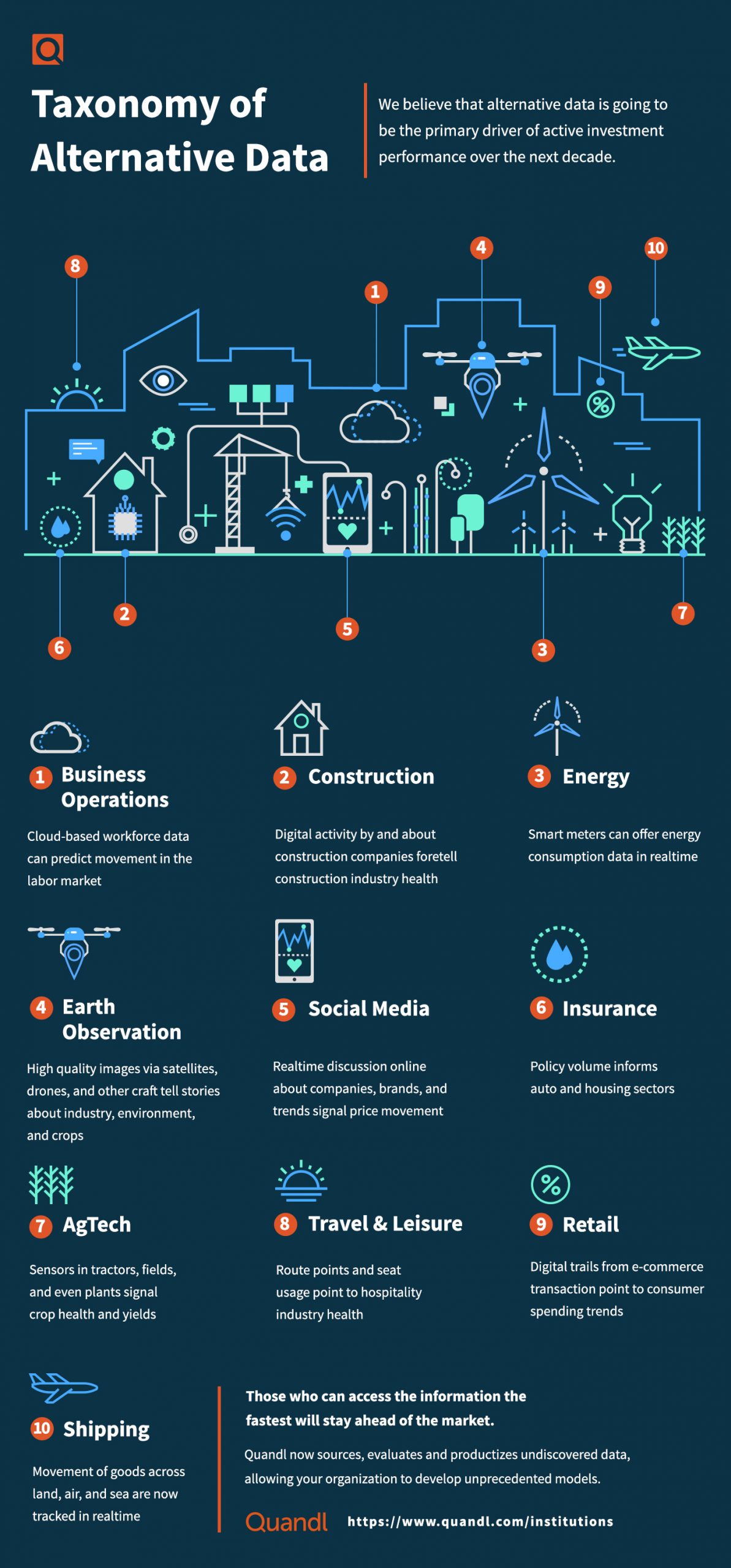
If information is power, then unique information sourced from places, well, not-yet-sourced from, is a new level of domination. This is alternative data unmined information with the potential to be leveraged for commercial value. Given that were in what we like to call a data revolution, where nearly every move we make can be digitized, tracked, and analyzed, every company is now a data company. Everyone is both producing and consuming immense amounts of data in the race to make more money. To help paint a more concrete picture of how alternative data may be useful, below is a list of 10 industry sectors that we believe can produce new data for investors.
Business Operations
When it comes to operational challenges like keeping costs low and improving efficiencies, data from various sources, such as cloud-based workforce data, can prove instrumental. This type of data can give insights into things like movement in the labor market, allowing investors to understand and preemptively react to the health of various companies.
Construction
Within the construction industry, data produced by construction companies can also forecast the industrys overall performance. For example, Buildfax, an automated source for property condition data, has information about U.S. building construction permits that, according to Buildfaxs site, can reveal broad trends like economic growth, gentrification, adoption of solar technology, and more.
Energy
Its no secret that the energy industry is ripe with data, especially as our homes and cars become smarter, built with various sensors and meters that track usage, movement, and more. A prime example is the smart thermostat company Nest, which was recently bought by Google. Data collected from Nests home thermostats provides instant insight into how people are using energy. Were figuring out how to leverage energy consumption data in realtime on a broad enough scale to say something about the sector as a whole. .
Earth Observation
As satellites and drones become increasingly ubiquitous, the data they collect from the number of cars in various parking lots, to the change in oil reserve levels in large storage tanks can shed light on the health of various aspects of the economy. . Examples of potentially impacted industries include oil, retail, farming, shipping, and manufacturing. UrsaSpace and Tellus Labs are two examples of companies who are taking advantage of this opportunity, creating insightful datasets for these industries.
Social Media
Social media is flooded with potential useful information, the trick is knowing how to logically decode and analyze it in a productive way. Broadly speaking, brand mentions and trending topics can signal some kind of price movement. Then you have crowd sentiment datasets, which may provide insight for investment banks and hedge funds.
Insurance
The trillion dollar insurance industry has the potential to provide investors with insights into a multitude of other industries due to its ubiquity. Every company needs insurance of one sort or another, which means that the insurance industry produces a ton of data thats waiting to be analyzed. Of course, its difficult to pinpoint how this data can be used to make predictions about other industries by proxy, but there are several applications that look promising at this point. For example, the insurance industry could suggest signals about the automotive industry, fuel supply, and even route points if you include in-car transponders designed to bring down premiums.
AgTech
Technology is transforming the agriculture industry. Sensors placed in fields, equipment, and even plants are providing information to farmers regarding the health and yield of their crops. However, this data also has the potential to be useful for those looking to gain insight into the condition of the industry overall, if privacy and ownership issues can be overcome.
Travel & Leisure
With the right data, interested parties can also unlock information about the performance of the travel and hospitality industry. There is now access to datasets like airline route points and seat usage, hotel occupancy, etc., that point to important shifts and trends regarding popular companies, locations, and businesses in the hospitality industry.
Retail
The e-commerce boom has generated an endless pool of digital trails that map out consumer spending patterns, with sources ranging from credit card companies to email inboxes full of electronic receipts. This data can be broken down by retailer, product, geography and more. Theres now the potential to have real-time access to company performance of e-commerce giants like Amazon; without infringing on users privacy (the data point says nothing about the buyer; only the company, the product, and the price).
Shipping
Shipping labels allow companies and consumers alike to track the movement of their goods. Similarly, location-tracking services are being employed by auto manufacturers and trucking firms. Data captured by each of these new technologies can be used to show the status of commercial road traffic.
We are just beginning to tap into the power of alternative data. Current market feeds are a zero-sum game; its time for investors to move on to the next and newest sources of data to maintain a competitive, profitable edge.
Where do you think the next edge in investing comes from?