


In 2017, Google’s CEO, Sundar Pichai, announced their shift toward an AI-first future. For digital marketers, ML and AI technologies can be a game-changer.
With artificial intelligence, advertising platforms can collect user data and help companies connect with target audiences more effectively. They minimize menial tasks and help you create data-driven and relevant ads.
Here is how to use automation and machine learning to boost your Google Ads campaigns.
The Introduction of Responsive Search Ads
Today’s customers are tech-savvy and more demanding. With the rise of wearables and mobile advertising, online users expect to get things done faster. Above all, they want brands to provide highly personalized, relevant, and helpful ads.
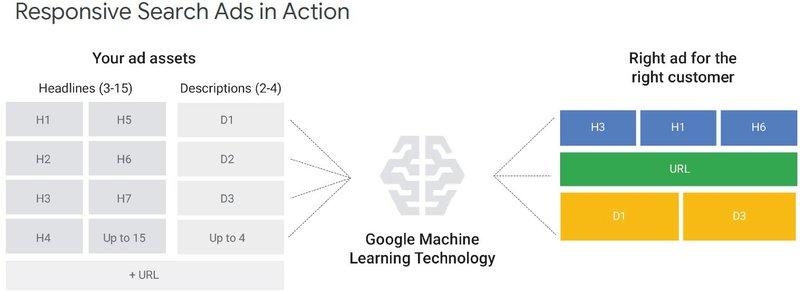
That is where responsive search ads can help. They allow marketers to create ads that show more text to customers. Responsive search ads combine your creativity with ML to provide exceptional results.
With responsive search ads, you can create up to 15 headlines and four description lines. Google will do the rest. The platform uses ML to test content combinations.
Google Ads strives to identify which ad combinations perform best for various search queries. So, even if users are googling the same thing, they may see different ad content based on context.
That way, you ensure your ads match your target audience’s search terms and intent. That helps you boost campaign performance and maximize conversions.
Google’s internal research results back me up on that. Advertisers using Google’s machine learning to create personalized ad campaigns generate up to 15% more clicks.
Boosting Foot Traffic with Google’s Local Campaigns
Online customers still make most of their purchases in brick-and-mortar stores.
Surveys found the same. With the evolution of intelligent voice search, mobile searches for near me have grown. Moreover, 80% of customers using local keywords go to a local store after performing online research.
Therefore, Google Ads are an opportunity to drive foot traffic to your physical store. That is where its Local Campaigns can help.
When creating a Local Campaign, you only need to define store locations you want to promote. You do that by linking your Google My Business listing.
Google uses ML technologies to optimize bids, ad placements, and asset combinations. That way, it helps you promote your brick-and-mortar stores online more effectively.

Leveraging Automated Ad Extensions
When Google’s AI algorithms estimate that an extension can boost your ad performance, they create it automatically.
There are seven types of automated ad extensions, including:
- Call extensions
- Message extensions
- Sitelinks
- Structured snippets
- Location extensions
- Seller ratings
- Callout extensions
However, with automated extensions, you will have less control over your ads. Google can automatically replace your copy with its AI-generated solution. Always consult your AdWords agency before implementing them.
Increasing the Optimization Score
The Optimization Score is one of the most crucial Google Ads metrics. It measures your Google Ads account’s performance. It ranges from 0% to 100%.
Using ML and AI algorithms, Google Ads assesses your campaigns to check whether they are fully optimized. It measures the score in real-time. The system considers multiple factors, settings, your account, campaign status, and recent recommendations history.
Along with the performance score, you also see a list of recommendations. They help you optimize your campaigns. Additionally, you will learn how applying those suggestions will impact your optimization score.
The optimization score impacts several aspects of your Ads campaign, including:
- Bids and budgets
- Keywords and targeting
- Ad copies
- Ad extensions
- Possible recommendations
Harnessing the Power of Automated Bidding
You do not have to worry about manual bidding anymore. Machine learning automates the process. By streamlining your bidding efforts, you can eliminate guesswork and make informed decisions.
Now, there are several automated bidding types to apply, including:
- Maximize Clicks help you boost the CTR.
- Target Impression Share ensures your ads appear at the top of Google’s SERPs.
- Target CPA sets search bids to enhance conversions.
- Target ROAS maximize your return on investment.
- Maximize Conversions helps you get the most out of your conversion value.
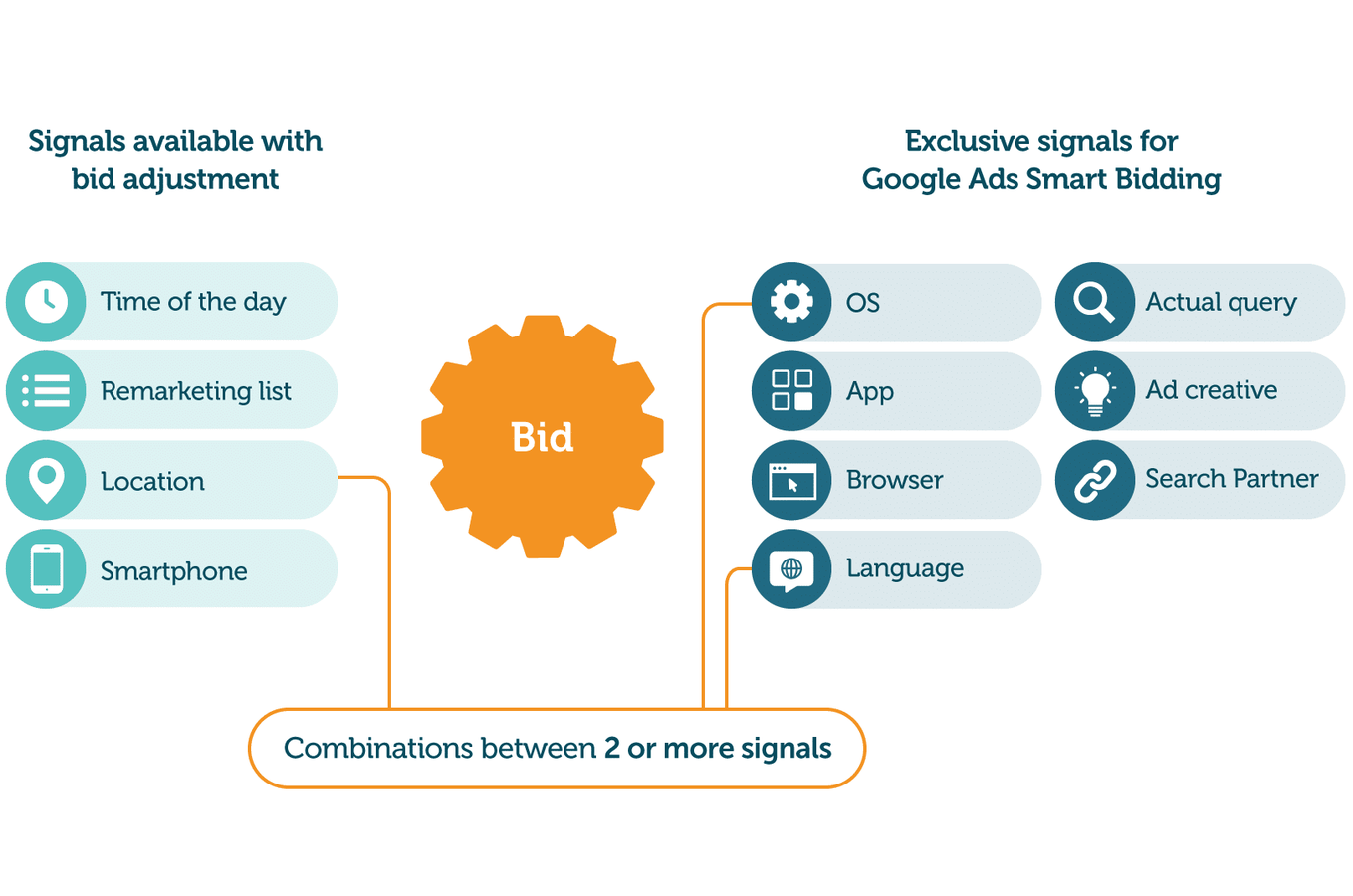
Smart bidding uses machine learning to help you align bids with your advertising objectives. ML technologies analyze signals, such as languages, operating systems, or time of day, to understand the context of searches.
Setting Up Smart Campaigns
AI-driven Google Smart campaigns are perfect for optimizing Google Ads campaigns in the long-run. They benefit your online presence on multiple levels.
First, they provide automated maintenance. Set your ad campaigns, and Google will do the rest. It takes care of keyword selection, bidding, and targeting. That way, it helps you focus on more demanding aspects of your Google Ads campaigns.
Second, Google will take care of copywriting. You only need to provide it with relevant product information.
Personalizing CX with Smart Shopping Campaigns
Big data and digital advertising are a match made in heaven.
Google’s Shopping campaigns prove that. Shopping ads include rich product information, such as images, price, merchant name, and reviews.
The role of machine learning in his process is immense. ML technologies estimate the likelihood that a click will result in conversions. They adjust bids accordingly.
AI and ML also determine where your Shopping ads will show up and which products they will feature.
AI and ML are the Future of Google Ads
In the world of PPC advertising, delivering relevant and personalized ads is crucial. To harness the full potential of Google Ads, you need to have a lot of technical experience and knowledge.
Artificial intelligence and automation change that. These technologies reduce manual work and help you stay agile in the hypercompetitive digital advertising ecosystem.
Do you use ML and automation to boost your Google Ads campaigns? Please, share your experiences with us!
