


The Internet of Things (IoT) is the network of physical objectsdevices, vehicles, buildings and other items which are embedded with electronics, software, sensors, and network connectivity, which enables these objects to collect and exchange data. Implementing this concept is not an easy task by any measure for many reasons including the complex nature of the different components of the ecosystem of IoT. To understand the gravity of this task, we will explain all the five components of IoT Implementation.
Components of IoT implementation
- Sensors
- Networks
- Standards
- Intelligent Analysis
- Intelligent Actions

Sensors
According to (IEEE) sensors can be defined as: An electronic device that produces electrical, optical, or digital data derived from a physical condition or event. Data produced from sensors is then electronically transformed, by another device, into information (output) that is useful in decision making done by intelligent devices or individuals (people).
Types of Sensors: Active Sensors & Passive Sensors
The selection of sensors greatly impacted by many factors, including:
- Purpose (Temperature, Motion, Bioetc.)
- Accuracy
- Reliability
- Range
- Resolution
- Level of Intelligence (dealing with noise and interference)
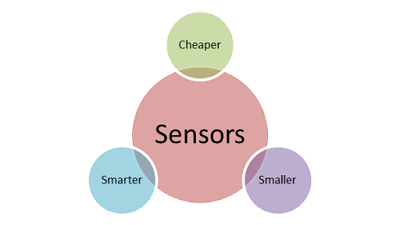
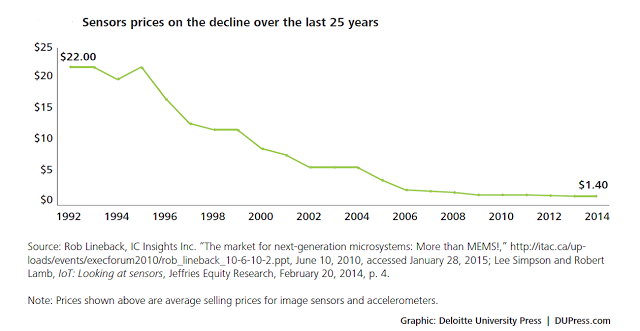
The driving forces for using sensors in IoT today are new trends in technology that made sensors cheaper, smarter and smaller.
Challenges facing IoT sensors
- Power consumption
- Security
- Interoperability
Networks
The second step of this implantation is to transmit the signals collected by sensors over networks with all the different components of a typical network including routers, bridges in different topologies, including LAN, MAN and WAN. Connecting the different parts of networks to the sensors can be done by different technologies including Wi-Fi, Bluetooth, Low Power Wi-Fi , Wi-Max, regular Ethernet , Long Term Evolution (LTE) and the recent promising technology of Li-Fi (using light as a medium of communication between the different parts of a typical network including sensors).
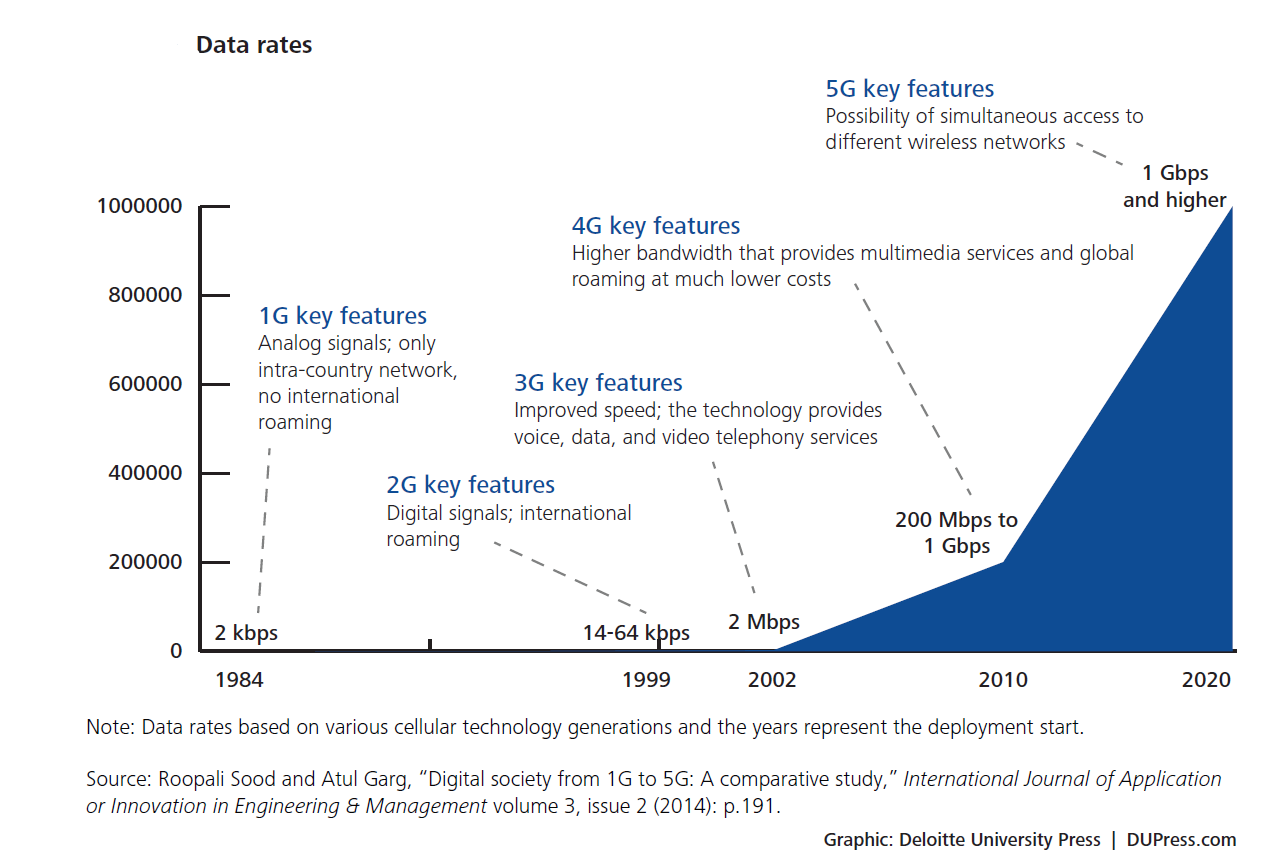
The driving forces for wide spread network adoption in IoT can be summarized as follows
- High Data rate
- Low Prices of data usage
- Virtualization (X – Define Network trends )
- XaaS concept (SaaS, PaaS, and IaaS)
- IPv6 deployment
Challenges facing network implementation in IoT
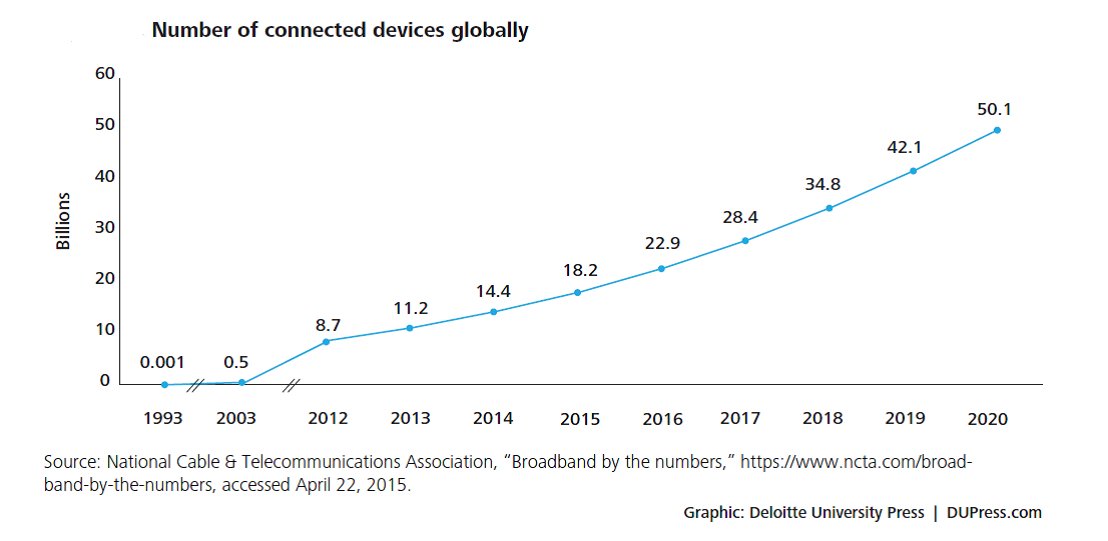
- The enormous growth in number of connected devices
- Availability of networks coverage
- Security
- Power consumption
Standards
The third stage in the implementation process includes the sum of all activities of handling, processing and storing the data collected from the sensors. This aggregation increases the value of data by increasing, the scale, scope, and frequency of data available for analysis but aggregation only achieved through the use of various standards depending on the IoT application in used.
Types of Standards
Two types of standards relevant for the aggregation process; technology standards (including network protocols, communication protocols, and data-aggregation standards) and regulatory standards (related to security and privacy of data, among other issues).
Technology Standards
- Network Protocols (e.g.: Wi-Fi)
- Communications Protocols (e.g.: HTTP)
- Data aggregation standards (e.g.: Extraction, Transformation, Loading (ETL))
Regulatory Standards
Set and administrated by government agencies like FTC, for example Fair Information Practice Principles (FIPP) and US Health Insurance Portability and Accountability Act (HIPAA) just to mention few.
Challenges facing the adoptions of standards within IoT
- Standard for handling unstructured data: Structured data are stored in relational databases and queried through SQL. Unstructured data are stored in different types of noSQL databases without a standard querying approach.
- Security and privacy issues: There is a need for clear guidelines on the retention, use, and security of the data as well as metadata (the data that describe other data).
- Regulatory standards for data markets: Data brokers are companies that sell data collected from various sources. Even though data appear to be the currency of the IoT, there is lack of transparency about, who gets access to data and how those data are used to develop products or services and sold to advertisers and third parties.
- Technical skills to leverage newer aggregation tools: Companies that are keen on leveraging big-data tools often face a shortage of talent to plan, execute, and maintain systems.
Intelligent Analysis
The fourth stage in IoT implementation is extracting insight from data for analysis, Analysis is driven by cognitive technologies and the accompanying models that facilitate the use of cognitive technologies.
With advances in cognitive technologies ability to process varied forms of information, vision and voice have also become usable. Below is a list of selected cognitive technologies that are experiencing increasing adoption and can be deployed for predictive and prescriptive analytics:
- Computer vision refers to computers ability to identify objects, scenes, and activities in images
- Natural-language processingrefers to computers ability to work with text the way humans do, extracting meaningfrom text or evengenerating text thatis readable.
- Speech recognition focuseson accurately transcribing human speech
Factors driving adoption intelligent analytics within the IoT
- Artificial intelligence modelscan be improved with large data sets that are more readilyavail- able than ever before, thanksto the lower storage costs.
- Growth in crowdsourcing and open- source analytics software: Cloud-based crowdsourcing services are leading to new algorithms and improvements in existing onesat an unprecedented rate.
- Real-time data processing and analysis: Analytics toolssuch as complexevent processing (CEP)enable processing and analysis of data on a real-time or a near-real-time basis, drivingtimely decision makingand action.
Challenges facing the adoptions of intelligent analytics within IoT
- Inaccurate analysis due to flaws in the data and/or model: A lack of data or presence of outliers may lead to false positives or false negatives, thus exposing various algorithmic limitations
- Legacy systems abilityto analyze unstructured data: Legacy systems are well suited to handle structured data; unfortunately, most IoT/business interactions generate unstructured data
- Legacy systems ability to manage real- time data: Traditional analytics software generally works on batch-oriented processing, whereinall the data are loaded in a batch and then analyzed
Intelligent Actions
Intelligent actions can be expressed as M2M and M2H interfaces for example with all the advancement in UI and UX technologies.
Factors driving adoption of intelligent actions within the IoT
- Lower machine prices
- Improved machine functionality
- Machines influencing human actions through behavioral-science rationale
- Deep Learning tools
Challenges facing the adoption of intelligent actions within IoT
- Machines actions in unpredictable situations
- Information security and privacy
- Machine interoperability
- Mean-reverting human behaviors
- Slow adoption of new technologies
The Internet of Things (IoT) is an ecosystem of ever-increasing complexity, its the next weave of innovation that will humanize every object in our life , which is the next level to automating every object in our life . Convergence of technologies will make IoT implementation much easier and faster, which in turn will improve many aspects of our life at home and at work and in between.
