


Do you often get clueless during conversations on topics like PHP,’ HTML,’ or CSS’?
Well, according to a global survey, you are not alone. Only 0.5%* of people know how to code. 99.5% of the world’s population has no knowledge or familiarity with coding and programming languages.
In today’s digital age, it comes as a surprise that we know so much about smart devices and futuristic technology and almost nothing about the basics behind their making.
But that doesn’t mean that we don’t want to build things online. Right?
And, more importantly, is coding a must-have for building websites and mobile applications? Apparently, not anymore.
Over the last decade, there have been some exciting developments in an old-time movement called The No-code Movement.
The purpose of the no-code movement is NOT to make programmers or developers redundant but to enable people who know little to nothing about coding to build their full-fledged applications.
With this movement mainstreaming, tools like Webflow, Automate.io, Bubble, and Typeform have skyrocketed. Moreover, hundreds of new paid and free no-code tools have entered the market in recent years – and the numbers are only increasing.
What are no-code tools?
No-code tools are platforms that power non-developer entrepreneurs and SMBs to build third-party integrations, websites, and web applications without hiring software developers or learning to code.
Is no-code the future?
Every year, the demand for websites and web applications increases by 30%. With more and more businesses moving towards digital transformation, the demand for online apps and services will only increase.
This situation would have been much more overwhelming for businesses, especially startups and SMBs. However, no-code platforms emerged as a convenient and cost-effective alternative in time.
Given its popularity and the excellent promise no-code technology holds for laymen users, we can confidently say that no-code is the future. Or, as Chris Wanstrath, CEO at GitHub, said, “The future of coding is no coding at all”
7 Best no-code tools to try in 2021
Now that we know what no-code is and the promise it holds for the future of business – let’s look at some of the best no-code platforms available in the market today.
1. Automate.io
Automate.io is a no-code workflow automation tool. With a library of 200+ integrations, Automate.io enables businesses and teams to connect all leading cloud/SaaS applications in minutes.

Suppose you are looking to streamline your sales, marketing, invoicing, communication, and more. In that case, Automate.io allows you to set up automated workflows that will do the exact thing on your behalf.
Here’s an example of social media marketing automation. You can connect Facebook Lead Ads with your email marketing app like Mailchimp to send immediate personalized emails to prospects as soon as the lead arrives. No coding required!
Automate.io pricing starts at $ 9.99 /month. A FREE plan also available!
2. Bubble
Bubble is a visual programming language and an application platform. From simple prototypes to complex marketplaces and CRMs, anyone can create almost any app using Bubble.
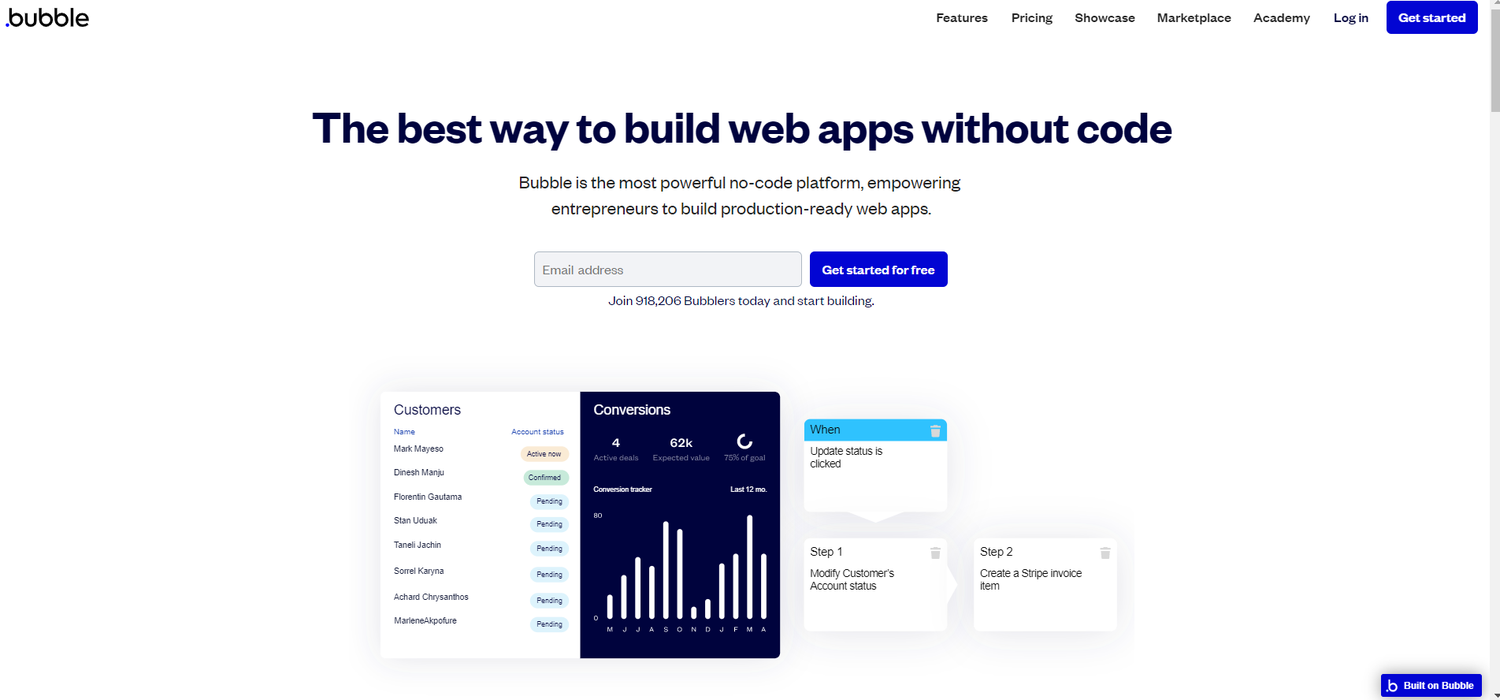
The platform offers a point-and-click web editor and robust cloud hosting feature that allows users (coders and non-coders) to build web applications and workflows in the fastest way possible.
Bubble pricing starts at $25/month. A FREE plan also available!
3. Voiceflow
Voiceflow is a creative platform to design, prototype, and launch powerful voice and chatbots. Voiceflow is one of the most prominent tools in the conversation design space – trusted by over 60,000+ designers, developers, and teams worldwide.
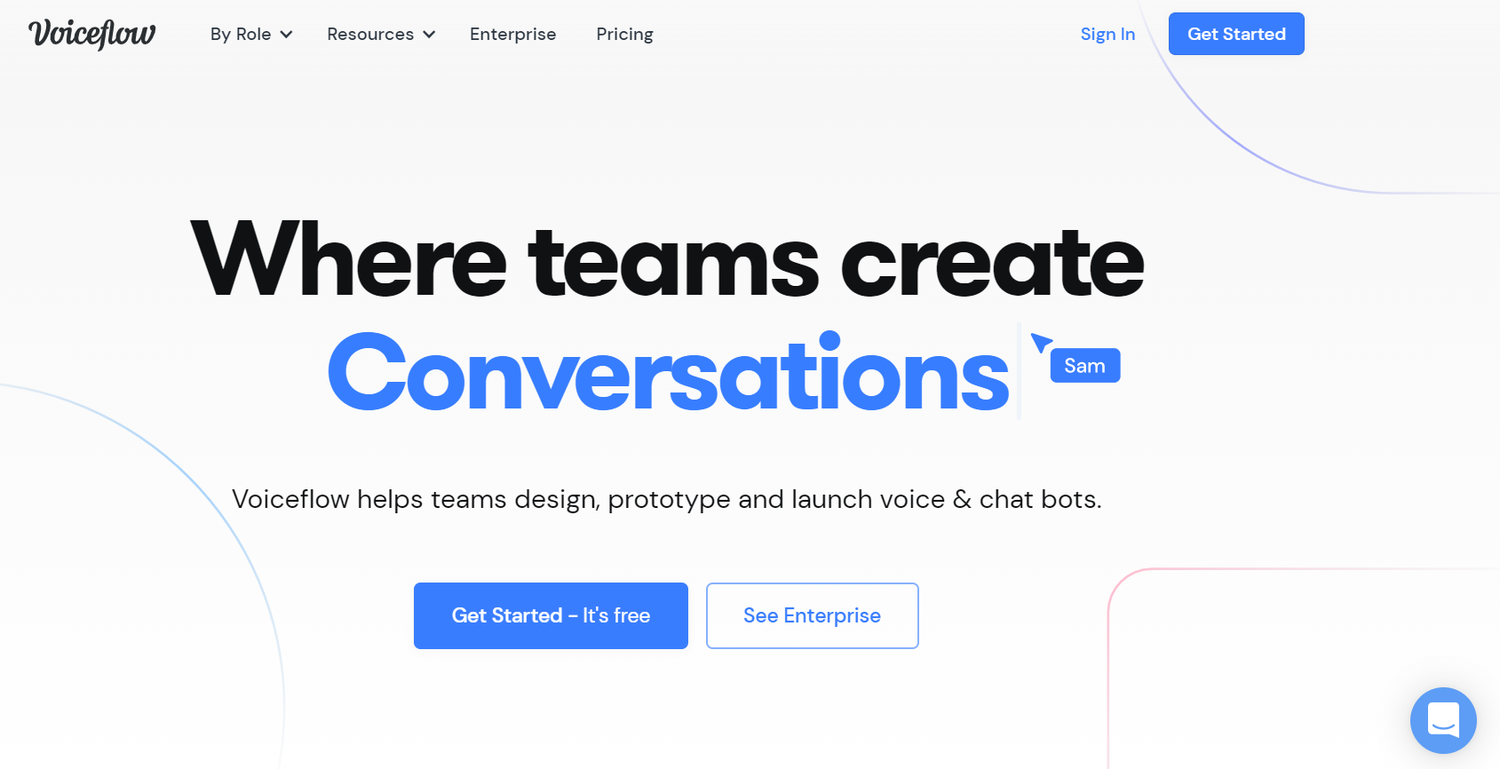
Whether you’re building for Alexa, Google, IVR, IoT, or chat “ Voiceflow’s intuitive no-code drag-and-drop interface empowers you to build fully functional prototypes instantly. You can publish directly to Alexa or Google or effortlessly export your project and hand-off to the development team “ all in one click.
Voiceflow pricing starts at $40 per editor per month. A FREE plan also available!
4. Webflow
Webflow is a fusion of a website builder with a CMS. It’s a no-code platform that empowers freelancers and non-engineers to build and launch fully responsive websites independently.
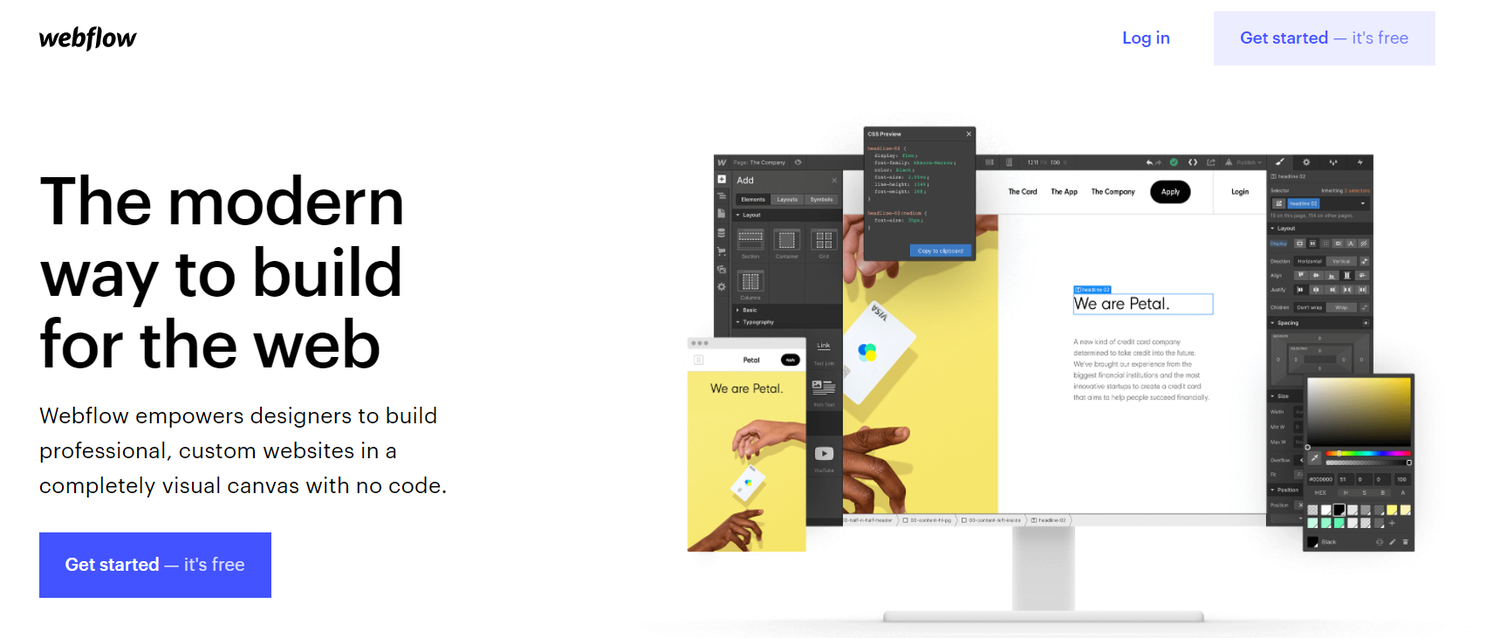
Webflow platform is very similar to Squarespace or WordPress. But, it offers more design freedom than any other website building platform.
Moreover, it offers the much-needed advantage of zero maintenance. That means once you build a site using Webflow, you don’t have to worry about running updates, installing packages, or any other website-related hassle.
Webflow pricing starts at $12/ month.
5. Carrd
Carrd is a platform for building stunning and responsive microsites. You can create one-page websites on any idea in minutes. If you want to create a professional-looking landing page or website without coding or relying on a developer, Carrd is for you.
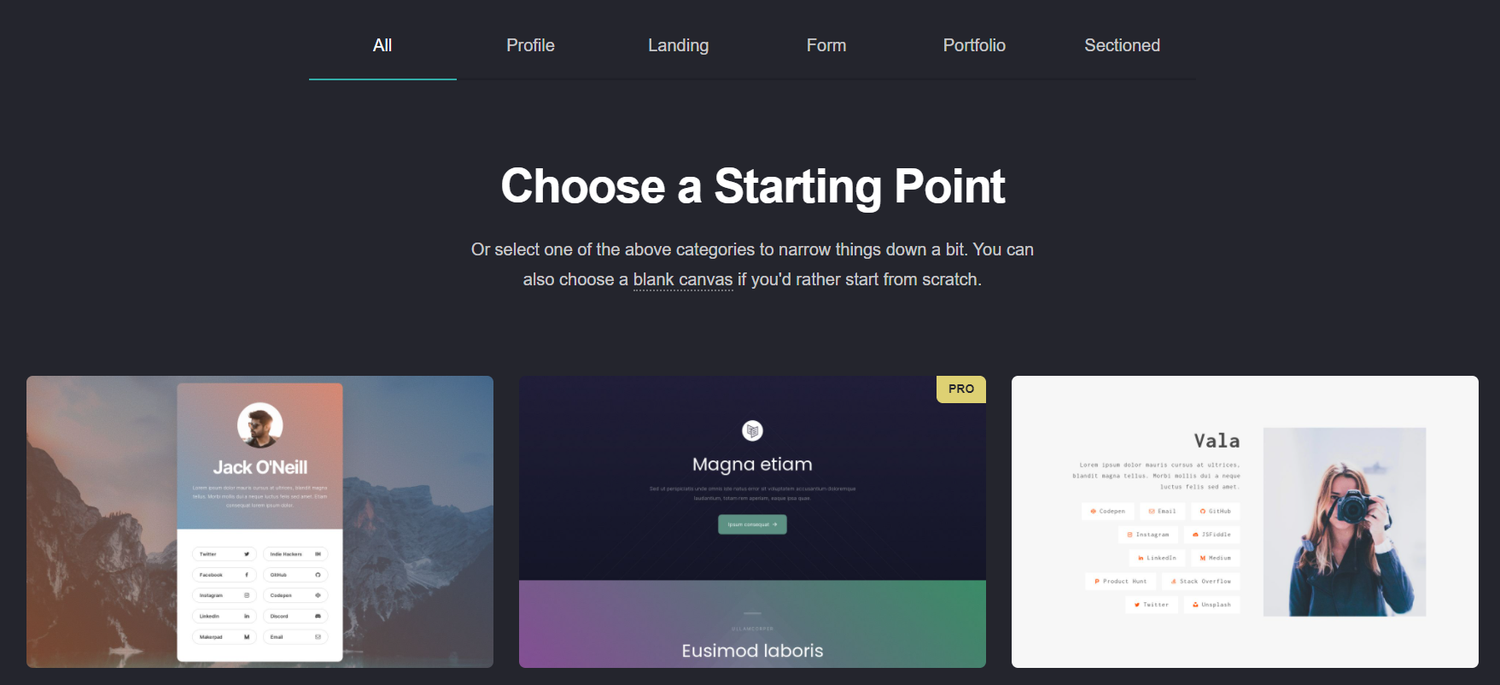
In addition to building sites using existing templates, Carrd lets you embed your custom code and widgets to the site from third-party services such as PayPal, Stripe, Typeform, and more.
You can create an account on Carrd for FREE or go straight for the Pro version at $19/year.
6. Rintagi
Rintagi is an open-source low-code application platform. It offers an array of extensions and development features that enable developers and non-developers to create responsive, enterprise-ready applications.
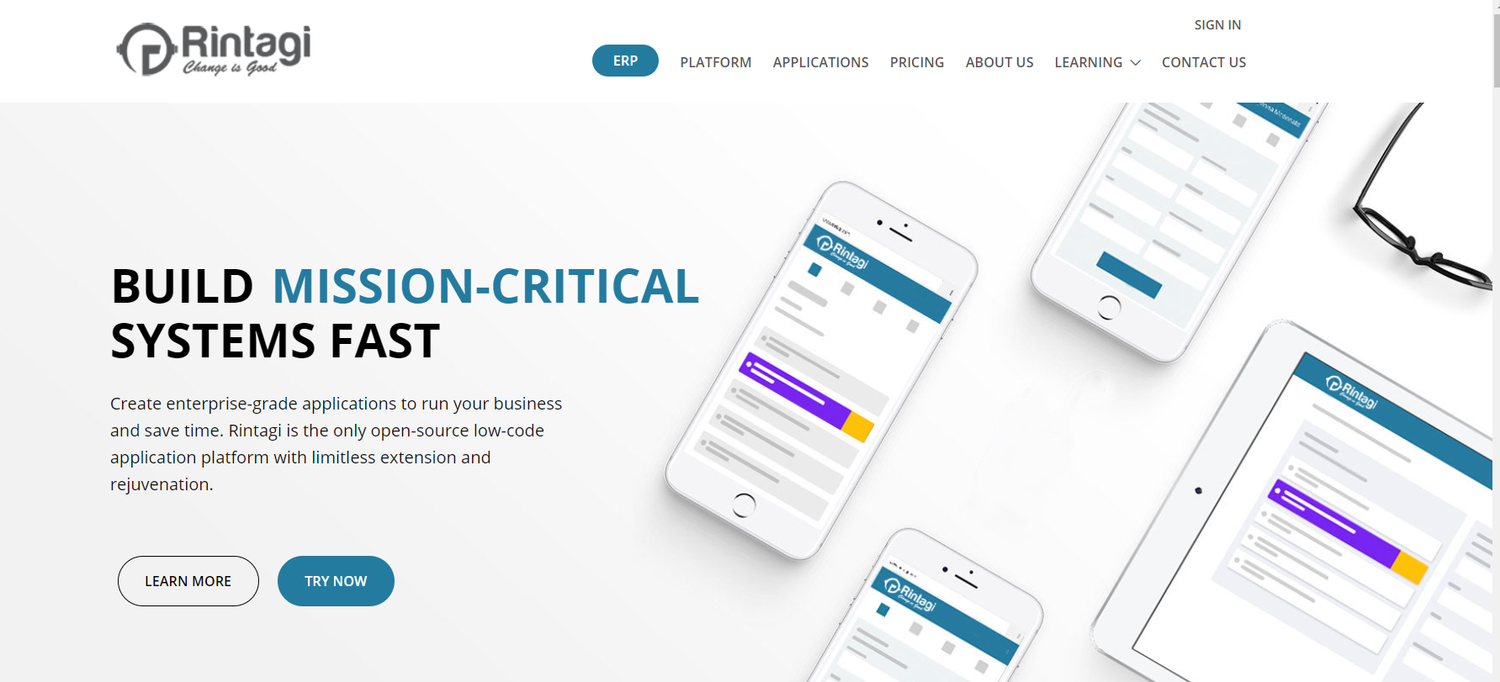
The applications you develop using Rintagi are device-independent and are supported by built-in enterprise-grade security features. That means your application is kept safe from its development to deployment and is accessible across different devices.
Rintagi pricing starts at $975/month.
7. Memberstack
Memberstack is a no-code membership integration. Designers, marketers, and programmers use this integration to create members-only websites, dashboards, web apps, and intranets.
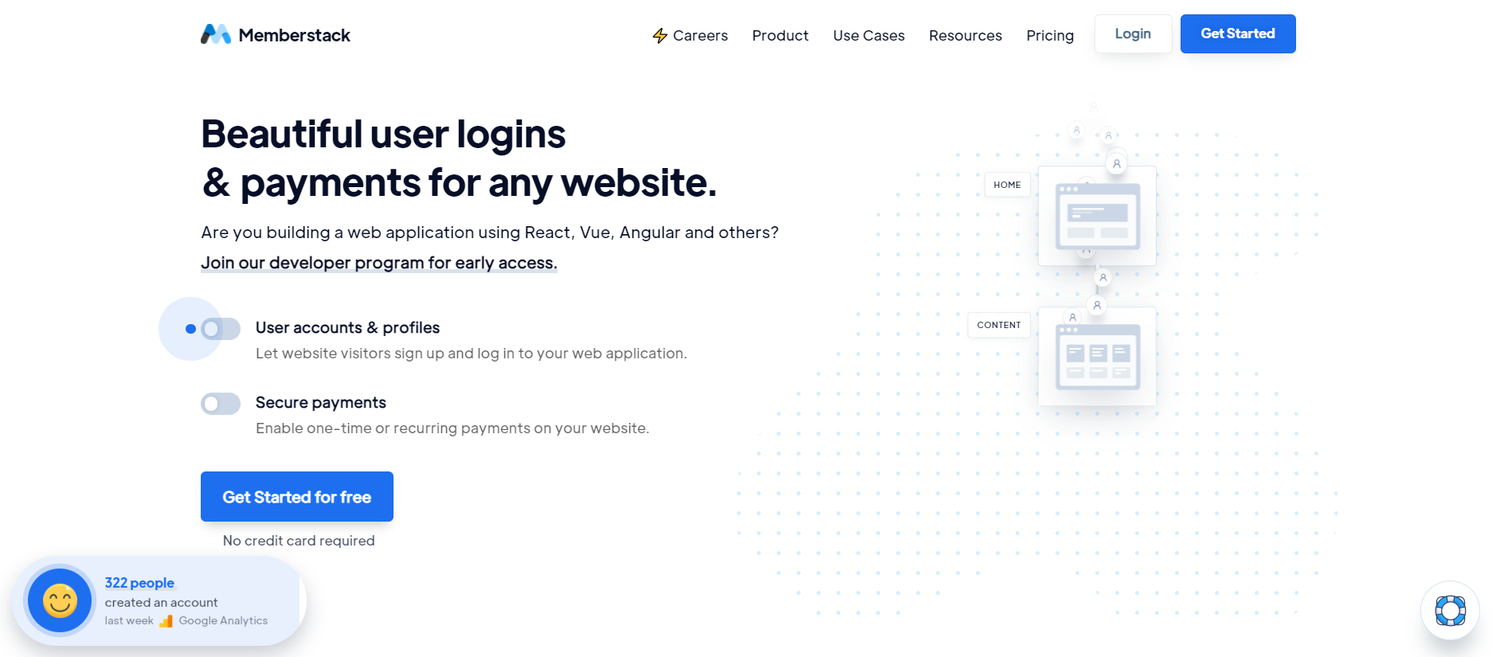
Memberstack powers businesses and individuals to offer more branded user experiences with the help of a simple JavaScript code snippet. Install the JavaScript code snippet to your website, set membership plans and permissions, and you are good to go.
Memberstack pricing starts at $25/mo/site.
How can no-code tools create value in SMB?
If you are considering investing in no-code, knowing what it means is not enough. You have to evaluate the why as well.
Here are some of the significant ways modern startups and SMBs can create value using no-code tech.
1. Drive innovation among non-technical folks
Smaller businesses usually operate with a limited workforce and resources. However, the pressure to keep a competitive edge remains the same as any other business in the industry. By deploying no-code tools, SMBs can tap into their non-coder and non-developer population to adapt and innovate for future strategies.
They no longer need to depend on traditional coding methods. Instead, they can equip themselves with automated cloud infrastructure that accelerates the process and product innovation.
2. Eliminate the risk of shadow IT
Building or buying applications without IT oversight is one of the few mistakes businesses make that put their security at risk. And, the risk is not limited to startups or small businesses.
According to a study, there are 20 times more cloud applications running in most organizations than the IT department estimated. The majority of them are operating in the dark, with no clarity on security and data privacy.
Now, this is where no-code technology made a difference. It offers businesses what they need the most – complete control and visibility. No-code tools present a rare opportunity for teams to create custom workflows and databases for their needs using existing SaaS solutions.
3. Reduce the overall time and cost of the project
Hiring programmers and technical experts is an expensive proposition for SMBs. However, avoiding it was not an option as it would lead to inefficient processes and delayed workflows.
If the requirement is not that complicated, businesses can use no-code tools and get through the development process in a time – and at a fraction of the cost of hiring a developer.
4. Streamline and accelerate business growth
Last but not least, by leveraging no-code for multiple use cases, small businesses can optimize their agility and go-to-market strategy.
Sync all your cloud communication and productivity apps to improve everyday productivity or set up social media marketing automation to drive more business – some pre-built tools and templates that simplify repetitive tasks to simple drag and drop action.
Summing up
The recent growth of no-code proves one thing – the rise of no-code tools is the future of technology.
There was a time when creating a single web page required in-depth knowledge of programming languages. Nowadays, with no-code development tools rising, everyone can be a website and app creator, irrespective of their understanding of coding.
No-code technology is the silver bullet startups and small businesses needed to thrive in today’s competitive market. Even large enterprises are planning on trying this no-code digital transformation in the coming years.
