


A data product is a tool or an application that processes data in a statistical way to generate future results. These results are aimed at helping businesses/organizations make better future decisions. Note that while some tools and applications may and do process data in a statistical manner, it is not necessary for all of these applications to fall under the data product category.
Take for example an application such as Amazon. Is Amazon considered a data product? The short answer is no. Even though the Amazon website can not work effectively without its data, the main goal of Amazon is to sell products to customers. But take, for example, the product recommendation algorithm used on the Amazon e-commerce website. This algorithm takes in the user’s data and processes it for better future decisions (suggesting products for the customer to buy).
This article will state the different types of data products and some examples for each type. Moving on, we will list 4 tips to look out for when creating your own data product.
Types and Real-Life Examples of Data Products
In general, data products can be divided into 3 categories or types:
1. Data-enhanced products
This category includes data products that are created to boost a company’s sales. The most well-known product in this category is recommendation algorithms. Recommender algorithms are specifically built to suggest future products to customers based on their previous experiences (products they bought, liked, or products that people with similar interests have bought).
2. Data as insight products
Not directly used to generate revenue, data as insight products are used to boost sales, discover new markets, and so on. Examples of data as insight products include social media apps, which collect data on users for future insights on each customer. Such data includes what the user likes, dislikes, etc.
3. Data as a service products
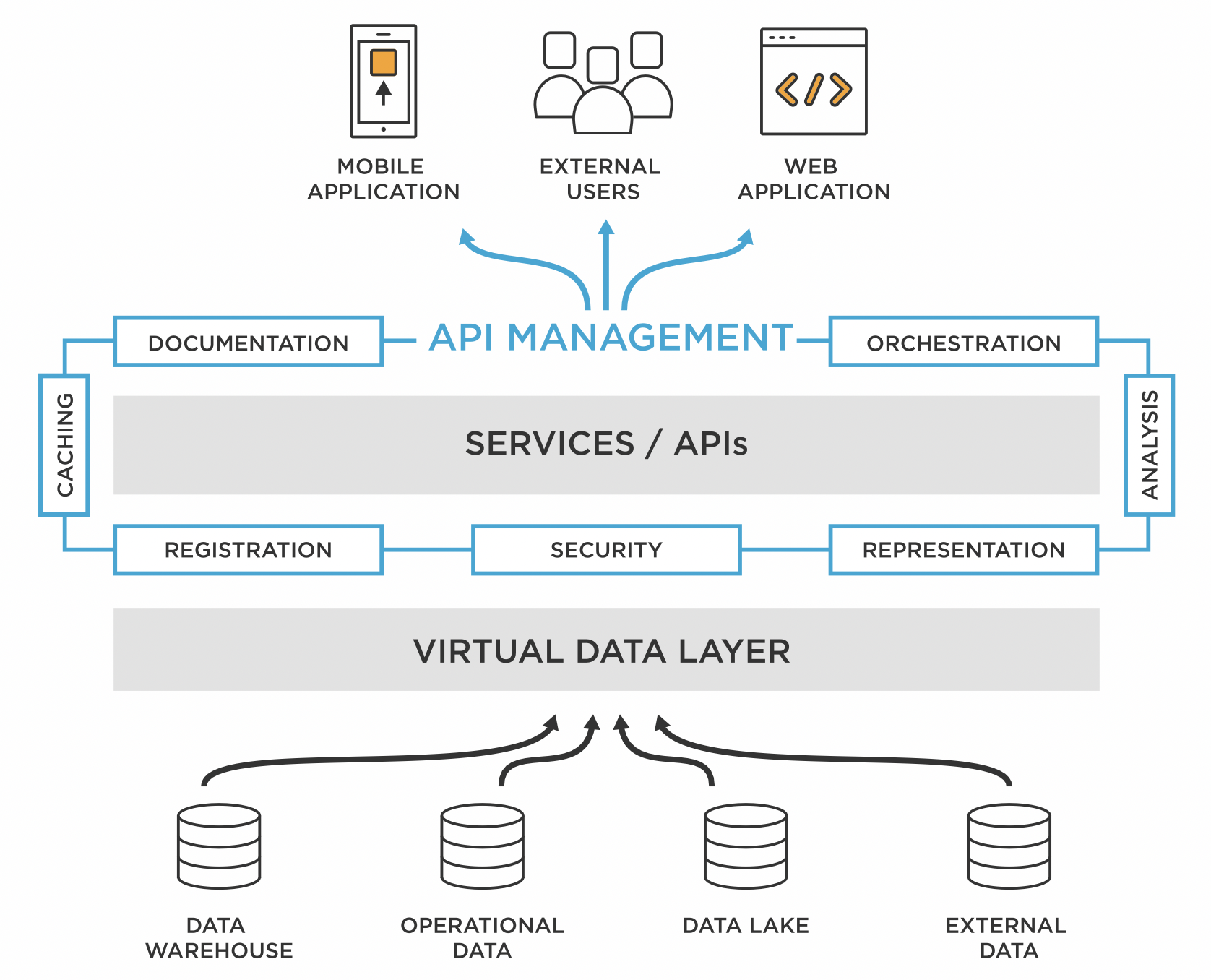
These are products that customers can subscribe to using an API (application programming interface). Such services are usually integrated into the customer’s main product. Some examples of data as a service products include weather forecasting, GPS, etc.
What to do when designing your own data product
1. Identify the correct market
Before creating any product or service, a given market demand must be present. Such demand will be the main reason for creating any product in the first place. Some questions to ask yourself when creating your own data product are: Who would benefit from my product or service? Are customers willing to pay value X to buy my product? Does the profit of creating and selling such a product out way the costs and the risks?
2. Pick high-quality data
As data can be thought of as the main building block of any data product, utilizing the highest grade data set possible would surely make the biggest difference. So why pick high-quality data?
To answer this question we must state what high-quality data means in the first place. High-quality data is data that ensures accuracy and consistency. Meaning that each data point collected is accurate (with a low degree of error) when compared to the actual real value. Moreover, for data to be of high quality, data should be collected at a consistent rate, with no empty time gaps. Lastly, high-quality data should be new, making sure that the data is up to date.
How to make sure that your data is of high quality? By running strict guidelines on each data point collected. Such guidelines include data cleansing, the review and correction of each data point in a given data set. The data cleansing process will remove inaccurate, incomplete, or misleading records. All in all, data cleansing would decrease the cost and time of creating your data product.
3. Open feedback channels

Taking in your customer’s feedback on any project, product, or service is of absolute importance. Some feedback forms would include customer reviews, surveys, questionnaires, etc. By analyzing such data, a better understanding of a given product’s weaknesses and strengths can be achieved, allowing for improvements. This can be done by removing or improving all the weak points of a given product and focusing on a given product’s strengths.
4. Repeat till perfection
You will unlikely get the final product right the first time. You need to focus on perfecting your product in all ways possible. By utilizing different methods such as the evaluate and iterate approach, feedback channels, and more, you can test how well your data product is performing, allowing you to keep on improving and optimizing it.
So what are some common ways to improve your data product? As stated earlier, you may find a way to improve what you are feeding into your system. This means you can feed your data product better quality data. This quality improvement is sure to improve your data product’s accuracy and performance.
Moreover, in the case of higher system loads, you can boost the system’s scalability allowing for even more customers and better load performance.
Conclusion
In this article, we started by defining what exactly is a data product. We also stated, that even if some products do process data in a statistical way, it does not mean that they fall under the data product category. Moving on, we stated the 3 most common data product types which are data enhanced products, data as insights, and data as a service.
We also gave some real-life examples of data products such as recommendation systems, weather apps, and global position systems. Lastly, we focused on 4 tips to follow when creating your own data product.
I hope that after reading this short article, you have a better grasp of what a data product is, and what to look out for when creating your own unique data product.
