


As we know, the pace of innovation has been absolutely incredible in the past few years, which has changed customer experience from its very core. Companies are leveraging technology to deliver value to customers.
Amazon is using AI and ML to engage with their customers, Walmart is acquiring digital startups like Bonobos, and lifestyle and hospitality giants “Gucci” and “Marriott International” are using VR technology to give a state-of-the-art experience to their clients. These are some prominent examples of how technology has now slowly become a part of customer experience.
As we all know, human imagination has no leaps and bounds; it won’t be an exaggeration to say that the future of customer engagement will have technological innovations as their driving force.
Here are 11 technologies having the potential to make a perpetual dent on the landscape of customer experience.
1. Artificial Intelligence
Artificial Intelligence is all about gathering the data and delighting customers through it. You can use the past data of customers through AI tools to predict the interaction context, and it also helps improve it for better customer experience. The speed and precision of AI and human insight carry the potential to satisfy the need for present and future customer engagement efficiently and productively.
Let’s look at the 3 best ways to use AI for providing quality customer service experience.
1. Case classification: AI learns from your past cases and automatically routes the right cases to the organization’s concerned authority.
2. Article recommendation and next best action: AI automatically recommends helpful articles to agents and right actions in the customer’s context’s problem.
3. Chatbots: An AI-powered experience that can help with the customer support process and solve their problems quickly and easily. Chat system tools can assist in lead generation and conversion via visitor monitoring or asking a few common questions. If integrated with great knowledge base, chatbots can solve almost every obstacle
Since Artificial Intelligence is a broad collection of technologies, one needs to identify your customer’s journey ” right from the queries they’re asking to offer them an everlasting customer experience.
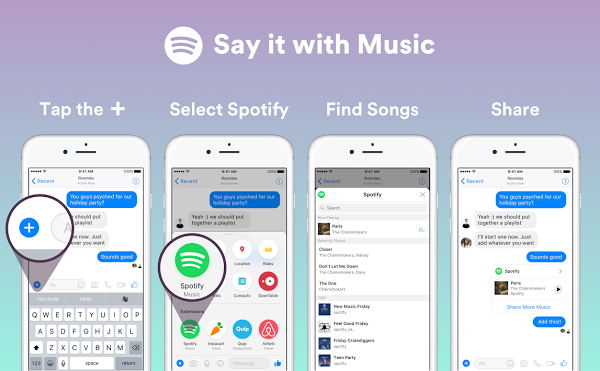
Spotify ” the most extensive on-demand music service application is a perfect example of a brand utilizing AI’s potential.
Spotify uses Facebook messenger chatbot to serve up music recommendations based on mood, activity, or genres, or you can search across Spotify’s catalog to share songs, albums, and playlists with your friends in your Messenger chat. How smart is that, right?
2. Internet of Things
IoT significantly reduces human efforts and increases the productivity of tasks in hand by forming a network of the devices we use in our day-to-day life.
TESLA, for example, is planning to use IoT in such a way that 80% of car repairs can be done without even visiting a service center. By using over-the-air software updates, they promise that issues can be remotely diagnosed.
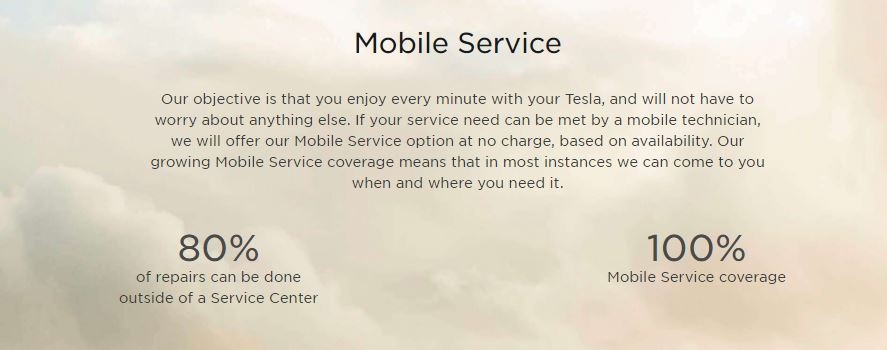
“We are also developing new ways for your Tesla to self-improve. The result is a car that is constantly evolving and improving, allowing you to stay out of the shop and on the road.”, states the official Tesla website.
Meaning, while you are sleeping at night or sipping a coffee at a coffee shop, your car is getting services through software installed in your vehicle with the help of the internet.
The only drawback to IoT at this point is its relative lack of security compared to other advancing technologies. As consumers share their data with companies that make ever-smarter devices (such as appliance manufacturers, for example), the manufacturer may not have established a high level of security or the transparency about their security provisions that are in consumers’ best interests. And how would a consumer know? The solution is security labels that can let consumers know how much security is attached to the IoT-onboard products they buy. Those security labels will be part of IoT’s advancing technology.
3. Augmented Reality
With the help of Augmented Reality, brands can generate real lifelike experiences and help customers to interact and learn about the product.
Goldman Sachs has predicted that Augmented Reality is expected to grow $80 billion by 2025. Another report by Google states that hundreds of millions of mobile devices will support AR capabilities in the coming years.
To understand it more clearly, let’s use an example of a brand like Gucci, which has provided its customers with a try on a feature in their iOS app to help customers make better and more informed product decisions.
By pointing smartphone cameras downwards, customers can see a digital overlay of 19 different sneakers on their own feet! They can swipe left or right to change to a pair of their liking. Additionally, the app allows users to click photos, which can then be shared on social media or messaging apps. A perfect example of a mixture of a great marketing strategy and quality of customer service.

Another prominent example of augmented reality is the famous Dubai Frame where the Fernando Donis of DONIS Architects have leverage the technology to show Dubai’s architecture, economy, and infrastructure.
Thus, it’s safe to say that augmented reality delights your customers and is going to disrupt the industry realms even more in the future. In my opinion, you must invest in AR app development to gain a competitive edge.
4. Virtual Reality
Inspiration, engagement, impact ” these are the three dominant reasons why the world’s leading brands create amazing Virtual Reality experiences for their customers.
VR is a form of interactive software that immerses customers in a three-dimensional environment – usually through a headset with special lenses – to generate an experience virtually.
You might have seen it in action while watching movies and in-game zones where people play games like cricket, boxing wearing those oversized lenses. Yes, that one.
“Why shouldn’t people be able to teleport wherever they want,” said Palmer Freeman Luckey, an American entrepreneur best known as the founder of Oculus VR. That is the potential of VR.
Hospitality giant Marriott offers event organizers and customers a realistic idea of how their event could look with a VR powered headset. Customers can see 360-degree, 3D views of custom-designed room set-ups, making event-planning easier like never before.
5. Big data
As per the statistics, people generate 2.5 quintillion bytes of data each day, and nearly 90% of all data has been created in the last two years. And this makes us realize that the amount of information collected around the globe is too hefty to process. This is where big data comes into action.
How will you use big data for customer engagement?
It is a software utility designed to analyze, process, and extract the information from incredibly complex and large data sets that the traditional data processing software could never deal with.
For example, the online retail giant “Amazon,” has access to a large amount of data of its customers – their names, addresses, payments, and search histories, the list goes on.
While this information is utilized in advertising algorithms, Amazon also uses it to provide better customer service.
So next time, when you contact the Amazon help desk with a query, don’t be surprised when the employee on the other end already has most of the relevant information about you on hand.
6. Blockchain
Jack Ma said, Blockchain technology could change our world more than people imagine. Bitcoin, however, could be a bubble.”
If you have been following banking, investing, or cryptocurrency over the past decade, blockchain ; the record-keeping technology behind the Bitcoin network must have crossed your eye.
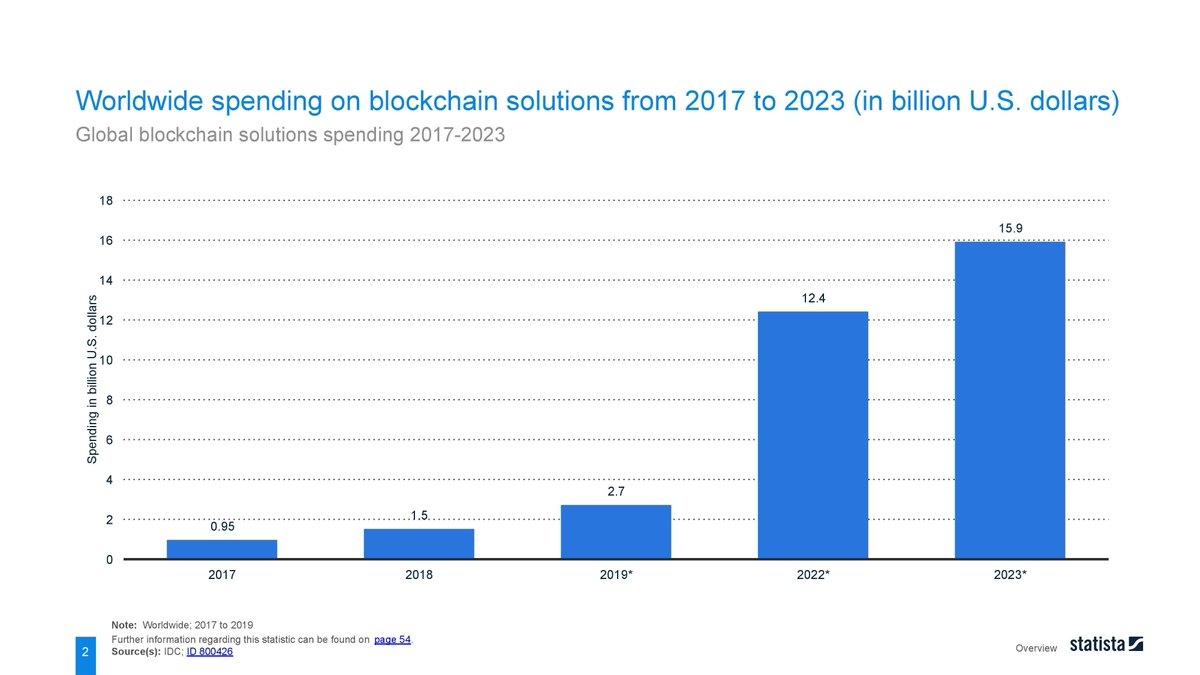
Worldwide spending on blockchain solutions is expected to grow from 1.5 billion in 2018 to an estimated 15.9 billion by 2023 as brands in almost every industry want to take advantage of the blockchain phenomenon’s perceived potential.
Blockchain is a system of recording information in a way that makes it difficult or impossible to change, hack, or cheat the system.
Even if one block in one chain gets changed, one will come to know when hackers try to corrupt a blockchain system, they would have to change every single block in the chain, across all the distributed versions of the chain.
Hence, not only blockchain provides an advanced level of security, but it also acts as a centralized repository of your product’s data, storing information from each step of the supply chain. This data can then be used to create campaigns for brand conversions.
7. 3D printing
To truly realize the potential of 3D printing, have a look over what, Avi Reichental, former president and CEO of 3D Systems said “With 3D printing, complexity is free. The printer doesn’t care if it makes the most rudimentary shape or most complex shape, and that is completely turning design and manufacturing on its head as we know it!”
“The 3D printing market is all set to double every 3 years with the annual growth forecasted by analysts varying between 18.2 and 27.2 percent”, stated 3D Hubs, the 3D Printing Trends Report 2019.
The airline industry giant Boeing was one of the early adopters of 3D printing technology. It has made over 20,000 3D printed parts for ten different military and commercial planes.
3D printing has revolutionized the automotive industry. Using 3D printing, designers and engineers can reduce automobile waste and create prototypes in quick turnaround time. It also helps in the mass production of automobiles and their spare and customized parts.
8. Voice Technology
Alexa and Siri, well known digital voice assistants, are the prime examples that illustrate Voice technology’s capabilities. Just the fact that voice technology is a combination of IoT (devices and gadgets), AI (services), and UX (interaction) is enough to contemplate the complexity of creation, but the comfort that it has brought is limitless. Below mentioned are the primary benefits of it.
-
Improved information sharing
-
Better documentation and note-taking
-
Improved productivity as you have your hands free for more important tasks.
-
Automation of routine processes through simple voice commands equipment
Music streaming apps like Amazon music equips customers to give voice commands to play their favorite songs. Grocery delivering apps like Big basket also give the option to speak the content of their grocery list for ordering.
9. 5G
Who doesn’t like the faster and steady internet, and well, that is exactly what 5G is about. 5G is the 5th generation mobile network after global wireless standards like 1G, 2G, 3G, and 4G networks. It promises to deliver higher multi-Gbps peak data speeds, more reliability, massive network capacity, increased availability, and better user experience to more customers.
Gartner had predicted that sales of 5G-enabled smartphones are about to take off: The firm says 5G devices will account for 12 percent of mobile phone shipments in 2020, and that they will make up 43 percent of device shipments in 2022.
10. Serverless Computing
As geeky as it sounds, it is a pay-per-use service provided by Google cloud platform, AWS lambda, etc. It helps businesses build intuitive and fast applications and websites by removing the requirement of managing infrastructure behind it. The cloud service providers mentioned above themselves automatically scale and manage the infrastructure required to run the code with serverless applications.
The significant benefits being, developers get charged only for the server space they utilize, making the service a cost-effective option.
A 2020 DataDog survey indicated that over 50% of AWS users are now using the serverless AWS Lambda Function as a Service (FaaS). Serverless technologies are going mainstream with each passing day. As a brand leader, adapting to this technology has the potential to pay back multifold in the future.
11. Drones
Just imagine this, you walk into your local Walmart. Within moments, a drone flies down from above and flies in front of you, then takes you to the item by communicating with you through a shopping list on a phone or tablet which is provided to you by the store.
Sounds like something drawn straight from a sci-fi movie? Well, Wallmart has filed a patent for drones for customers in its stores looking for specific items.
Not just Walmart, Amazon, and domino are some brands looking to use drones for improving their customer service experience.
Plus, drones have so many benefits:
-
Reduced roadway congestion
-
Reduced greenhouse gas emissions
-
Reduced fuel consumption cost
-
Grater route flexibility
-
Better customer experience
And we all know that customer delivery experience plays a vital role in creating an image of a brand.
As per the report, The drone package delivery market is estimated to be USD 2.1 billion in 2023 and is projected to reach USD 27.4 billion by 2030.
Are You Using These Technologies to Enhance Your Brand Experience?
Leading brands embracing emerging technologies is merely the beginning of the trend towards more personalized, intelligent, and quality customer experiences. The next few years promise a significant number of exciting transformations in numerous industries as they augment their experiences with these technological advancements.
Today’s luxury will be tomorrow’s baseline standard of service. The requirements of digitally conscious consumers are now changing tremendously, and businesses need to be flexible enough to stay one step ahead of those demands.
What are your views on the impact of technological advancement on customer experience? Are you already utilizing any of these technologies or planning to do so? How has your experience been with it?
Do let me know in the comment section.
