


Invalid, incomplete, duplicate, untargeted, unstandardized, and non-compliant data leads to inefficiencies and faltered revenues. Ensuring data quality and database integrity is similar to working out and eating healthy. Every organization knows how important it is, but they hardly do anything as often they should. The symptoms of data quality neglect show long after most of the damage is already done.
Your company‘s database quality depends on your ability to identify, correct, or reject dirty data before it enters your database and corrupt its integrity. Equally important it is to ensure that you adhere to the data cleansing best practices to regularly update and eliminate bad data.
Here are 5 major steps of data cleansing process:
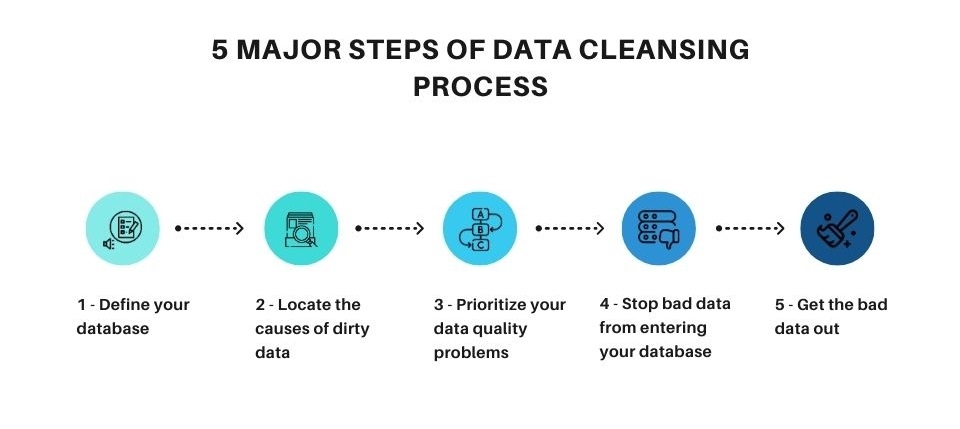
1. Define your database
The first step towards a clean and accurate database is to define your database. Without absolute clarity about what type of data should exist in the database; you cannot focus your efforts on deriving business strategies for generating revenues. And, expecting your database to deliver optimal value in such a scenario is like a far-fetched possibility.
2. Locate the causes of dirty data
Now that you have defined what your sales lead data should comprise; try finding out the cause that is making your data dirty and lowering its quality. Identify and stop invalid, incomplete, and duplicate data from entering your database. Also do not forget that data decays at 22% year-over-year. Regularly cleanse data to extract data that has expired or become outdated.
3. Prioritize your data quality problems
Once the database is defined, and causes of dirty data are located “ it’s time to decide from where to start cleansing. Not prioritizing data quality problems wastes cleanup efforts otherwise, and immediately re-pollutes the business data.
4. Stop bad data from entering your database
Once the data quality issues are prioritized; now it’s time to handle those problems. Map your data quality issues and your data cleansing process. List all your data sources and note down any and every data filtration process that you have in place. This will help in creating specific rules to restrict who brings in the data and how.
5. Get the bad data out
After stopping the bad data from entering the master database, now is the time to take care of bad data which has already entered and sitting in your database which eats up your overall productivity and efficiency.
Regular and automated data cleansing ensures that incomplete data is analyzed for completeness and missing fields are either completed or appended with new ones. Experienced data cleansing companies have better understanding of your domain, your market, and the industry your company belongs to. They automate the manual aspects of data entry of data collection from disparate data sources and scrubbing and standardizing that data.
