



While VR therapy might seem like a far-fetched idea, we have already seen instances of early successes where this technology helped patients overcome certain psychological disorders. In fact, we can go as far back as 2006 when Dr. Barbara Rothbaum, a professor at the University of Emory School of Medicine, and her team published a paper in the American Journal of Psychiatry where they show how they used VR to help patients overcome acrophobia. Today we will take a deep into virtual reality therapy to see what types of disorders are cured and the various tools that are used. Before we get into all of the disorders that can be cured, let’s first get an overview of what VR therapy is.
What is Virtual Reality Therapy
The virtual reality therapy definition is a complete immersion into a virtual environment where people can engage and interact with the causes of their disorders. This involves gradual and repeated exposure to feared stimuli with resultant changes in cognitions, behaviors, and emotional and physical responses. The feared stimuli can be pretty much anything, and the exposure to them facilitates extinction of the fear response and helps change dysfunctional assessments of threat and unhelpful responses, reducing the conditioned anxiety associated with feared stimuli. This is what makes VR and therapy an effective combination.
Virtual Reality Exposure Therapy
A big part of psychotherapy is exposing patients to the things they fear in a safe and controlled environment. From the very early days of VR, researchers in this field have recognized the powerful role VR can play in helping people manage or even cure their disorders. This includes things like:
- Virtual reality therapy for anxiety disorders “ This is a mental health disorder characterized by feelings of worry, anxiety, or fear that are strong enough to interfere with one’s daily activities. Therefore, when working with patients, it is very important to control the body’s responses to the fears, i.e., racing heart, rapid breath, etc. Believe it or not, VR experiences trigger the same physiological reactions that the real world. This is why doctors therapists prefer to use VR when working with patients dealing with anxiety disorders.
- Virtual reality therapy for PTSD “ Virtual reality is an effective tool for treating PTSD because the patient can put on VR headgear and be immersed in a world where images that could trigger a PTSD response are all around them. For example, if the person is afraid to go to a particular location or they are dealing with traumatic memories, a VR world can be created to help that person confront these fears. Such virtual environments provide visual, auditory, tactile, vibratory, vestibular, and olfactory stimuli to patients.
- VR exposure therapy for substance abuse “ Virtual reality can elicit cravings for drugs and alcohol, which can be used to treat dependency on a particular substance. Essentially, the mechanism is the same as treating people with PTSD since the goal is to help people confront challenging situations in a controlled and safe environment. This gives people the opportunity to practice what they will do when encountering such situations in real life.
- Virtual reality therapy for autism “ Living with autism is very difficult, and doctors are using VR to help patients live the best life they can. They are using VR to create role-playing environments for practicing social skills or alleviate phobias. VR has also been used to help prepare autistic children for public speaking. Using an audience of avatars that faded away if eye contact wasn’t made by the speaker, children were encouraged to look around the room rather than just ahead. It is also being used to help others without autism to understand what living with the condition means. Many argue that there is no other medium that comes as close to putting you in someone else’s shoes as VR.
- Virtual reality therapy for depression “ Depression is a common mental disorder with a large treatment gap. However, recent studies reveal that VR therapy can promote positive emotionality and improve cognitive abilities in older people, both at home and in long-term care facilities. VR thus holds potential in allowing older individuals to gradually adapt to their new environments ”thereby mitigating the detrimental effects of place attachment and social exclusion.
- VR physical therapy “ Virtual reality is showing a lot of promise in the physical therapy field. First of all, we need to keep in mind that VR adds an element of fun, which can motivate people to continue with their therapy. VR can also be used to help patients practice real-life skills, such as washing the dishes or grocery shopping. This does not mean that VR is better than everything currently being used, but there is room to explore other applications since there is a lot we don’t know about VR.
VR Therapy Apps are Already Being Used to Treat Disorders
According to the Diagnostic and Statistical Manual of Mental Disorders (DSM) published by the American Psychiatric Association, there are more than 450 different types of mental disorders. Many of these can be treated or alleviated with a group of methods called Cognitive Behavioral Therapy (CBT) which aims to change deep-seated thoughts, beliefs, and attitudes that negatively distort our view on life.
There are already numerous virtual reality and mental health already on the market today that can help people overcome the disorders we mentioned earlier and many more. Companies can take advantage of virtual reality development services to create whatever environment they need and physiological parameters.
Now that we have looked at VR for therapy let’s now take a look at virtual reality psychology.
Virtual Reality and Psychology
VR psychology is relatively new, but recent evidence shows that there is a lot of promise in using this psych-focused VR. Strictly from a psychological point of view, VR is simultaneously a simulative, cognitive, and an embodied technology. These features make VR the perfect tool for experiential assessment and learning with great clinical potential. So, what role can VR play in the future of psychology? According to neuroscience, the body matrix is a complex brain network that maintains the integrity of the body at both the homeostatic and psychological levels by supervising the cognitive and physiological resources necessary to protect the body and the space around it.
VR could be the core of a new trans-disciplinary research field ”embodied medicine, the main goal of which is the use of virtual reality to alter the body matrix with the goal of improving people’s health and well-being.
If we take a step back and look at the broader picture, we see that psychology and the exposure therapy we talked about earlier are intertwined. After all, the disorders we mentioned earlier all have a psychological barrier the patient needs to overcome, and virtual reality simply creates a safe environment where people work on their problems. From the psychological perspective, the human brain reacts to these virtual environments the same way as if they were happening in real life. This also opens the door for greater telehealth since a lot of patients cannot make the physical trip to see a doctor or specialist for a wide variety of reasons, and VR allows them to get the care they need remotely.

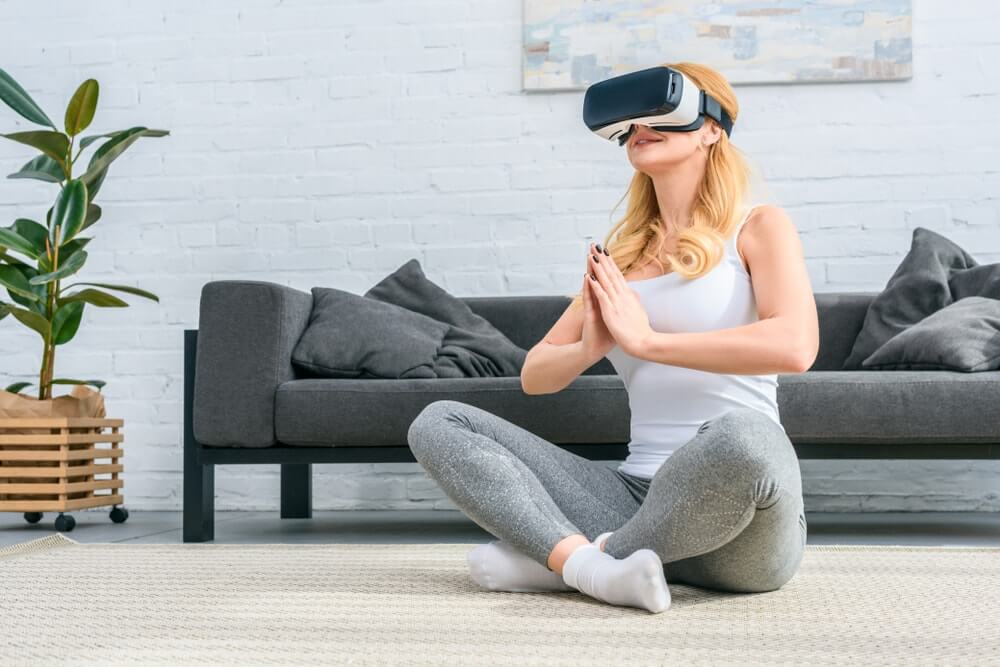
Virtual Reality and Mental Health Go Hand in Hand
In this article, we discussed a lot of ways virtual reality mental health can be beneficial to both doctors and patients. A lot more work and research need to go into virtual reality therapy psychology as well as VR and mental health, and this area will continue to evolve as the technology matures. If you have an idea for a VR mental health product, you will need a reliable partner to make it a reality. Skywell Software has extensive experience creating VR products for some of the world’s leading brands. Contact us today to learn more about how we can help you.
Originally published here