


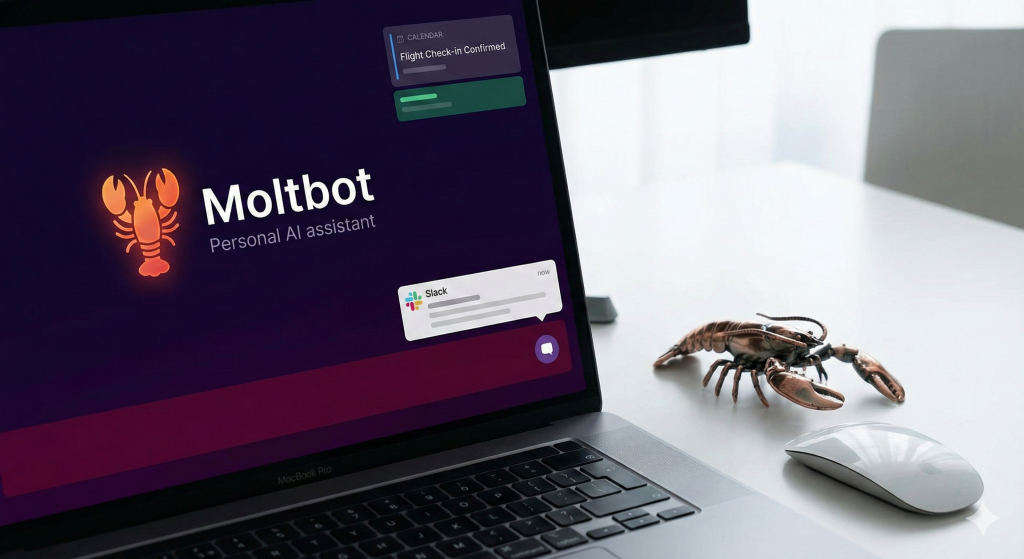
The latest wave of AI innovation has produced an unexpected mascot: a lobster. Within weeks of its debut, the personal AI assistant originally known as Clawdbot went viral, sparking a massive surge of interest in autonomous agents. Despite a high-profile rebranding to Moltbot following legal pressure from Anthropic, the project’s “crustacean soul” remains intact’and so does the hype.
From Personal Project to Viral Sensation
Moltbot is being marketed as the “AI that actually does things.” Unlike standard chatbots that simply provide text responses, Moltbot is designed to execute tasks: managing calendars, sending messages across various platforms, and even handling flight check-ins.
What started as a private tool built by Peter Steinberger‘an Austrian developer and the founder of PSPDFkit’quickly evolved into a community phenomenon. After a three-year hiatus from the tech world, Steinberger created the tool to manage his own digital life. The project, initially named as a nod to his affinity for Anthropic’s “Claude” model, was forced to change its name to Moltbot to avoid copyright infringement.
Key Stats at a Glance
- GitHub Popularity: Over 44,200 stars and counting.
- Market Impact: The buzz surrounding the project was so significant that it contributed to a 14% surge in Cloudflare’s stock, as investors recognized the demand for the infrastructure required to run such agents locally.
- Technical Foundation: Open-source and designed to run on a user’s local machine or private server rather than a centralized cloud.
The Power’and Risk’of Autonomy
The primary appeal of Moltbot is its ability to act on a user’s behalf. However, this level of autonomy introduces significant security considerations. Because the software can execute commands on a computer, it opens the door to potential vulnerabilities that static chatbots do not face.
Security Concerns to Consider:
- Prompt Injection: There is a theoretical risk that malicious content’such as a specifically crafted message’could trick the AI into performing unauthorized actions without the user’s consent.
- Local Execution Risks: Experts warn that running the bot on a primary laptop containing sensitive data (like SSH keys or password managers) is risky.
- The “Silo” Solution: To maintain total security, many developers recommend running Moltbot in a Virtual Private Server (VPS) or a “sandbox” environment, though this currently limits the bot’s ability to interact with a user’s local files.
Navigating the Hype
The transition from Clawdbot to Moltbot was also a target for bad actors. During the rebranding process, scammers attempted to hijack the project’s digital presence to promote fraudulent cryptocurrency schemes. Steinberger has since resolved these issues, but the incident serves as a reminder of the “Wild West” nature of the current AI boom.
The Bottom Line: Moltbot represents a shift from AI as a “search engine replacement” to AI as a “digital agent.” While it currently requires a certain level of technical savvy to operate safely, it provides a glimpse into a future where software doesn’t just talk to us’it works for us.