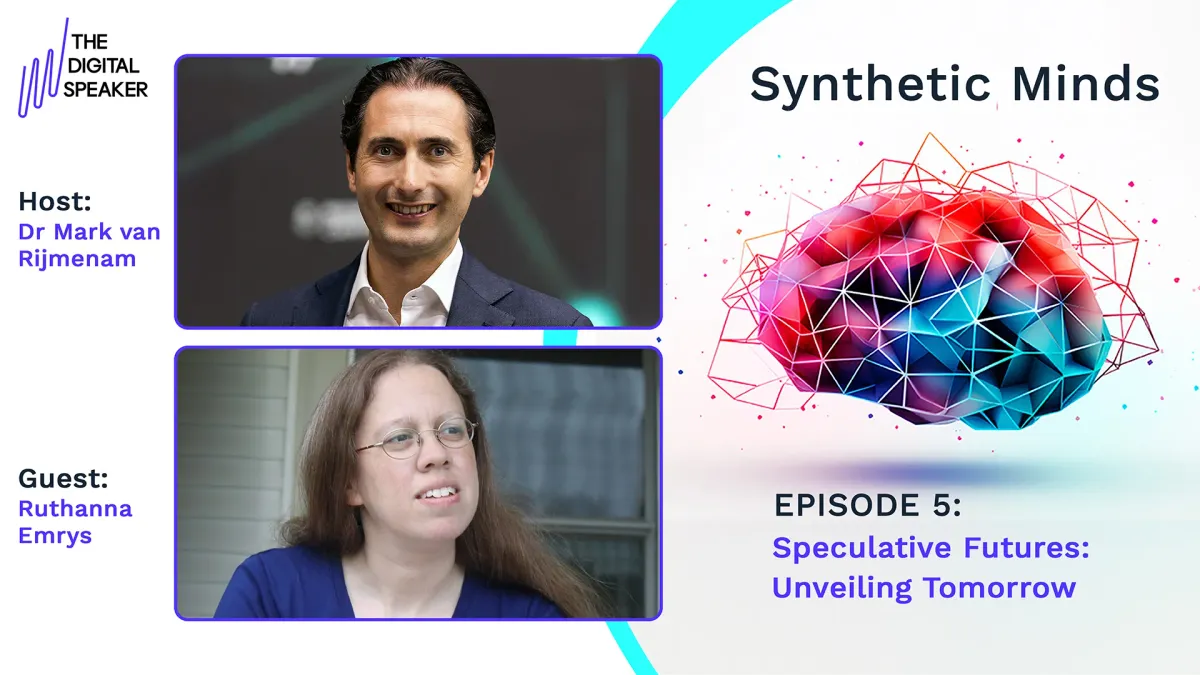
The below is a summary of my recent Synthetic Minds podcast episode on speculative futures.
Can science fiction novels teach us better business strategies than MBA programs?
Ruthanna Emrys’ imaginative worlds offer more than escapism-they’re blueprints for navigating technological transformations. In the latest Synthetic Minds podcast, Emrys discusses how speculative fiction can enhance scenario planning and strategic foresight. Her stories challenge our assumptions and encourage business leaders to consider diverse future scenarios, from climate change to alien encounters.
Speculative fiction, Emrys argues, allows us to test the boundaries of what we believe is possible and ethical. This genre helps leaders envision the impact of emerging technologies and societal shifts, encouraging a proactive rather than reactive approach. For instance, her novel “A Half-Built Garden” explores how communities adapt to or resist technological changes, providing a narrative framework for businesses to examine their own responses to innovation and disruption.
Emrys emphasizes the importance of ethical considerations in technological adoption. Her narratives highlight the need for aligning advancements with humanistic values, ensuring technologies enhance equity and access. By analyzing her stories, leaders can glean insights into resilience and adaptability, preparing them to pivot as real-world conditions change.
Integrating speculative fiction into strategic dialogues fosters a culture of innovation and critical thinking. It allows teams to explore potential impacts of decisions in a safe, imaginative context. How can speculative fiction help your organization embrace complexity and uncertainty in strategic planning, ensuring you’re ready for any future?
To read full article or listen to the episode, please proceed to TheDigitalSpeaker.com