


Big data intelligence is considered the Holy Grail of decision-making in business today. As far back as 2013, some 78% of US business leaders surveyed agreed with the statement that, If we could harness all of our data, we’d be a much stronger business.
Indeed, it takes a lot more than having a large amount of readily available even real-time information to unlock better, faster decision-making. Experts shout themselves hoarse advocating democratization and smart use of data, as well as fast track analysis, for everything from business intelligence to IoT:
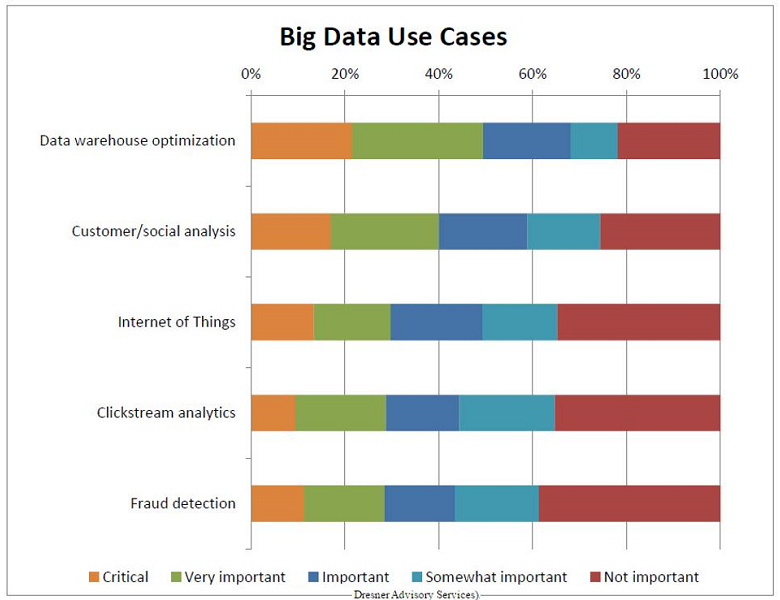
However, companies are not yet well-equipped to deal with issues emerging from the big data explosion. Issues like TMI (too much information) and analysis paralysis hurt more than help in decision-making. The answer to this conundrum lies in reducing the latency between data processing and decision-making.
Lets delve into some ideas and best practices that might help you reduce latency between data collection, mining and decision-making, so you can reap full benefits of your big data tools.
Limit the Scope of Data
The first step towards minimizing analysis paralysis is to define appropriate processes, limits and expectations. Analysis is not a deliverable unto itself. Rather, it is a step in the project management framework, so it must be defined by specific goals, tasks and deadlines. This can be achieved through the creation of a well-defined scope.
An undefined or disproportionately large scope of data can impede the speed of decision-making. Analyzing high volumes of data has its benefits but unnecessarily slows down processes. The larger the scope of data available for analysis, the more the confusion and margin for error. When you need to plan out a project quickly, always start with the minimal amount of information required to make a risk-free decision.
You can also phase out analysis by attacking portions of data in stages. When planning phases, start by determining expected goals, the date range for data collection, the data mining methodology, which part of the project/organization it concerns the most, and so on.
Based on these parameters, quickly scan data variables to produce answers to your questions in a reasonable timeframe. Remove all irrelevant variables that wont affect the next decision above a certain threshold, so that you are not hampered by scope creep.
Stop Talking, Start Doing
Nearly 30 percent of the average employees time is wasted in meetings, and most meetings are unproductive. Meetings create an illusion of forward movement where dialog is confused with action, and activity with accomplishments. When you add big data, data intelligence, and numbers to the mix, the effect could be even more disastrous. Big data reports and analysis shift the attention from action and deliverables to processing and detailing.
That, however, doesnt mean youre better off skipping data and analysis reports. Just try to avoid setting up meetings for seemingly inane tasks. Involve decision makers based on their technical knowhow and the requirements of the project, not because of organizational structure and hierarchy rules.
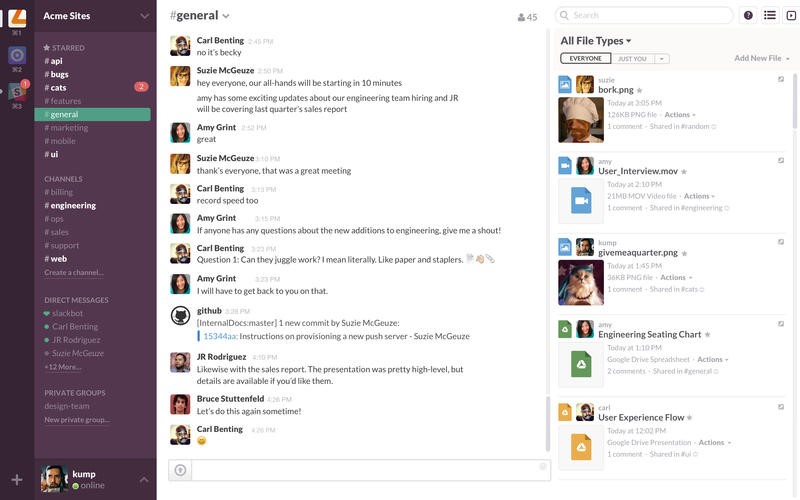
If, however, you are using a communication tool like Slack, you can drastically cut down the need for meetings. Slack empowers all your employees to make small decisions by making communication channels that can be substituted for project meetings, emergency meetings, team meetings, or pretty much any meeting. These channels are transparent, so everyone knows whats going on.
Escape Decision Avoidance
Decision avoidance is as real and common a phenomenon as analysis paralysis. Sometimes key decision makers refrain from making decisions by making unusual requests, asking for revisions, frequently changing the objective or plan, or taking any measures that could lead to postponing the inevitable.
This can occur due to various reasons such as fear of failure, fear or being mistaken, or fear of obsolescence. You can beat these fears by following a deadline-centric approach. If every analysis is performed with a defined timeline, no decisions would be delayed with Need more information or Lets sleep over this tonight.
Decision makers must understand that the length of deliberations is directly proportional to opportunities lost and increased competition. If the key managers or decision makers in your workplace are prone to decision avoidance, help them with better tools that can help them penetrate through data and gather precise intelligence.
Encourage Non-Linear Decision-Making
The traditional, linear decision-making process involves software specialists, data scientists and strategic managers, who work together to take decisions based on data sourced from different software platforms.
This process is especially beneficial when the available data is raw and unwieldy, in which case subject matter experts are required to decode it and make a call on its usability. However, this process is expensive, and decision-making is often left in the hands of a select few.

Image by author
The alternative to linear decision-making is a simple solution that makes data available to all users across an organization so that they can form better-informed decisions individually and in real time.
For example, Sisense, a provider of business intelligence software that lets you mine large, disparate datasets, has developed a solution that enables every employee to use data for fast, sound decision-making. Through a drag-and-drop interface and versatile, embeddable dashboards, Sisense allows even tech-challenged employees to make sense of data.
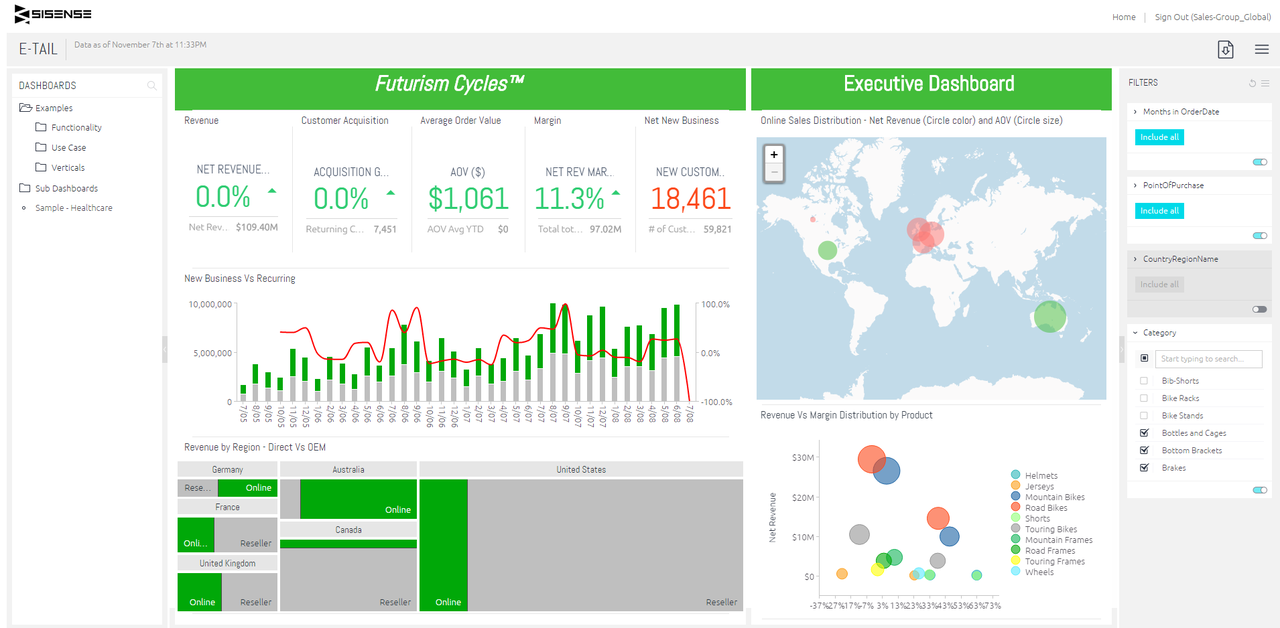
Sisense has a dashboard-centered platform and UI running on top of single-stack data architecture, which breaks down complex information into parts that can be easily analyzed and understood. Visualization narrows down the time difference and complexity between linear and non-linear decision-making.
Fast Track Analyis
Fast tracking is primarily associated with project management. However, the concept can be applied to analysis too. Rapid analysis is performed to determine whether it is feasible, worthwhile and/or lucrative to aggressively invest in a given project.
Fast-track analysis is structured into five phases: selection, classification, ascendency, error-proofing, and review. Its performed through a series of standardized questions and variables designed to help you make informed decisions.
For instance, managers can use fast-track analysis to understand conditions such as lack of time, resources, funding, tradeoffs, adjustments and unrealistic expectations that affect a project, so they can decide which project must take priority over others. All in all, this methodology helps speed up the measurement of a projects viability by cleverly leveraging the parameters that will ultimately impact its execution most.
Over to You
The most important goal of analysis is to reach the best conclusion possible based on reasonable, verified information, and within the stated timeframe. The fact that you have data doesnt automatically translate into business intelligence. Data provides a head start to decision-making, but it wont make decisions for you.
Further analysis allows you to measure and mitigate the risks involved in taking actions based on your data. This is the basis for better decisions.
But again, analysis can be a time-consuming task. Dwelling on your data for too long can be detrimental and hamper your growth. The best solution is to walk the tightrope in such a way that you can benefit from big data intelligence without squandering all the first-mover perks that come with it.
