


Healthcare is rightfully considered one of the most promising industries for IoT technology implementation. This is the industry where many routine processes can be automatized with the help of IoT-based solutions. This, in turn, enhances the efficiency of the workflow in hospitals and clinics. Let’s find out how the Medical Internet of Things works and why it is worth using.
Why Use IoT in Healthcare
The main idea of the IoT concept is collecting, transferring, and/or processing data without human participation. There are plenty of ways to make use of this technology in healthcare. Thus, automatic collection of physical health data and its instant transferring to specialists helps in making a diagnosis, disease prevention, and remote monitoring. EHR systems help keep medical records in order and provide instant personalized access to medical data.
Internet of Medical Things
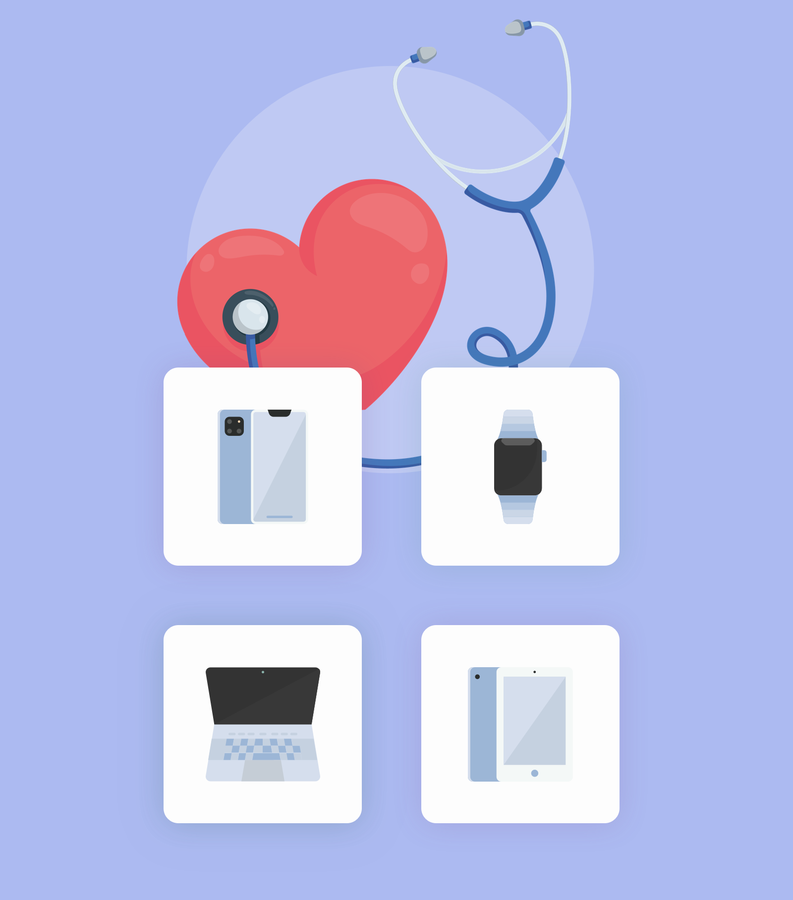
As the name implies, the Internet of Medical Things is a smart system consisting of interconnected devices. Usually, these networks include such smart devices as smart bracelets/watches, trackers, monitoring devices, and so on. The tasks performed by these devices can be divided into two groups: collecting data and monitoring. As of now, IoMT is one of the fastest-growing healthcare sectors.
What Are the Benefits of IoT Solutions in Healthcare?
Both professionals in the healthcare industry and patients can take advantage of IoT solutions. Here are the five main benefits offered by the Medical Internet of Things.
-
Continuous monitoring. Some apps can receive signals from smart wearable devices and process the information received. It helps immediately detect life-threatening conditions, such as asthma or heart attacks and inform doctors or emergency services of them.
-
Optimizing interaction of patients and doctors. For example, apps like AutoBed help immediately find spare beds for new patients, minimizing their waiting time. This results in better patients’ experience.
-
Drug management. IoT systems make it possible to control the amount of a drug taken precisely. This, in turn, helps doctors assess the efficiency of the treatment. Another helpful option is sending notifications informing of the need to take a drug to patients or their relatives.
-
Automation of routine workflow. In-hospital IoT-systems provide fast and precise processing and systemizing of medical information: medical records, metrics, diagrams, and so on. This helps release doctors’ time and prevent human errors.
-
Prevention. People with chronic diseases or those in risk groups can use IoT solutions for continuous monitoring of their health state. Smart software can detect the first symptoms of diseases, which helps make the right diagnosis much earlier.
Major Challenges Associated with IoT
When implementing IoT solutions in the healthcare sector, one needs to be aware of the main pitfalls associated with the use of this technology. The best way to avoid possible problems is to order an IoT app at a custom healthcare software development company.
-
Security issues. The whole healthcare sector has to deal with the storage and processing of sensitive data, which must be protected. Reliable data-protection solutions tend to be costly. Besides, there are certain standards, such as CCPA and GDPR, which need to be complied with.
-
Protocols integration. This is true for all systems that include numerous devices, using various protocols. To provide a seamless functioning of the entire network, it is necessary to integrate the protocols. HIPAA and HITECH protocols are commonly used in healthcare applications.
-
Huge amounts of data. IoT apps in healthcare have to process tons of information. Sometimes, it can result in data overload, which negatively affects the accuracy.
Real Examples of Healthcare IoT Solutions
Being one of the rapidly growing industry sectors, IoT in healthcare attracts investors from all over the world. No surprise some real giants, such as Google and Apple, are investing in MIoT development. Let’s have a look at just three real examples.
-
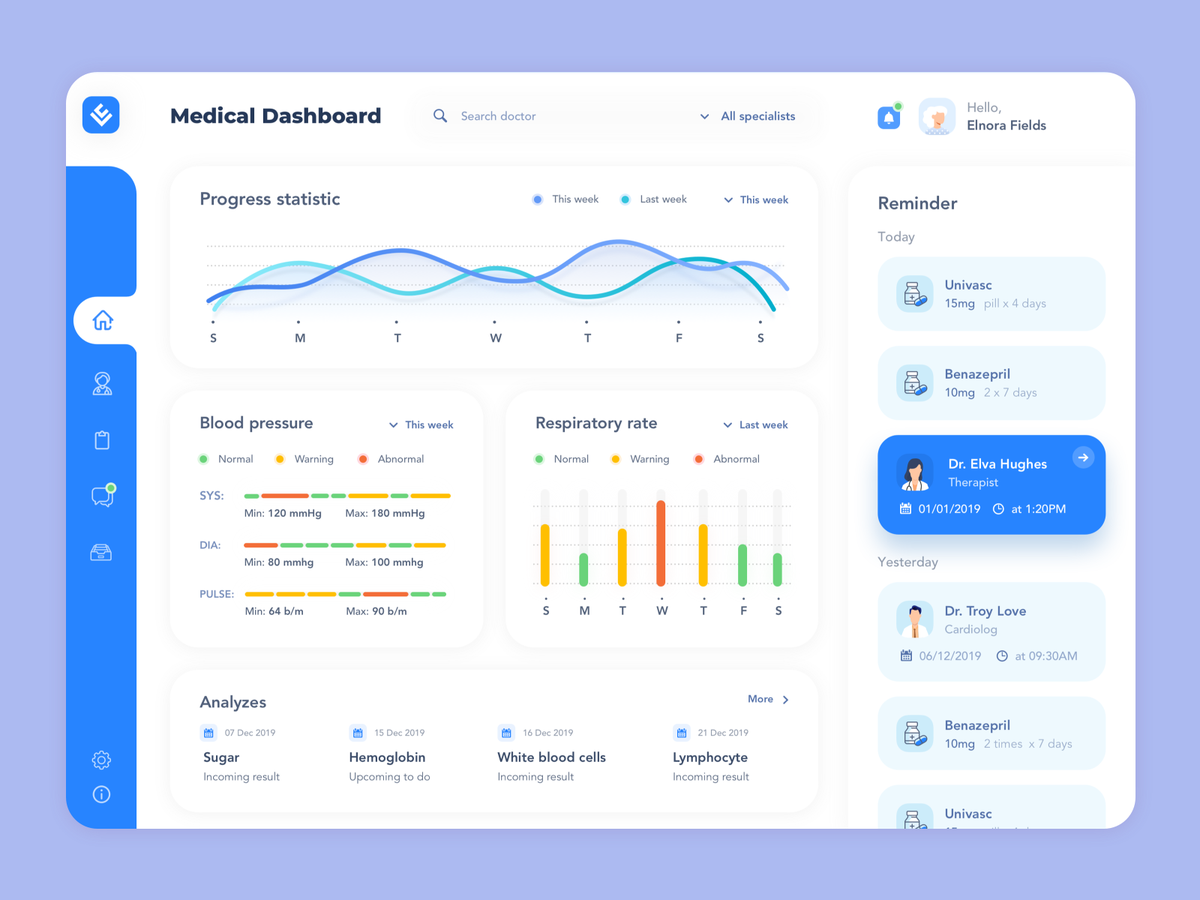
Hospital Information Management Systems known as HIMS. They help to keep in order all the information on a hospital-level and effectively manage this information. This includes employees’ and patients’ data, medical records, reports, appointments, medicines, equipment, and so on. Popular HIMS apps are eVisit, eHospital, Insta HMS, and others.
-
Electronic Healthcare Records Systems known as EHR. They are intended for keeping all medical records in one place in a convenient digital format. All the medical information is instantly available to authorized users and reliably protected from unauthorized access.
-
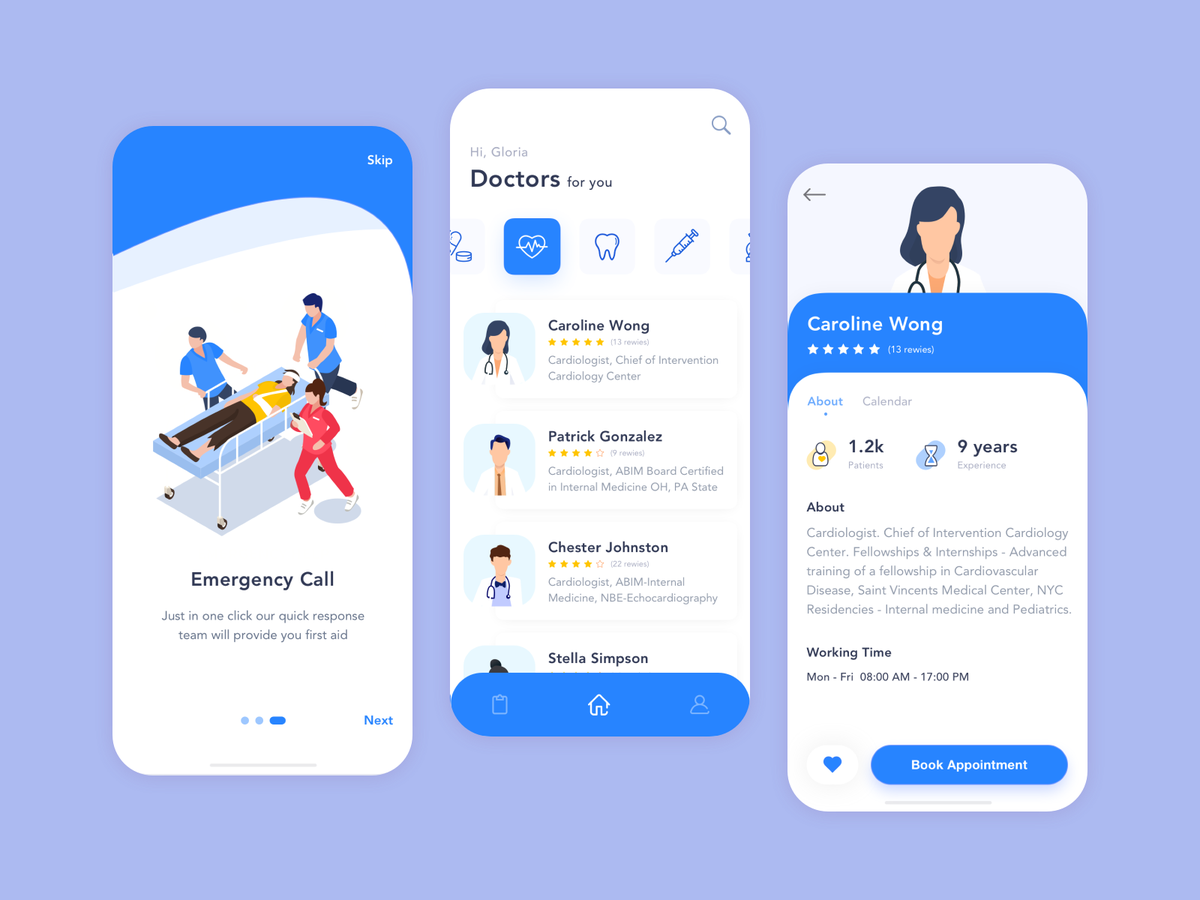
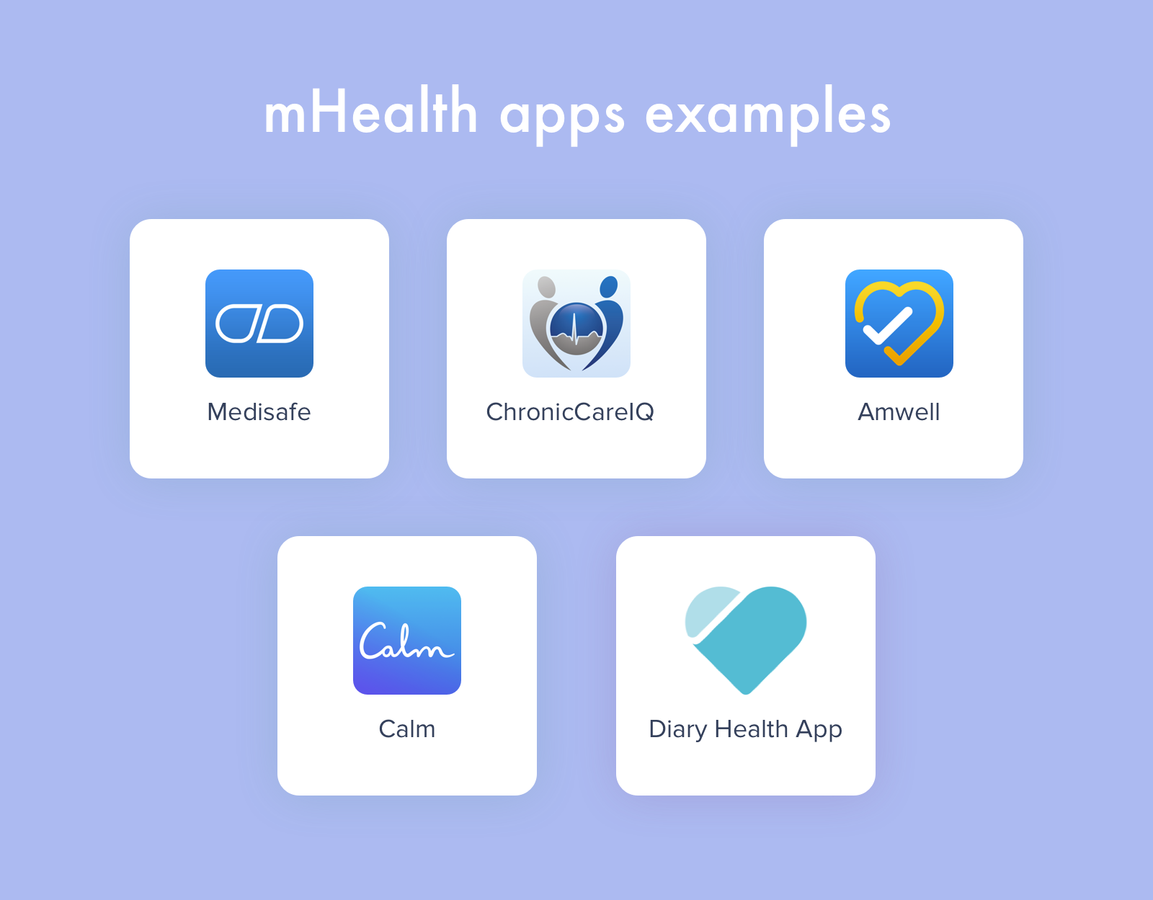
Mobile healthcare apps for individual users. They are divided into two large groups “ apps for emergency use and the ones for regular use. The second group is the largest: it includes numerous fitness, wellness, and healthcare apps, which are used for collecting physical data and generating individual recommendations for users.
While the Internet of Things in Healthcare is all the rage these days, it is still a relatively new technology. No surprise its sphere of application is constantly expanding. We’ve described just some common use cases, while new top-notch IoT solutions appear every year.
