


People hate change. Despite this, change is one of life’s constants. Everything changes, grows, and evolves.
Especially in the workplace.
This can be a massive challenge for managers looking to introduce new technologies.
Even if those technologies are ultimately implemented with the best intentions.
Increased productivity, employee engagement,improved customer service, reduced waste and improved integrations are just some benefits of implementing new technology at work.
Businesses that embrace new technologies sooner rather than later generally outperform their competitors. These technologies also tend to improve employee collaboration, satisfaction, efficiency, build a future-forward company wide mentality and generally lead to improved productivity.
Regardless of what technology it is, it’ll need to be operated by your employees, who aren’t always so fond of new tools.
That’s why it’s useful to know how to implement new technologies in regards to employee management and not just throw them in the deep end. Even if your highly competent employees are capable of swimming. Metaphorically.
How To Implement New Technologies In Employee Management
As great as your latest software upgrade, tech tool, or management system may be in theory, getting it working effectively is a whole other ball game. That’s because no matter how good it is, it requires people to implement. That’s where this guide comes in.
Involve employees in deciding to implement
While the final decision should always be left to managers and those who’ve been entrusted with that responsibility, there’s a lot to be said for involving employees in the process.
When you include employees in the decision-making, you’re able to get the consensus and involvement of the people who’ll need to implement the technology you’re putting forward. Even if you’re providing technological solutions that you think will be of use, without the support of your staff there’s a good chance you won’t see the benefits you think you will.
Involving your employees in decision-making also acts as a great check and balance in terms of self-awareness.
Self-awareness is an essential skill of great managers because it allows you to see things from other perspectives and acknowledge when you may be wrong. No one is right all the time so being able to see your blind spots, or have them pointed out can be a major help.
What you think is a great technological tool may be all good and well in theory, but if you involve employees in deciding to use it, that may not be the reality. The more perspectives you are open to, the more you can understand the need for it.
Your employees will also feel heard and seen which can help them get on board with your decisions faster.
Make sure employees understand how it will benefit them
Nothing kills the potential of a new tool or software like employee apathy.
If you don’t make the effort to get your staff to understand how and why your new technology can impact and improve their day to day life, it is doomed. Employees who don’t understand the benefits will likely misuse or underuse new technologies.
Employee assistance programmes are a great example of this. They’re designed to support employees with everything from work issues, financial advice and even mental health issues. You can read more about employee assistance programmes here, but few employees are aware of exactly how this can benefit them.
Employers or managers need to make sure employees are actively aware of how they can benefit from technology like EAPs.
When you present new technologies to employees make sure to factor this in and have a few ready examples. The quicker an employee sees how it can directly impact their work every day, the more likely it is they’ll use it.
Change is never easy so explaining to your employees what’s “in it for them” will go a long way. The alternative though, is failing to adjust and adapt, which in today’s highly competitive world, is a death sentence.
Luckily you’re not alone and once you get people onside, change is often for the best.
Just imagine how difficult it was to convince people to switch from tried and tested horses and carriages to motor vehicles back in the day.
Demonstrate its effect on the business
If you’re a good enough manager and a people oriented company, your employees should feel invested in your brand’s success.
These employees and this feeling of loyalty and connectedness are vital in today’s competitive market.
If you’ve established this, as well as demonstrating how new technology can personally benefit employees, being able to show its potential impact on the brand can add another layer to your pitch.

We’re not telling you tobore employees to death with financial stats and figures. Just indicate how this can lead to overall growth for the business and how that can positively impact them.
This additional layer of employee investment can have a major impact on your business. Especially if you use some sort of tracking features to set goals and measure progress.
Inform in advance
While people may dislike change, they hate change being sprung on them or having to learn to cope with a change on the go.
That’s why it’s vital to communicate your desire to implement new technologies and their benefits. If you’re open, inclusive and clear about how you think it can help the company as well as employees day to day, they;re going to respond positively.
This also helps grow mutual respect since you’re treating employees as equals rather than underlings.
Get leaders “on side”
Nothing kills improvement, growth or change like negativity.
Curbing negativity and apathy can be a challenging task. That’s where your relationship with the leaders in your team or company comes in. Even if they’re not “officially” leaders.
In any environment there are people who affect others. Through their leadership, charisma, charm, intelligence or seniority, it’s just human nature to gather around a central figure.
Getting a few of these people, in different departments or levels, onside can go a long way. If you show these figures the direct benefits and desired outcomes, they can quickly act as advocates for your plan. It sounds strange, but once enough key figures in any group buy into an idea, the rest tend to follow fairly quickly.
Securing the support of the leaders in a community can eradicate friction that naturally occurs when people are presented with change.
Provide thorough training
There’s no point implementing a technological solution to a problem if no one knows how to use it.
Even having the program be confusing or hard to come to grips with will be off putting enough for employees that they’ll mentallly scrap it and continue doing things the same way. Even if you’ve shown them how inefficient it is. Most people would rather stick to what they know than learn something brand new. Especially if it’s complicated.
That;’s where training comes in.
Since not every piece of new technology is easy to understand or outright user friendly, training that’s informative, engaging and can be re-consulted later is a must.
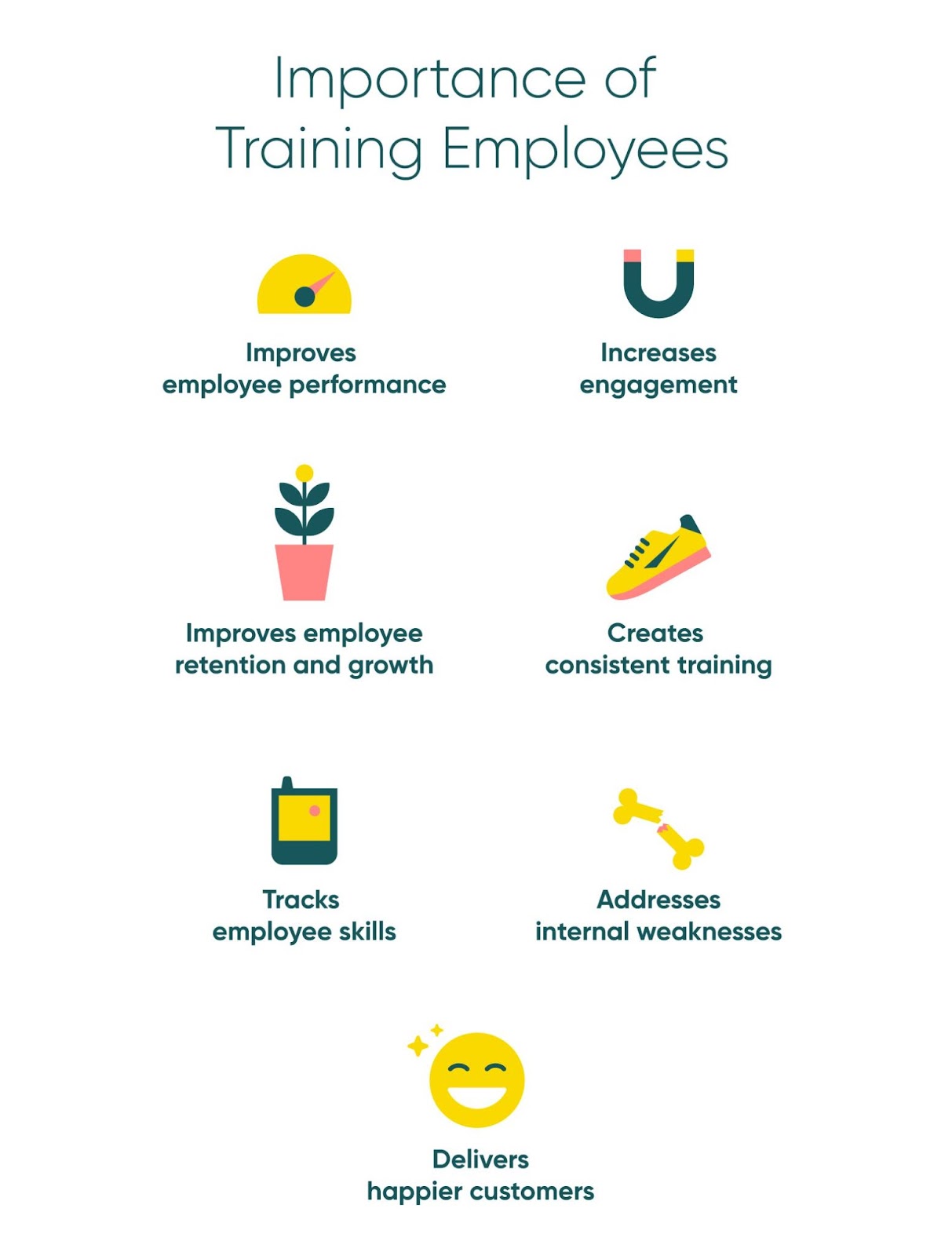
Being able to provide engaging training is a massive part of implementing new technologies successfully.
Bear in mind that not everyone learns the same way so being able to offer the training in a few different forms will ensure everyone can learn from it. Remember that the more you relate the technology to how it will personally affect and improve each employee’s day to day lives, the higher the success rate with your training will be.
The more well trained and versed in the new technology an employee is, the more likely they are to adopt it and enjoy doing so.
Incorporate tech-forward thinking into the culture
To put it simply, if you can instill a culture at work that’s not only forward-thinking and innovative but one that’s open to embracing future technological solutions.
This makes keeping up with the fast-paced and challenging business world a lot easier. If you manage to foster this atmosphere in a work environment, you can develop an environment of employee innovation. Somewhere employees come to you with technology they think can improve things.
Since no manager can be or owner can be everywhere, think of everything or see every angle, this is an ideal outcome for any business.
Final Thoughts
Given how globally competitive the world has become, implementing new technologies is no longer an option for companies.
Especially for companies that want to not just keep up with the competition, but get ahead.
That said, your employees are just as valuable as your products or technology you think will help grow your brand. It’s only by getting them on board that you’ll genuinely see the benefits of what you’re hoping to see when you implement your technological solution.
Management is always a balancing act, but your employees don’t have to be seen as an adversary, you have to bend to your will to get them to adopt your new technology. By following the processes we’ve mentioned above, not only will your employees adopt your technological innovation, but they’ll be happy you’ve come along with it.
If you’re lucky, this can be the start of developing a culture of tech forward thinking and innovation that gets your business in a perpetual forward motion. From there, with technology, a great product and enthused employees, the sky’s the limit!
