


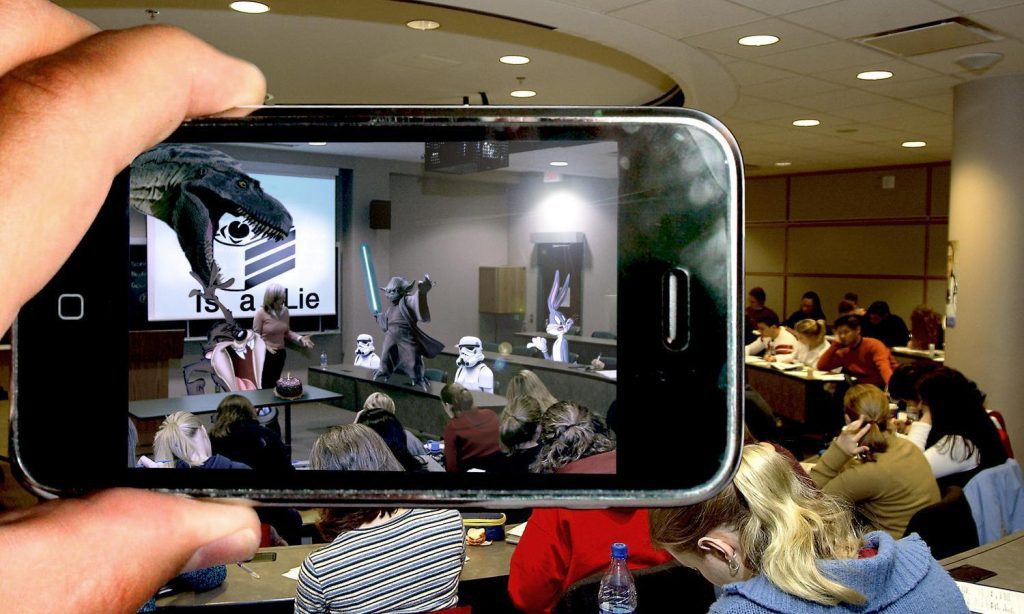
Augmented Reality application development entails replacing the virtual world with the real world. App developers utilize AR Libraries with open source API to break down the stages of development. Here is a review of five AR tools for mobile app developers along with their merits and demerits:
1. ARToolKit
ARToolKit is a type of augmented reality software tool utilized in the development of AR apps. The major advantage of this tool is the open-source code that allows unrestricted access to the library. Other merits of the ARToolKit include:
- The library aids tracking of advanced object markers via mobile device cameras thus duplicating their whereabout on the screen of the device.
- It supports 2D recognition and mapping of additional elements through OpenGL
- It provides a free development environment for operating systems like iOS, Linux, SGI, Windows, Mac OSX, and Android.
Although this AR library can be accessed freely, the development documentation is considerably limited. It compresses the test apps. However, some of them can be difficult to build. The examples are inadequate, and there are no plans to update the framework yet.
2. Vuforia
Vuforia is an all-inclusive SDK for augmented reality app development.
The main benefit of this tool includes a test app with annotations showing the abilities of the Vuforia and the support of virtual reality application devices. Other advantages are:
- It aids in the detection of different kinds of targets such as images, objects, and English text.
- Support of 2D and 3D recognition
- Support for Virtual buttons
- It features Smart Terrain with the capacity to recreate a terrain and set up a 3D geometric map of the environment.
- It supports extended tracking that produces an uninterrupted visual experience regardless of the location of the target.
The absence of a comprehensive framework manual results in complications for mobile app developers using Vuforia for the first time. The instructions and short tips to guide users are in random order, and also, a watermark pops up once each day on the free version of the Vuforia.
3. LayAR
LayAR library allows you to view the terrain through the layers on the mobile device screen. The advantages of LayAR are:
- Support of image recognition
- Each of the layers can provide data about social net users or location of specific places
- LayAR components support the expansion of the abilities of printed products.
Although the documentation of LayAR is detailed and well-structured, the manual is only obtainable online. All work is done on a server through JSON, making work on this AR tool inflexible.
4. WikiTude
This augmented reality library is available for Android, iOS, Epson Moverio, Optinvent ORA1, Vuzix M-100, Google glass. Wikitude can serve as a plugin for PhoneGap, a component for Xamarin, and a module for Titanium. The merits of WikiTude include:
- Support of 2D and 3D recognition
- HTML augmentation
- Supports 3D model rendering and animation
- Mobile application developers can build apps to search for events, Wiki articles, tweets and even reconstruct places in the virtual map using WikiTude
Mobile app developers who choose to use a complete version of WikiTude instead of the free trial version are required to make regular payments during mobile application development.
5. Kudan AR
Kudan library is faster than other AR tools. The mapping of multi-polygonal models in reality by other mobile AR apps is made possible by Kudan. The advantages of Kudan are:
- Image recognition
- Markerless tracking
- Mapping additional elements through a detached component over OpenGL
- An unlimited number of image recognition.
The manual for kudan is brief and lacks sufficient information. Also, the limited built-in functionality presents challenges for app developers when there is no access to OpenGL.