


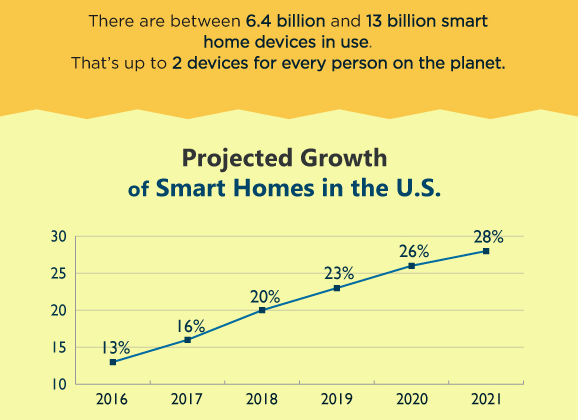
Smart homes are getting popular. People are investing heavily in smart homes to save money and to gain control over their home and all the devices. Statistics by Ooma show that there are between 6.4 billion and 13 billion smart home devices in use and the projected growth of smart homes in the US is expected to reach 28% in 2021.

These smart homes are powered by the Internet of Things (IoT), and according to Gartner, it is a $235 billion industry, and on average, 5.5 million new devices are connected each day.
Understanding a smart home and its data
A smart home uses several IoT devices. All the devices are connected wirelessly to your home’s network and can communicate with each other to provide consumers with a seamless user experience.
These devices have sensors and software that let them communicate with the network and other devices. The data collection is at the heart of smart homes because this is how these devices work. They constantly collect data from several sources and use it to provide users with a better user experience.
According to Daniel Knight, the technical director of Fibaro UK:
All the data we leave behind us is owned by those who collect it. We don’t have visibility on the data we give up to Google and Facebook. People are very wary of data collection methods.
Yes, all the data is owned by the company that collects it. If you own such a business that collects data from smart homes through your IoT device, how you use it?
Here are some smart ways businesses can use data from smart homes effectively.
1. Track consumer behaviour
Tracking consumer behaviour with data is easier than ever. What consumers do first thing in the morning, how they interact with your device, where they like to spend the weekend, and so on. It can be used to understand your consumer behavior better.
Birst is an analytics solution provider that helps businesses understand consumer behaviour using IoT. This is how their dashboard looks like.
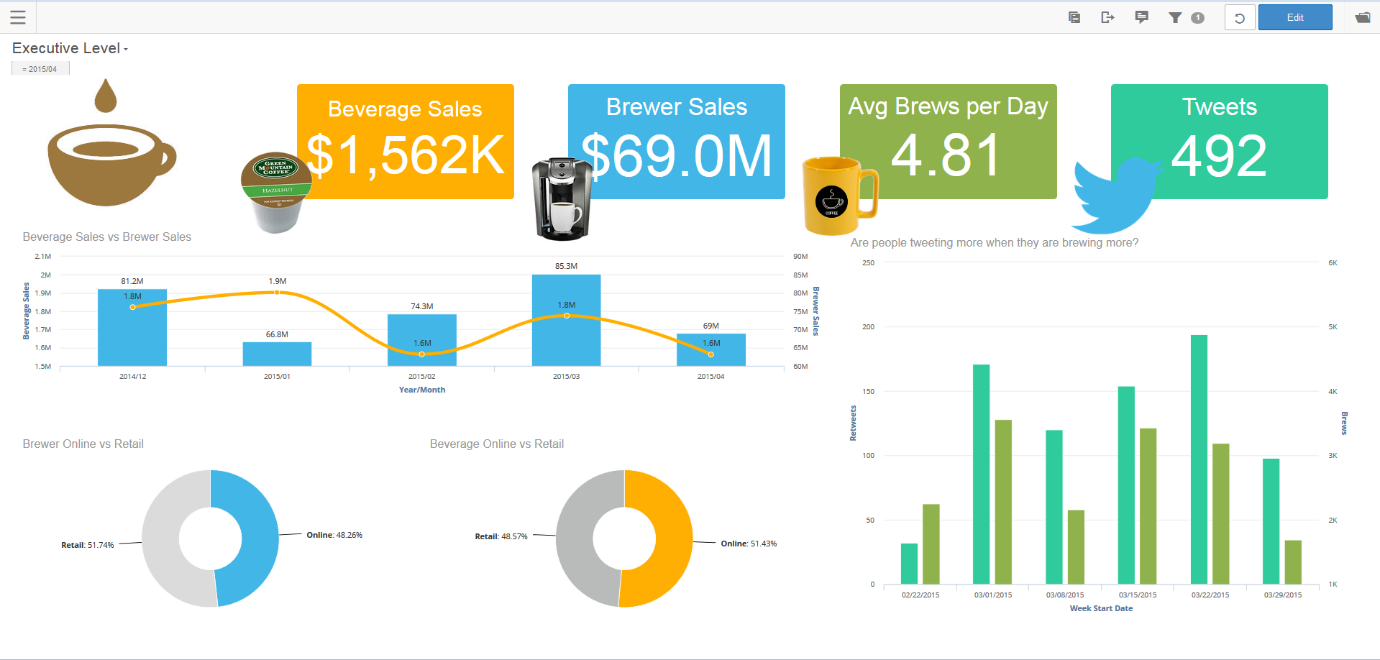

Connected coffee makers transmit information to the manufacturer on how many pots of coffee consumers brew a day. This data is correlated with social media data to draw inferences such as consumers who brew more coffee talk more about the brand on social media or consumers who brew less coffee engage with other coffee brands, and so on.
This gives you complete access to your consumers’ psychology, behaviour, and buying patterns.
2. Improve customer experience and engagement
Continuous customer engagement and delivering superior customer experience gets a whole lot easier when you know what’s happening in your customer’s life at any given point in time. Data from smart homes and IoT devices let you do this with a breeze.
For instance, if a device malfunctions, you can instantly get in touch with the consumer before he gets to know it. Fix the device well before your customer knows it.
It all comes down to how quickly you can access and analyze data from your device. Think of Google Maps; it informs you well before the time that there is congestion on the road ahead and you should take an alternative route. Imagine if you get this information when you have been through the congested patch, you won’t feel good, right?
This is how exactly you can use data from your device to provide proactive services to your customers.
3. Boost sales
This shouldn’t be surprising. Generating more sales with data from smart homes is a great way to increase revenue.
For instance, there is a device that tracks the weight of your toilet roll and thus tracks its usage. When your toilet roll is about to finish, you might get an email or a message or a call from the manufacturer.
In fact, tracking your product usage is way easier than tracking consumer behaviour or other variables. If you cannot think of any other innovative way to use data, at least get started with monitoring usage data so that you can send timely reminders to your customers.
Conclusion
The way how you use data from smart homes and your device today will define your business’s future and your market position in the industry a few years down the road. Don’t take it lightly because this data is worth millions of dollars.
Not using it to its optimal capacity is no less than a crime.