


A Google search for Internet of Things term reveals over 280,000,000 results, thanks to the media making the connection between the smart home wearable devices, and the connected automobile, IoT has begun to become part of the popular parlance. But thats not the complete picture, according to Gartner’s Nick Jones, vice president and distinguished analyst “The IoT demands an extensive range of new technologies and skills that many organizations have yet to master,” he added “A recurring theme in the IoT space is the immaturity of technologies and services and of the vendors providing them. Architecting for this immaturity and managing the risk it creates will be a key challenge for organizations exploiting the IoT. In many technology areas, lack of skills will also pose significant challenges.”
In the coming years, IoT will look completely different than it does today. IoT is a greenfield market. New players, with new business models, approaches, and solutions, can appear out of nowhere and overtake incumbents. But business is the key market. While there is talk about wearable devices and connected homes, the real value and immediate market for IoT is with businesses and enterprises. The adoption of IoT will be much more similar to the traditional IT diffusion model (from businesses to consumers) than the consumer-led adoption of social media and personal mobility.
The top 10 trends of IoT according to Gartner
1. Platforms
The platform is the key to success. The things will get increasingly inexpensive, applications will multiply, and connectivity will cost pennies. Keeping in mind that IoT platforms bundle many of the infrastructure components of an IoT system into a single product. The services provided by such platforms fall into three main categories:
- Low-level device control and operations such as communications, device monitoring and management, security, and firmware updates.
- IoT data acquisition, transformation and management.
- IoT application development, including event-driven logic, application programming, visualization, analytics and adapters to connect to enterprise systems.
2. Standards and Ecosystems
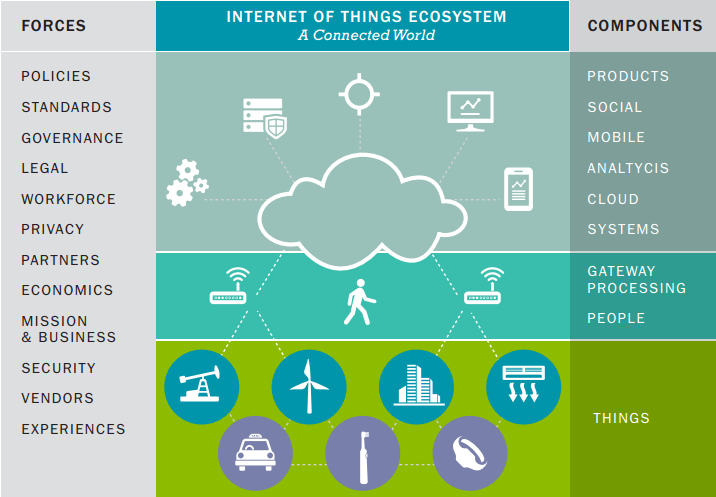
Gartner noted that as IoT devices proliferate, new ecosystems will emerge, and there will be “commercial and technical battles between these ecosystems” that “will dominate areas such as the smart home, the smart city and healthcare. Organizations creating products may have to develop variants to support multiple standards or ecosystems and be prepared to update products during their life span as the standards evolve and new standards and related APIs emerge,” according to Gartner. There will be a battle for IoT application mind share. With billions of devices projected to be spewing out petabytes of data, application developers will have a field day launching thousands, or even millions, of new and cool apps. But, similar to the smartphone world, all of these apps will be fighting for mind share, and only a few will rise to the top to be valued by businesses and consumers.
3. Event Stream Processing
According to Gartner: “Some IoT applications will generate extremely high data rates that must be analyzed in real time. Systems creating tens of thousands of events per second are common, and millions of events per second can occur in some telecom and telemetry situations. To address such requirements, distributed stream computing platforms (DSCPs) have emerged. They typically use parallel architectures to process very high-rate data streams to perform tasks such as real-time analytics and pattern identification.”
4. Operating Systems
There’s a wide range of systems out there that have been designed for specific purposes.
5. Processors and Architecture
Designing devices with an understanding of those devices’ needs will require “deep technical skills.”
6. Low-Power, Wide-Area Networks
Current solutions are proprietary, but standards will come to dominate. According to Gartner: “Traditional cellular networks don’t deliver a good combination of technical features and operational cost for those IoT applications that need wide-area coverage combined with relatively low bandwidth, good battery life, low hardware and operating cost, and high connection density.
The long-term goal of a wide-area IoT network is to deliver data rates from hundreds of bits per second (bps) to tens of kilobits per second (Kbps) with nationwide coverage, a battery life of up to 10 years, an endpoint hardware cost of around $5, and support for hundreds of thousands of devices connected to a base station or its equivalent. The first low-power wide-area networks (LPWANs) were based on proprietary technologies, but in the long term emerging standards such as Narrowband IoT (NB-IoT) will likely dominate this space.”
7. Low-Power, Short-Range IoT Networks
Short-range networks connecting IT devices will be convoluted. There will not be a single common infrastructure connecting devices.
8. Device (Thing) Management
IoT things that are not ephemeral that will be around for a while will require management like every other device (firmware updates, software updates, etc.), and that introduces problems of scale.
9. Analytics
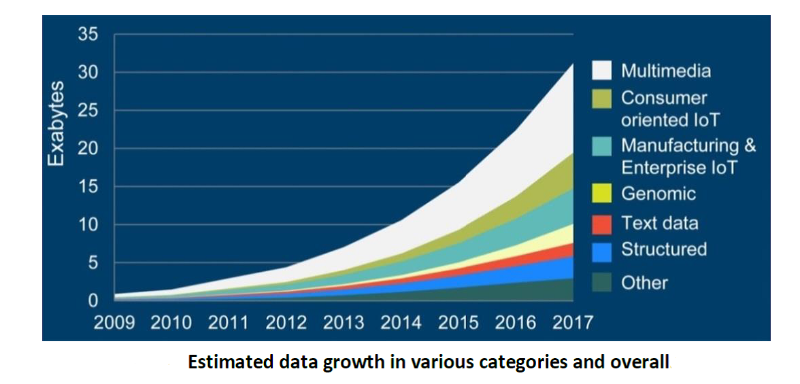
According to Gartner, IoT will require a new approach to analytics. “New analytic tools and algorithms are needed now, but as data volumes increase through 2021, the needs of the IoT may diverge further from traditional analytics,” according to Gartner. The currency of IoT will be data. But, this new currency only has value if the masses of data can be translated into insights and information which can be converted into concrete actions that will transform businesses, change peoples lives, and effect social change.
 10. Security
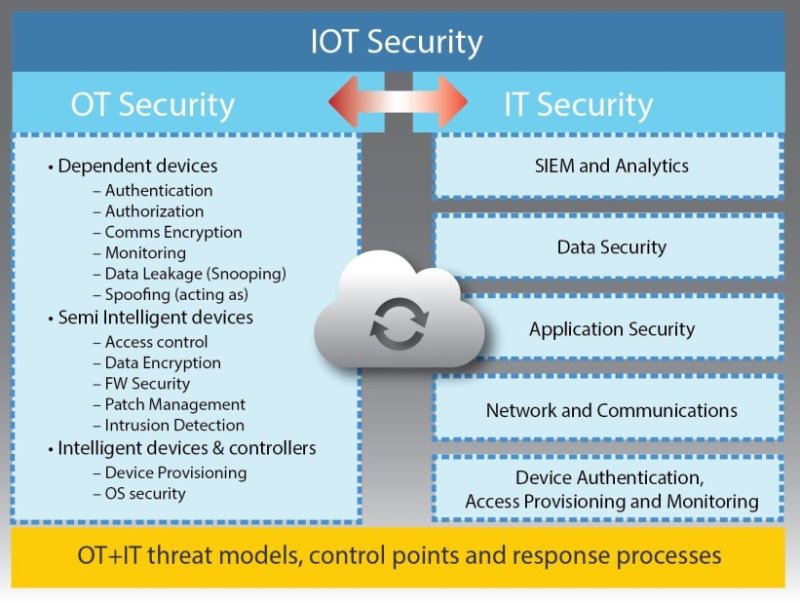
According to Gartner, threats extend well beyond denial of sleep attacks: Those are attacks using malicious code, propagated through the Internet of Things, aimed at draining the batteries of your devices by keeping them awake. According to Gartner “The IoT introduces a wide range of new security risks and challenges to the IoT devices themselves, their platforms and operating systems, their communications, and even the systems to which they’re connected.
Security technologies will be required to protect IoT devices and platforms from both information attacks and physical tampering, to encrypt their communications, and to address new challenges such as impersonating ‘things’ or denial-of-sleep attacks that drain batteries. IoT security will be complicated by the fact that many ‘things’ use simple processors and operating systems that may not support sophisticated security approaches.”
What is Next?
The market is endless. Its exciting but you need to build great software and hardware with a sophisticated backend with multiple security levels and to bring order and sophistication to data and understanding that security is an art that involves cryptography. Most companies dont have the talent they need to develop secure products.
References
https://www.dbta.com/BigDataQuarterly/Articles/10-Predictions-for-the-Future-of-IoT-109996.aspx
https://campustechnology.com/articles/2016/02/25/security-tops-list-of-trends-that-will-impact-the-internet-of-things.aspx
