



RASP (Runtime Application Self-Protection) and WAF (Web Application Firewall) are two distinct tools for web application security. Here’s how they differ and when to use each:
- RASP works inside the application, detecting and stopping threats in real time using runtime context. It’s ideal for zero-day attacks and application-specific security.
- WAF operates at the network edge, filtering HTTP/HTTPS traffic using predefined rules to block known threats. It’s best for perimeter security and quick deployment.
Quick Comparison:
| Feature | RASP | WAF |
|---|---|---|
| Location | Inside the application | Network perimeter |
| Detection Method | Context-based (runtime) | Pattern-based (traffic) |
| Deployment | Requires app modification | No app changes needed |
| Zero-Day Protection | Strong | Limited |
| Performance Impact | Moderate | Low |
When to Use:
- RASP: For deep protection against runtime threats, especially in critical applications like financial or healthcare systems.
- WAF: For broader traffic filtering and quick setup, ideal for legacy applications or multi-application environments.
Best Approach: Combine RASP and WAF for layered security, leveraging WAF’s perimeter defense and RASP’s application-level protection.
The Difference Between WAF and RASP
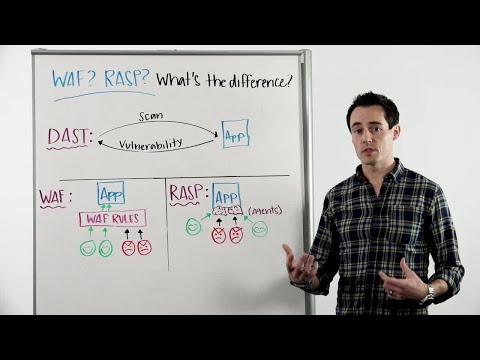
How RASP and WAF Work
RASP and WAF take different approaches to securing applications, operating at distinct levels within the application stack. Here’s a closer look at how each works and their key differences.
RASP: Inside the Application
RASP integrates directly into an application’s runtime. It monitors the application’s behavior in real-time and reacts instantly to potential threats, using context to identify and address suspicious activity.
WAF: Filtering at the Network Edge
WAF acts as a shield at the network’s edge, filtering HTTP/HTTPS traffic before it reaches the application. It relies on pattern recognition to identify and block malicious requests.
Comparing Features
Here’s a quick breakdown of how RASP and WAF differ in their operations:
| Feature | RASP | WAF |
|---|---|---|
| Protection Level | Inside the Application | Network Layer |
| Deployment Location | Embedded in the Application | Gateway at the Network Edge |
| Threat Detection | Context-Based | Pattern-Based |
RASP’s integration within the application allows it to detect threats based on runtime behavior, offering precise protection. On the other hand, WAF provides a first line of defense by blocking harmful traffic before it even interacts with the application. Together, they create a multi-layered security strategy.
Threat Detection Methods
RASP: Context-Based Detection
RASP analyzes how an application behaves in real-time to spot potential threats. It looks at various factors like whether a user is authenticated, their interaction history, the current state of the application, and specific data permissions. For example, if someone tries to access sensitive information, RASP evaluates these details to decide if the action is legitimate. This approach helps uncover complex threats that simpler, static methods might overlook.
WAF: Pattern-Based Detection
WAF uses predefined rules and attack signatures to identify harmful traffic. By examining HTTP/HTTPS requests, it compares them against known attack patterns. This makes it particularly effective at stopping well-known threats like SQL injection or cross-site scripting attacks, where the attack methods are already documented.
Detection Success Rates
Each method offers strengths in different scenarios. RASP excels at identifying zero-day and targeted attacks that don’t follow established patterns, thanks to its context-aware analysis. On the other hand, WAF is highly effective at blocking familiar, signature-based threats. Combining these methods creates a stronger, layered defense strategy.
sbb-itb-9e017b4
Setup and Performance Effects
When it comes to security, how you set things up and the resulting performance impact play a big role in how effective your solution will be. Both RASP and WAF have distinct approaches to deployment and performance, which influence their suitability for different scenarios.
RASP Implementation Steps
To use RASP, you need to embed its agents directly into your application. This method allows it to monitor internal behavior but can add some complexity to the process.
Here’s how RASP is typically deployed:
- Assess compatibility: Ensure your application code works well with RASP.
- Embed RASP agents: Integrate the agents into your app’s framework.
- Set security rules: Define policies to handle threats.
- Test thoroughly: Check functionality and measure any performance impact.
Modern RASP tools are designed to minimize performance issues, but improper configuration can still lead to noticeable delays.
WAF Network Setup
WAF, on the other hand, is deployed at the network level, which means you don’t have to modify the application itself. The setup revolves around configuring the network.
Steps for deploying a WAF include:
- Choose placement: Decide where in the network the WAF will sit.
- Deploy the solution: Install WAF appliances or set up a cloud-based version.
- Define detection patterns: Create policies for identifying and handling threats.
- Route traffic: Configure the network to pass traffic through the WAF.
WAFs are quicker to set up and require less maintenance compared to RASP. Cloud-based WAFs, in particular, offer added perks like distributed processing and caching, which enhance efficiency.
The decision between RASP and WAF often comes down to your organization’s specific needs. WAF’s ease of deployment makes it appealing, but RASP’s deeper integration offers a more thorough layer of protection. Your choice should align with your infrastructure and resources.
RASP and WAF Capabilities
This section breaks down the strengths and limitations of RASP and WAF, highlighting how these technologies differ in their approach to application security.
Main Strengths and Weaknesses
RASP operates directly within the application, enabling it to detect threats in real time based on the application’s behavior and context. Key advantages include:
- Context-rich threat detection due to deep integration.
- Ability to identify and block advanced attacks.
- Dynamically adjusts protection based on runtime conditions.
However, RASP comes with its own set of challenges:
- Requires significant development resources for implementation.
- Can impact performance if not configured properly.
- Needs separate deployment for each application.
- Demands a higher upfront resource investment.
On the other hand, WAF operates at the network level, offering a broader but less detailed layer of security. Its benefits include:
- Quick setup without modifying applications.
- Centralized security management for easier oversight.
- Lower complexity during implementation.
- Minimal impact on application performance.
Still, WAF has its limitations:
- Limited visibility into application internals.
- Prone to false positives in complex environments.
- Cannot detect certain runtime-specific attacks.
- Requires frequent updates to security rules.
Side-by-Side Comparison
The table below highlights the differences between RASP and WAF:
| Capability | RASP | WAF |
|---|---|---|
| Deployment Location | Inside application | Network perimeter |
| Complexity | High | Medium |
| Application Changes Required | Yes | No |
| Context Awareness | High | Limited |
| Performance Impact | Moderate | Low |
| Coverage | Deep but narrow | Wide but shallow |
| Zero-Day Attack Protection | Strong | Limited |
| Maintenance Requirements | Regular updates | Frequent rules |
| Scalability | Per application | Across multiple applications |
| Real-time Analysis | Complete | Limited to traffic |
Combining RASP and WAF
RASP provides detailed, application-level protection, making it a strong choice for critical systems with sensitive data. WAF, with its broad defense at the network level, is better suited for organizations managing multiple applications with standard security needs.
For a stronger security strategy, many organizations opt to use both technologies together. This layered approach combines WAF’s perimeter defense with RASP’s application-specific protection, offering a more robust and well-rounded security solution.
Using RASP and WAF Together
Combining RASP (Runtime Application Self-Protection) and WAF (Web Application Firewall) strengthens application security by bringing together their individual strengths.
Benefits of Layered Security
Using RASP and WAF together creates a more resilient defense by addressing threats from multiple angles:
Complementary Detection
- Merges network-level filtering (WAF) with in-depth application analysis (RASP)
- Ensures constant protection from the outer network to the application core
Stronger Zero-Day Threat Defense
- Uses behavioral analysis to spot new, unknown threats
- Helps guard against attack methods that haven’t been documented yet
Fewer False Alarms
- Pairs WAF’s filtering with RASP’s contextual awareness
- Enhances accuracy by validating threats through both systems
Ideal Scenarios for Using Both
Deploying both RASP and WAF is particularly useful in high-risk environments or where security is a top priority.
Critical Applications
- Banking and financial platforms
- Healthcare systems
- Online retail websites
Complex Architectures
- Microservices-based applications
- Multi-cloud setups
- Hybrid infrastructure combining on-premises and cloud systems
Regulatory Requirements
Industries with strict compliance needs benefit greatly, including those adhering to:
- PCI DSS (Payment Card Industry Data Security Standard)
- HIPAA (Health Insurance Portability and Accountability Act)
- GDPR (General Data Protection Regulation)
How to Implement Both
Follow these steps for a smooth integration:
-
Start with WAF
Deploy WAF first to establish strong perimeter security. -
Add RASP Protection
Integrate RASP into applications with higher exposure to threats. -
Coordinate Security Systems
Set up unified logging and monitoring to ensure both systems work together seamlessly.
Conclusion
Understanding the key differences between RASP and WAF is crucial for shaping your security strategy. Here’s a breakdown:
Key Differences
- WAF uses pattern matching to filter traffic, while RASP focuses on runtime behavior to detect both known and new threats.
- WAF protects against external attacks, whereas RASP secures the application’s internal operations.
- WAF requires minimal changes to applications, but RASP involves integrating with the application’s code for deeper protection.
These differences highlight when each tool is most effective.
When to Choose Each Solution
WAF is ideal for:
- Managing heavy traffic filtering
- Protecting older, legacy applications
- Quick deployment with minimal changes
- Addressing external threats efficiently
RASP is better suited for:
- Detecting threats at the application level
- Guarding against zero-day vulnerabilities
- Monitoring threats during runtime
- Leveraging detailed security insights and analytics
Using Both Together Works Best for:
- Meeting regulatory compliance standards
- Securing critical industries like finance or healthcare
- Protecting complex hybrid environments
- Building a layered, defense-in-depth approach
Your choice should align with your organization’s specific security needs, technical setup, and risk tolerance. For businesses handling sensitive data or facing advanced threats, combining WAF and RASP ensures stronger protection.