



Open-source tools can help you manage your organization’s data effectively without expensive licensing fees. They offer cost savings, customization, and community support, making them a great choice for improving data quality, security, and compliance. Here’s what you need to know:
-
Why Open-Source?
- No licensing costs and lower setup expenses.
- Customizable features to fit your needs.
- Active communities for support and updates.
-
How to Choose the Right Tool:
- Look for strong security features like encryption and access controls.
- Ensure compliance support with audit trails and data lineage tracking.
- Check for scalability and integration with your current systems.
-
Top Tools to Explore:
- Apache Atlas: Best for metadata management and lineage tracking.
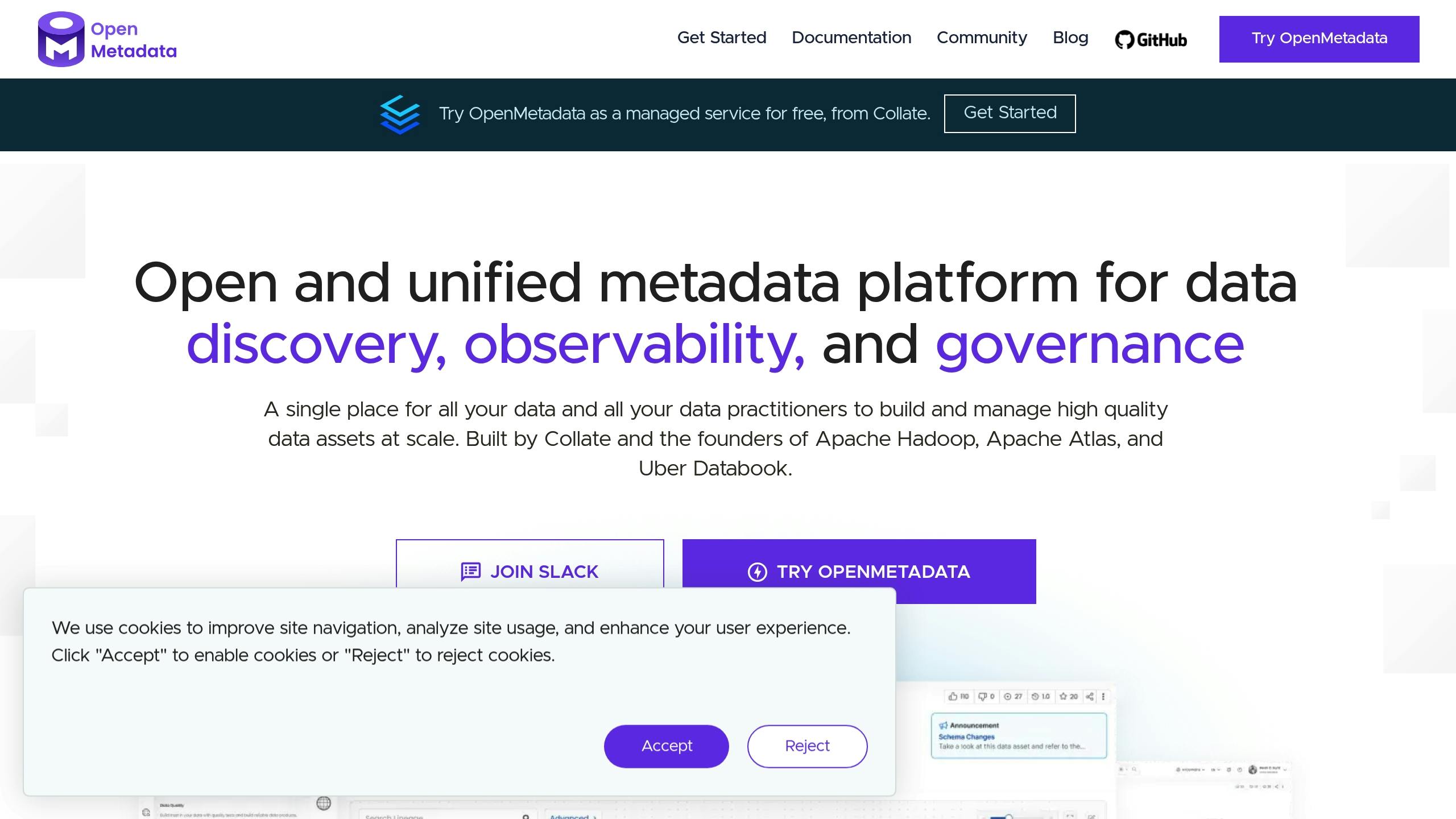
- OpenMetadata: Flexible API-first design with automated metadata ingestion.
-
Setup and Best Practices:
- Meet minimum system requirements (e.g., 16GB RAM, PostgreSQL/MySQL).
- Customize policies, automate workflows, and monitor performance regularly.
OpenMetadata Overview


How to Choose Open-Source Data Governance Tools
Picking the right open-source data governance tools starts with understanding your organization’s specific needs and capabilities. Here’s a guide to help you evaluate your options.
Tool Selection Checklist
When assessing open-source tools, focus on these key factors:
| Selection Criteria | Key Points to Consider |
|---|---|
| Security Features | – Authentication methods – Access controls – Encryption for data security |
| Compliance Support | – Compatibility with regulations – Audit trails – Data lineage tracking |
| Integration Options | – API availability – Support for existing data systems – Custom connectors |
| Scalability | – Handles large datasets effectively – Resource demands |
| Community Activity | – Active user base – Frequent updates – Quality of documentation |
Pay special attention to security and scalability to ensure the tool meets both current and future demands.
Security Assessment
Evaluate the tool’s security features, including:
- Role-based access control (RBAC)
- Data encryption for both storage and transmission
- Detailed audit logging
- Compatibility with your existing security systems
Scalability Requirements
Check if the tool can manage:
- Your current data workload
- Growth projections over the next 3-5 years
- Peak usage periods
- Available hardware and software resources
Top Open-Source Tools Overview
Once you’ve identified your criteria, explore these well-regarded open-source options.
Apache Atlas
Apache Atlas is a solid option for enterprise-level data governance. Its strengths include:
- Metadata management
- Data classification capabilities
- Lineage tracking features
- Seamless integration with the Hadoop ecosystem
OpenMetadata
OpenMetadata offers collaborative and automated tools, such as:
- API-first design for flexibility
- Automated metadata ingestion
- Advanced search functionality
- A wide range of connectors for integration
Assessing Tool Maturity
To gauge the maturity of a tool, consider:
- Frequency and stability of new releases
- Speed of bug fixes and issue resolution
- Quality and completeness of documentation
- Responsiveness of the user community and support forums
Setting Up Open-Source Data Governance Tools
Installation and Setup Guide
Getting started with open-source data governance tools takes some preparation. Here’s a step-by-step guide to help you implement them effectively:
System Requirements
Before you begin, make sure your system meets these baseline specifications:
| Component | Minimum Specifications |
|---|---|
| CPU | 4+ cores, 2.5GHz or higher |
| RAM | At least 16GB (32GB preferred) |
| Storage | 100GB dedicated SSD |
| Operating System | Linux (Ubuntu 20.04+ or RHEL 8+) |
| Database | PostgreSQL 12+ or MySQL 8+ |
| Java | OpenJDK 11 or newer |
Preparing the Environment
Follow these steps to get your environment ready:
- Update all system packages to the latest versions.
- Install necessary libraries and tools.
- Set up the database with correct permissions.
- Configure firewall rules and open required ports.
Integration Process
- Connect the tool to your existing data lakes and warehouses.
- Perform integration tests to ensure everything works smoothly before full deployment.
Once installed and integrated, configure the tool to suit your governance needs and maximize performance.
Tool Customization Tips
Policy Settings
Adjust your governance policies to align with your organization’s requirements:
- Define data classification levels.
- Set automated tagging rules for easier organization.
- Create custom metadata templates for specific use cases.
- Build workflow approval chains to streamline processes.
Optimizing Performance
Adjust key settings to improve tool performance:
| Setting | Suggested Configuration |
|---|---|
| Cache Size | 25-30% of total RAM |
| Connection Pool | 50-100 connections |
| Query Timeout | 30-60 seconds |
| Index Buffer | 4-8GB for high workloads |
Automating Workflows
Set up automation for repetitive tasks, such as:
- Running data quality checks.
- Updating metadata automatically.
- Generating compliance reports.
- Handling access requests efficiently.
Enhancing Security
Boost your system’s security by:
- Configuring role-based access control (RBAC).
- Setting custom authentication rules.
- Managing encryption keys securely.
- Customizing audit logs for detailed tracking.
Keep a record of all customizations and maintain a version history for your configurations.
Setting Up Monitoring
Track key metrics to ensure everything runs smoothly:
- Monitor system resource usage.
- Keep an eye on tool performance.
- Check compliance with governance policies.
- Track user activity for security and auditing purposes.
sbb-itb-9e017b4
Managing Data Governance with Open-Source Tools
Creating Data Rules and Guidelines
Establishing clear rules and guidelines aligned with your organization’s goals is critical for effective data governance.
Data Classification Framework
Develop a structured system to classify data based on its sensitivity. Here’s an example framework:
| Classification Level | Description | Required Controls |
|---|---|---|
| Public | Non-sensitive information | Basic access logging |
| Internal | Business operational data | Role-based access |
| Confidential | Sensitive business data | Encryption, audit trails |
| Restricted | Highly sensitive data | Multi-factor authentication, strict monitoring |
Access Control Implementation
Implement strong access controls by requiring user authentication, assigning role-based permissions, monitoring access continuously, and conducting regular reviews of permissions.
Compliance Documentation
Maintain thorough documentation of your data handling procedures, security measures, compliance requirements, and audit protocols to ensure accountability and adherence to standards.
Once these rules are in place, maintaining data quality becomes the next priority.
Data Quality and Tracking
Defining policies is just the start. Maintaining those policies requires a focus on consistent data quality.
Quality Metrics Monitoring
Regularly track key quality metrics to ensure data integrity:
| Metric | Target Range | Monitoring Frequency |
|---|---|---|
| Completeness | 95-100% | Daily |
| Accuracy | ≥98% | Weekly |
| Consistency | ≥97% | Daily |
| Timeliness | <30 min lag | Real-time |
Data Lineage Tracking
Implement data lineage tracking to keep tabs on:
- How data flows between systems
- Any transformations applied to the data
- Patterns of data usage
- Adherence to compliance standards
Quality Control Automation
Leverage automation to maintain data quality by setting up:
- Validation checks to ensure data accuracy
- Anomaly detection systems to flag irregularities
- Duplicate identification processes
- Standardized formatting protocols
Reporting and Analytics
Generate regular reports to keep stakeholders informed about:
- Trends in data quality
- Compliance with governance policies
- Access patterns and potential risks
- Any security incidents or breaches
Solving Common Open-Source Tool Problems
Open-source data governance often comes with its own set of challenges. Tackling these issues requires clear strategies and practical solutions.
Main Implementation Hurdles
Technical Integration Complexity
Integrating open-source tools into existing systems can be tricky. Common challenges include:
| Challenge | Impact | Solution |
|---|---|---|
| API Incompatibility | Disrupts data flow | Use middleware adapters |
| Performance Bottlenecks | Slows down processing | Optimize with caching techniques |
| Version Conflicts | Causes system instability | Use containerized environments |
| Schema Mismatches | Leads to data errors | Build mapping frameworks |
Resource and Expertise Gaps
A lack of experience or resources can slow down implementation. To address this:
- Provide specialized training for your technical teams.
- Develop clear, step-by-step documentation for your use case.
- Collaborate with open-source communities for insights.
- Set up systems for sharing knowledge across your organization.
Support Limitations
When external support is limited, self-reliance becomes essential. Focus on:
- Handling bug fixes and patches internally.
- Keeping up with security updates.
- Improving tool features and performance.
- Regularly reviewing and optimizing your systems.
By addressing these challenges, you’ll be better equipped for effective and lasting data governance.
Long-Term Success Strategies
Once immediate barriers are handled, shift your focus to sustaining success over time.
Community Engagement Strategy
Active involvement in open-source communities can offer valuable support and insights. Key actions include:
- Contributing bug fixes and tool improvements.
- Taking part in community discussions on development.
- Sharing your implementation experiences.
- Building relationships with core maintainers.
Continuous Development Framework
Establish a plan for ongoing tool maintenance to keep everything running smoothly:
| Component | Frequency | Key Activities |
|---|---|---|
| Security Audits | Monthly | Scan for vulnerabilities and patch them |
| Performance Reviews | Quarterly | Optimize systems and allocate resources |
| Feature Updates | Bi-annual | Plan and implement new capabilities |
| Documentation Updates | Ongoing | Keep knowledge bases up to date |
Risk Mitigation Planning
Prepare for potential issues by creating a solid contingency plan:
- Back up critical data regularly.
- Maintain fallback systems for essential operations.
- Define clear steps for escalating technical problems.
- Document recovery processes for system failures.
Skill Development Program
Invest in your team’s skills to ensure long-term success:
- Schedule regular technical training sessions.
- Host workshops that simulate real-world scenarios.
- Encourage cross-training to build versatile teams.
- Record best practices and lessons learned for future use.
Summary
Using open-source tools for data governance requires a well-thought-out plan that matches the tools’ technical features with your organization’s specific needs. This involves selecting the right tools, setting them up correctly, and maintaining them over time.
Organizations can make the most of open-source solutions by blending them into their current systems and regularly updating practices to keep data secure and reliable.
For more insights into open-source data governance, check out the resources available on Datafloq.